VIDEOS: Mayor out to stop criminal economy, load-shedding crippling Tshwane
Mayor Cilliers Brink says there will also be a change in the determination with which the municipality collects what is owed by residents and consumers as at least 1 000 credit control disconnections should be executed every week.
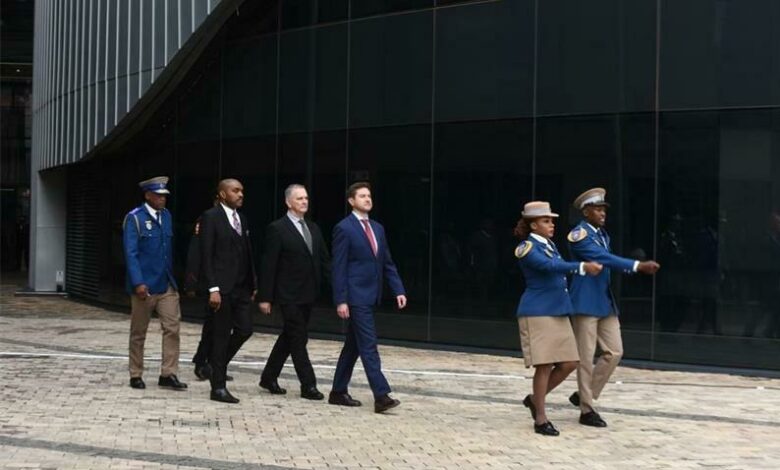
Tshwane mayor Cilliers Brink was brutally honest about the municipality’s dire financial state in his annual State of the Capital Address (Soca) yesterday.
It was his first speech since being elected into office two months ago and follows a damning Auditor-General report on deteriorating service delivery in the city.
“The Auditor-General’s findings on the valuation and classification of the City’s properties, plant and equipment will take more than a financial year to redress,” said Brink.
“It’s clear that the revenue management division needs drastic changes to fulfil its function,” he said.
“Continuous declines in revenue collection seem to confirm the numerous allegations that revenue agents and credit control contractors are demanding bribes for illegal connections and reconnections.
“This is part of a criminal economy that operates in our City and has the same devastating effect on value for money and service delivery.”
MAYOR SAYS TSHWANE NEEDS TO TURN FINANCES AROUND
Brink said the metro needed to turn its finances around by fighting criminality and aggressively ramping up revenue collection whilst also settling its overdraft facility before end-June.
He said the revenue collection rate had to be ramped up to at least 93%, by performing 1 000 credit control disconnections every week and preventing illegal reconnections.
“There will also be a change in how the municipality decides to collect what is owed by residents and consumers.”
Other plans yet to be presented to the municipal council in the coming months will look at stabilising revenue and matching budgeted expenditure over the next two years.
These plans include sourcing special funding for targeted infrastructure investments aimed at reducing water and electricity losses.
It will also involve “sweating” the City’s existing assets, which includes long-term leases as well as the sale of land and buildings not required for service delivery.
The current model of delivering certain services, including the management of City resorts, Wonderboom National Airport and the Tshwane Fresh Produce Market will also be revised.
He said new sustainable ways had to be found to deliver basic services.
These included electricity, water, sewage, safety and securing critical infrastructure.
He said cracks in infrastructure were already noted in the Rooiwal wastewater treatment plant, which was biologically and mechanically overloaded.
ENTIRE BUDGET NEEDED FOR UPGRAGES
Brink said it required R2.5-billion in upgrades, which was the City’s entire budget in any given financial year.
“Rooiwal is a stain on our conscience as a City, including successive administrations of several parties. We cannot stick to the current timeline of trying to fix Rooiwal with our limited resources.
“We desperately need help and as a mayoral committee we are humble enough to admit that fact.”
He said water and sewage systems had further been degraded, leading to sewage spills in communities like Winterveldt, Mabopane and Chantelle. He said the administration now needed to take every policy measure to buck the national trend of economic decline.
Brink said further reducing service outages and mitigating the effects of load-shedding was also vital for financial recuperation.
“In the next three years, it is imperative that Tshwane reduces its dependence on Eskom.
“In the next three years, at least 1 000MW must come from alternative sources, namely a combination of own generation and procurement from independent power producers.
“Tshwane is paying the price today for the lack of investment in infrastructure in the first decade of the municipality’s existence.”
He said Tshwane would begin the quest to source developmental finance for sustainable energy provision, water provision and waste collection.
OPPOSITION HAVE THEIR SAY
ANC spokesperson in Tshwane Joel Masilela criticised the address.
He said Brink had admitted that in seven years, “Tshwane had not been able to break new ground”.
“This coalition government is unable to run a city well. There has been evidence of the City being unable to fix sewerage spillages, attending to waste collection and potholes.
“It takes them forever to collect waste and attend to core service delivery issues in communities.”
According to Masilela, revenue collection had to be ramped up ages back.
“The future looks very dim for residents.
“The metro is only looking for other funding models that could potentially rescue and carry out its constitutional obligations now.”
Watch:
EFF Tshwane leader Obakeng Ramabodu questioned how the metro would financially recover with the current Finance MMC at the helm.
“He was part and parcel of the Auditor-General’s findings.
“It is impossible to achieve the 93% with this coalition team.”
He said further the mayor failed to attend to issues in informal settlements in his speech.
Watch:
ALSO READ: Mayor makes service delivery oversight visit to Mamelodi
Do you have more information about the story?
Please send us an email to editorial@rekord.co.za or phone us on 083 625 4114.
For free breaking and community news, visit Rekord’s websites: Rekord East
For more news and interesting articles, like Rekord on Facebook, follow us on Twitter or Instagram