WATCH: World Ranger Day: Research on horn pod device a game-changer for rangers
A tracking device put into a pod fitted onto the stump of a dehorned rhino is proving to be a valuable asset in the fight against poaching.
A new Swiss-designed satellite checking device fitted to dehorned rhinos is a game-changer in the Kruger National Park.
Previously, similar tracking devices have been planted in the horns of rhinos, but these new caps being fit to the stumps of dehorned rhinos, have shown to make a real difference in the fight against poaching.
During 2023, 499 rhinos were poached across South Africa, 406 were killed on state properties and 93 on privately owned parks, reserves and farms. This was an increase of 51 in comparison to 448 rhinos poached in 2022.
Kruger National Park recorded a 37% decrease from 2022 with a total of 78 rhinos poached in 2023.
Researcher Vanessa Duthé, a member of a research team on dehorning, said universities like Princeton and Harvard are taking hands to test the efficacy of the tracking device caps being glued to stumps of horns.
“Every 30 minutes these tracking caps will send by a satellite the co-ordinates of the rhino’s position to rangers. The goal is to know where they’re grazing so they can be protected,” explained Duthé.
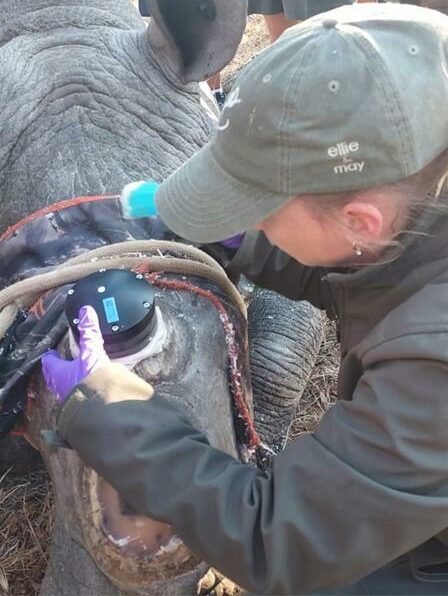
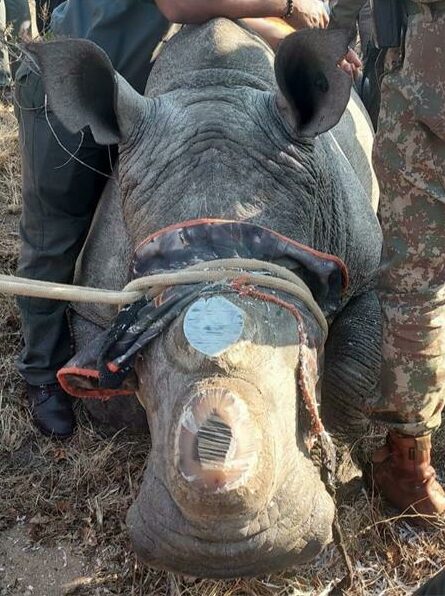
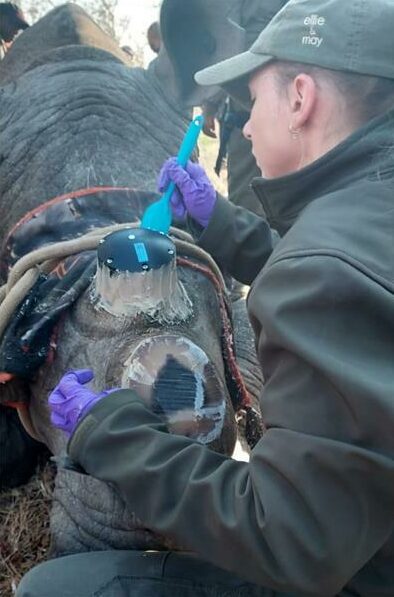
WATCH: Researcher Vaness Duthé fitting a device pod to a rhino
She pointed out that the whole point of the pod is also to record movement data over a long period of where the animals go about their business in the park.
According to her, previous trials have shown that these horn pods can stay on for a year and house a small solar panel as well as batteries.
“With horn growth, the pod ends up falling off. It’s quite a nice device because it will never cause any harm to the rhino. When it just falls off, we can recover them and change the batteries,” explained Duthé.
She emphasised the horn pods have been through many trials to ensure that they are the most robust devices possible to withstand rhinos’ rough daily lives.
Data recorded from the device include how the rhinos are using their habitat in the park and how this impacts the landscape.
“Rhinos are surprising. You would think that because of their size, they wouldn’t move that much, but the pods that we’ve deployed so far have already shown that they move quite a lot across the park’s landscape,” said Duthé.
The horn pod deployment in the park is quite new.
“We are deploying 36 devices at present in the park but we’ve deployed about 100 in total countrywide, including these 36. Research is ongoing to get a robust device that will stay on the horn and doesn’t cause any harm to the rhino. It’s still in development but proving to be a real tool for anti-poaching,” stressed Duthé.
The horn pods project visit was one of the stops of the American Ambassador, Reuben Brigety, on his visit to the Kruger National Park.
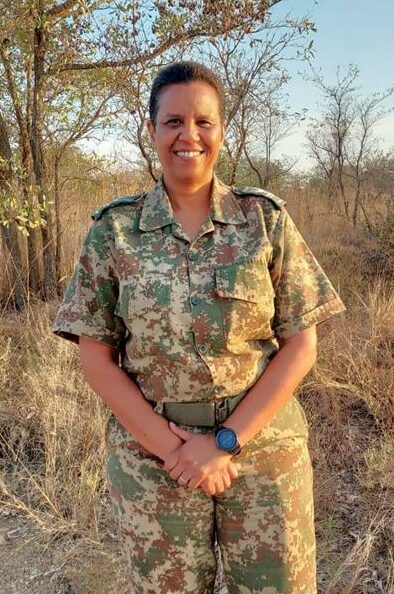
Head ranger Cathy Dreyer explained to the ambassador and his party that dehorning operations have been a big component of their anti-poaching strategy and has been a focus of the ranger corps’ work for the past 11 weeks.
“The strategy is used in combination with a lot of other different strategies that we are employing currently. At present, a lot of the rhinos have already been dehorned but we need to repeat the dehorning at least every 18 months,” explained Dreyer.
WATCH: Section ranger Marius Snyders dehorning a rhino
These strategies include strong collaboration between external stakeholders permanently based at the park and attending to wildlife crime cases, such as the Skukuza Stock Theft and Endangered Species Unit, Skukuza SAPS and SAPS forensic teams.
Also part of the strategy is the continued implementation of the Ranger Services Integrity Management Plan. It is a holistic approach that assesses the drivers and dynamics of corruption and then addresses these with a comprehensive set of actions that focus on building individual integrity and organisational resilience to corruption.
Dreyer said a very successful part of the anti-poaching efforts is improved access control. This is done through the installation of automated number plate recognition cameras and gate cameras, as well as radar detection systems that remotely track any illegal entry by poachers on foot into the park.
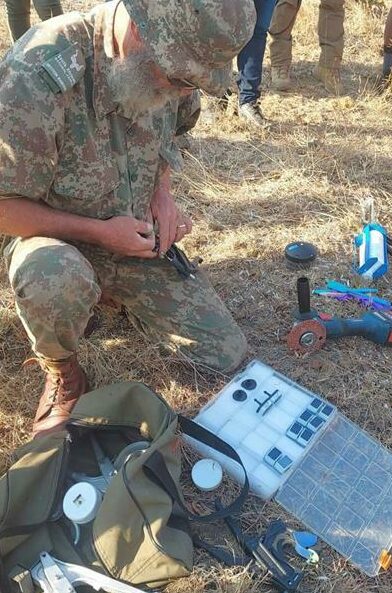
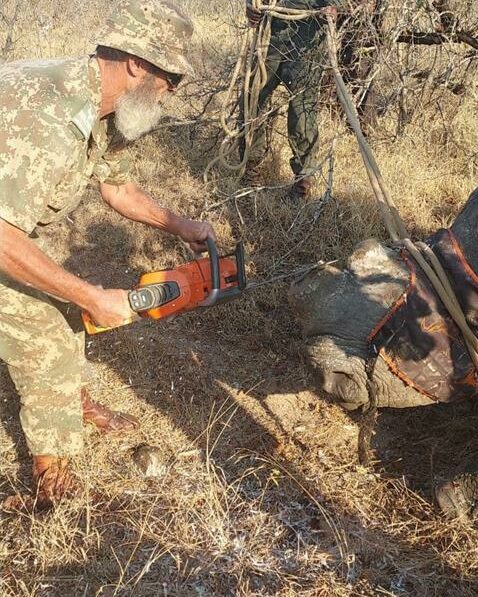
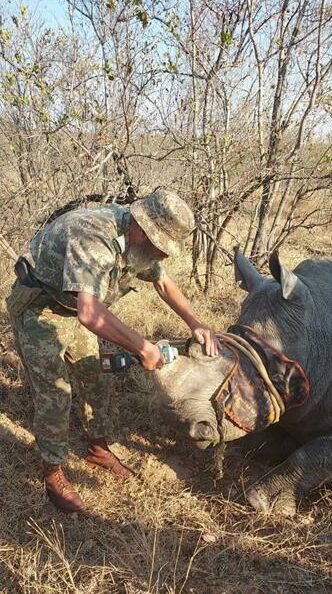
One of the park’s vets, Dr Lufano Netshivhadulu, explained to the ambassador that “people think we’re removing the whole horn, but we are trying to keep the horn as short as possible. We’re trying to discourage the poachers from shooting our rhinos,” he pointed out.
He added that the process of immobilising the rhino for the dehorning must be handled with great care, as the medication in the dart to put the rhino temporarily to sleep is very potent.
“Since we started dehorning the rhinos we have seen a decrease in the poaching numbers in the park. The tracking devices also make it easier for us to keep up with the maintenance of the dehorning process,” said Netshivhadulu.
Brigety applauded the work of the rangers and researchers, remarking that they are “national treasures”.
He referred to USAID donations towards the anti-poaching campaigns and said that his government regarded these as an investment in conservation, as well as in the welfare of the communities around the park.
“Responsible partnerships between the USA and the conservation sector in South Africa remain critical in combating international wildlife trafficking,” said Brigety.
During his visit, Brigety also played a part in some of the tests done on a dehorned rhino to record data on its health.

WATCH: American Ambassador Reuben Brigety on the USA’s contribution to antipoaching efforts in SA.
Deputy minister of forestry, fisheries and the environment, Bernice Swarts, is honouring rangers on World Ranger Day on Wednesday, July 31, at the Rangers Memorial at the Kruger Gate, Kruger National Park.
World Ranger Day is celebrated worldwide to commemorate rangers killed or injured in the line of duty.
This year, SANParks will highlight the experience of rangers with a focus on 30 to 40 years long service in line with 30 years of democracy in South Africa.
Do you have more information about the story?
Please send us an email to bennittb@rekord.co.za or phone us on 083 625 4114.
For free breaking and community news, visit Rekord’s websites: Rekord East
For more news and interesting articles, like Rekord on Facebook, follow us on Twitter or Instagram