Electric vehicle project showcases skills and sustainability in schools
The idea behind the vehicle is to reduce harmful gas emissions by promoting the use of renewable energy.
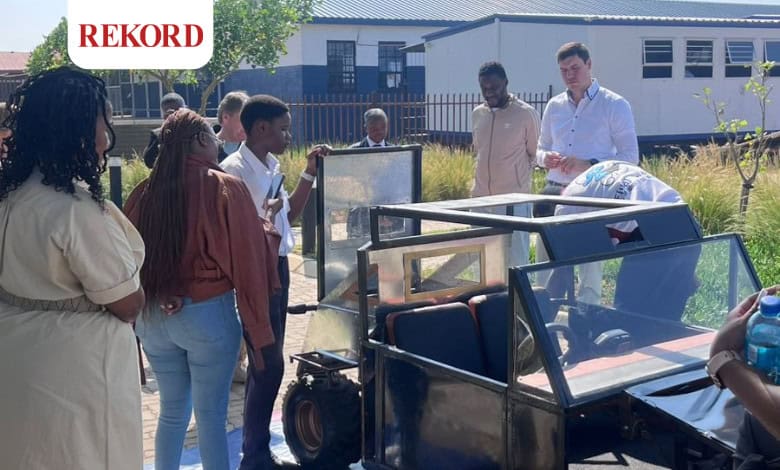
Learners at the Lethabong Maths, Science, and ICT School of Specialisation proudly presented their newly developed electric vehicle, the Lethabong Electric Vehicle: EV LMSI 1000, to international media companies visiting the school recently.
This event showcased how the impact of strategic partnerships can advance innovation, skills development and quality education.
The spokesperson of the MEC for Education, Onwabile Lubhelwana, said the groundbreaking project reflects Gauteng’s commitment to building a future-ready province through investment in innovation, science, technology and education.
“Through the #SchoolsOfSpecialisation programme, learners are being equipped with critical 21st-century skills in science, technology, engineering and innovation, positioning Gauteng as a hub for talent, creativity and economic growth,” he said.
Lubhelwana said the journey towards the development of the electric vehicle began in 2024 when learners started conducting research in the automotive sector in preparation for the school’s launch as a School of Specialisation (SOS).
He said their research efforts evolved into a practical innovation project in 2025, culminating in the completion of a fully drivable electric vehicle this year.
“The purpose of the invention is to contribute towards reducing harmful gas emissions produced by conventional vehicles by promoting the use of renewable energy. The project also seeks to support environmental sustainability by reducing dependence on fossil fuels and contributing toward the protection of the ozone layer,” he stated.
Lubhelwana mentioned that in addition to its environmental objectives, the initiative aims to expose learners to Fourth Industrial Revolution (4IR) technologies and innovation within the automotive and engineering sectors.
He mentioned that the school currently receives funding support from the Department of Basic Education (DBE) and is actively seeking partnerships and sponsorship opportunities from organisations and stakeholders aligned with renewable energy, innovation, education and skills development initiatives.
“Lethabong’s long-term vision is to continue developing more electric vehicles with the goal of expanding into larger-scale production in the future,” said Lubhelwana.
According to him, the school also hopes to establish collaborations with automotive companies and industry stakeholders to exchange knowledge, strengthen innovation, and provide learners with relevant technical skills and practical industry exposure.
“The project equips learners with practical and technical skills relevant to modern industry demands. Through participation in the design, development and production processes, learners have gained hands-on experience in engineering, renewable energy, research, problem-solving, teamwork and innovation,” he said.
Lubhelwana said that this exposure helps prepare them for future careers in the automotive, programming, technology and manufacturing sectors.
The EV LMSI 1000 stands as an example of how education, innovation, and sustainability can come together to empower young people and shape the future of South Africa’s economy and technological advancement.
Do you have more information about the story?
Please send us an email to bennittb@rekord.co.za or phone us on 083 625 4114.
For free breaking and community news, visit Rekord’s websites: Rekord East
For more news and interesting articles, like Rekord on Facebook, follow us on Twitter or Instagram or TikTok or WhatsApp Channel