Metro housing plagued by decaying buildings, cash crunch and stationery projects
The Auditor-General’s findings and the Tshwane Housing Company’s revised business plan paint a disturbing picture of decayed residential buildings, financial pressure and undeveloped land projects. The FF Plus warns that the entity’s problems can cost taxpayers and residents dearly.
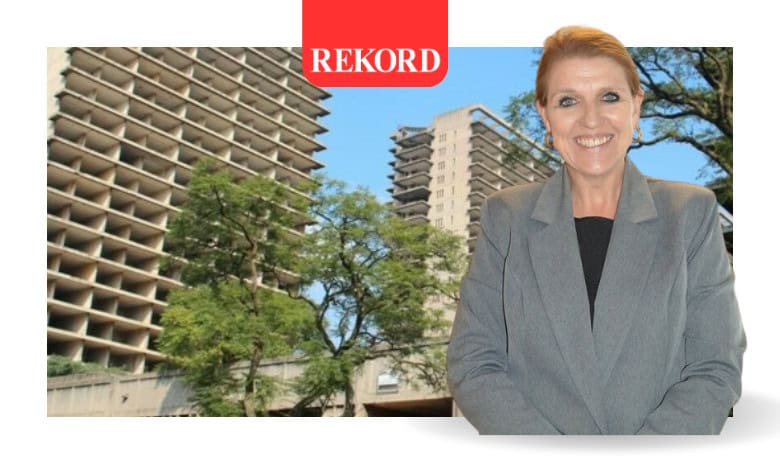
The Tshwane metro’s housing entity, Housing Company of Tshwane (HCT), is in a deep financial and operational crisis, according to the Freedom Front Plus (FF Plus).
The Auditor-General’s report and the entity’s revised 2025/26 business plan revealed serious shortcomings in financial management, asset management and service delivery.
The findings follow after the Auditor-General’s feedback report on the HCT’s annual general meeting was submitted to the Council at the end of May. At the same time, the revised business plan also revealed new details about the entity’s financial challenges to light.
According to FF Plus councillor Lenor Janse van Rensburg, the documents show that the entity did not just struggle with administrative problems.
“The latest auditor report and business plan provisions prove that the metro’s housing entity lost control over its core portfolio,” said Janse van Rensburg.
One of the most alarming findings concerns the condition of the city-managed residential buildings.
The Auditor-General (AG) inspected seven buildings and found that they do not comply with health and safety requirements.
The inspections revealed structural cracks inside and outside the buildings, roof leaks, raw sewage around residential complexes, peeling paint and general structural deterioration.
All seven buildings have been formally declared as non-compliant structures, under Section 12 (1) of the National Building Regulations and Standards Act.
Janse van Rensburg described the situation as more than just an audit finding.
“The health and safety finding represents a humanitarian crisis, not just an audit finding. The city cannot allow residents to continue living in decaying buildings with raw sewage, structural cracks and roof leaks while they await court proceedings for 12 to 18 months.”
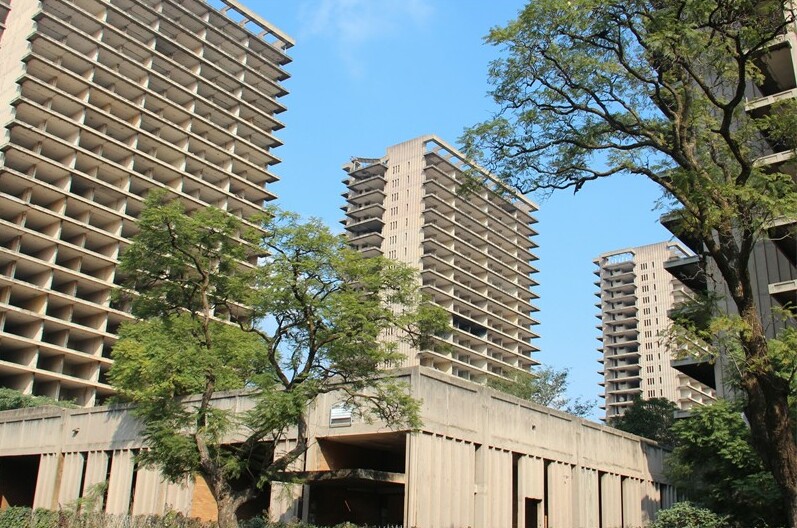
The seven buildings are: Blesbok (Arcadia), Bosbok (Arcadia), Nuwe Stalshoogte (Arcadia), Ou Stalshoogte (Arcadia), Die Heuwel (Pretoria-Wes), Groenveld (Pretoria-Wes) and JJ Bosmanhuis (Pretoria east).
All show serious signs of decay, including structural cracks, leaking roofs, extensive mold growth and build-up of raw sewage.
According to the report, the conditions pose a direct risk to residents’ safety. Efforts to resettle residents have, however, met legal resistance.
Safety and evacuation plans that were submitted in 2025 were rejected by residents, after which legal teams were appointed to challenge the processes.
The result is that all seven buildings are currently caught in legal processes that can last between 12 and 18 months, while the structural and health risks remain largely unchanged.
The situation reminds Van Rensburg of Schubart Park in the city centre, where years of abandonment led to similar safety and health dangers.
In 2011, Schubart Park residents were evacuated, but the process later ended in the Constitutional Court after it was found that the city did not provide sufficient alternative accommodation.
The condition of the buildings also had a direct impact on HCT’s finances.
HCT had to abandon rent income targets at certain self-supporting senior housing schemes after residents were moved and the buildings became uninhabitable.
HCT’s financial position is a cause of concern, according to Janse van Rensburg.
The revised business plan shows that the entity’s operating liabilities exceed its operating assets by more than R25-million.
“This is not a technical slip; it is a serious statutory breach. The housing entity destroys local contractors and small businesses by failing to settle payments within the legally prescribed 30 days due to poor cash flow management,” said Janse van Rensburg.
Another aspect of housing that has come under the spotlight is the metro’s handling of big development projects.
The business plan indicates that projects such as Chantelle en Timberlands have been removed from HCT’s project lists because funds are not available.
For the FF Plus, this indicates poor planning. “One cannot build houses with empty promises,” said Janse van Rensburg.
While service delivery goals are being scaled down, the report shows that expenditure on contractual services increased by 68% – an increase of more than R20-million.
The costs are primarily related to security services and emergency repair work.
According to Janse van Rensburg, taxpayers are increasingly paying for emergency interventions while existing infrastructure continues to deteriorate.
The AG’s report also highlights land acquisitions by the metro spanning more than a decade.
Since 2011, the city spent about R516-million on plots of land of more than 1 000 hectares.
Several of the projects, however, remain in the planning phase after years.
Examples include Zithobeni Heights in Pretoria east, which was purchased back in 2013/14 but is still listed as a planned mixed development, as well as Derdepoort 326-JR east of East-Lynne in the Moot that has not been developed yet after it was purchased 10 years ago.
The planned social housing project of the Chantelle X39 site in the north of Pretoria (Akasia), for which R48-million was paid, has since been halted.
According to FF Plus, these projects represent a pattern where land is purchased without development within reasonable time frames.
The party demands that monthly progress reports on the seven unsafe buildings be submitted to the relevant committee until residents have been safely relocated.
It said the combination of deteriorated buildings, poor rent collection, financial pressure, increasing expenditure and long-lasting undeveloped land projects indicates a housing entity that, according to them, requires urgent structural intervention.
ALSO READ: El Niño forecast raises concerns over food prices and water security
Do you have more information about the story?
Please send us an email to bennittb@rekord.co.za or phone us on 083 625 4114.
For free breaking and community news, visit Rekord’s websites: Rekord East
For more news and interesting articles, like Rekord on Facebook, follow us on Twitter or Instagram or TikTok or WhatsApp Channel