Landfill shame: Only two private Pretoria sites pass audit
As Pretoria grapples with mounting urbanisation, the failure to manage waste responsibly is not just a technical issue. It is a reflection of collapsing local governance. This is the conclusion of the researchers of a landfill audit.
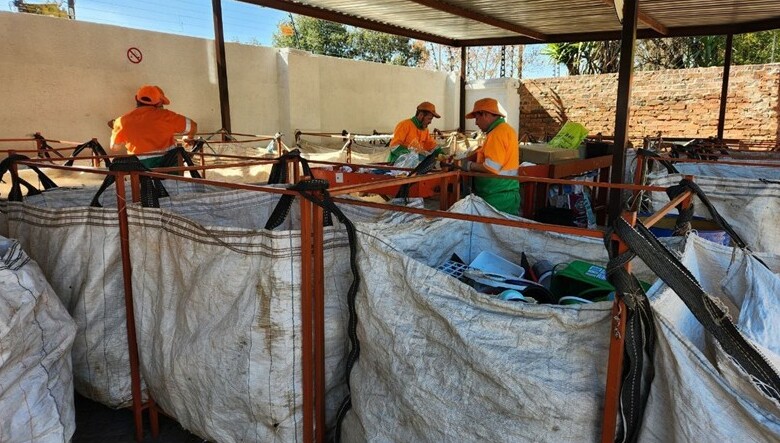
In a countrywide landfill site audit released early in September, AfriForum has once again turned the spotlight on South Africa’s waste management crisis, this time with a sharp focus also on Pretoria.
Despite the capital city’s strategic importance and resources, only two landfill sites in the Tshwane metro passed the audit, both privately operated.
In stark contrast, every single site owned by the metro failed to meet the basic standards for responsible landfill management.
According to Marais de Vaal, spokesperson for AfriForum, this result confirms what has become a pattern in the organisation’s audits over recent years.
“Private landfill sites consistently outperform municipal ones, because they are more strictly monitored and face direct consequences if they fail to comply.
“Their business survival depends on compliance. In contrast, municipalities are rarely held accountable, even when they blatantly fail to meet legal and environmental requirements,” said De Vaal.
Out of the six landfill sites audited in the Pretoria area, only The Waste Group’s Mooiplaats and Bon Accord sites met the minimum compliance threshold of 80%.
Mooiplaats, in particular, received full marks, complying with every single audit criterion, like daily compaction and waste covering, to proper signage, access control, and operational transparency.
This stands in harsh contrast to the four metro sites:
– Bronkhorstspruit – 66% (Fail)
– Hatherley – 68% (Fail)
– Ga-Rankuwa – 60% (Fail)
– Soshanguve – 72% (Fail)
These results underline what AfriForum has described as the ‘institutional rot’ within local government, where basic maintenance and legal requirements are neglected.
While many sites are stagnating in mediocrity, Bronkhorstspruit has taken a noticeable step backwards.
Last year, this landfill narrowly missed passing, with a score of 74%. This year, it fell to 66%.
De Vaal attributed the decline to failures in key operational areas.
The audit also revealed that Bronkhorstspruit no longer has a functional waste monitoring committee that includes community representation, undermining transparency and public involvement.
Not all the news is negative. The Soshanguve landfill, despite still failing to meet the 80% pass mark, showed substantial improvement year-on-year.
According to last year’s audit, it failed several critical indicators, including inspections of incoming waste, compaction, fire management, recycling facilities, and the handling of tyres. This year, all these categories were marked as fully compliant.
“Soshanguve has clearly taken steps to improve its operations, and we commend that. It shows that improvement is possible even within the same municipal structure. But they still fall short of a pass. Incremental progress is no substitute for full compliance,” De Vaal said.
One area where Soshanguve continues to lag is infrastructure, particularly stormwater management, which is crucial for preventing leachate pollution (liquid that has absorbed contaminants, after passing through a landfill) and operational disruptions during rain.
Despite the gravity of the findings, AfriForum has yet to engage with the metro directly following the release of this year’s results in the first week of September.
“We have sent a request to meet with the Department of Forestry, Fisheries and the Environment to discuss our findings and explore how these audits can support better cooperation with municipalities,” he said. “Our goal is to help build capacity and accountability, not merely to criticise.”
However, AfriForum remains cautious about pinning hopes on government responsiveness.
Past engagements with municipalities have yielded little action, and the organisation is increasingly investing in alternative, community-driven waste solutions.
Nationwide, the audit painted a dismal picture: Only 22% of South Africa’s landfill sites passed the audit, with 131 of the 169 audited sites failing to meet even the most basic standards.
While Gauteng as a province leads the way with an average score of 84%, this high average is skewed by private and better-performing municipal sites outside Tshwane.
“Municipalities are supposed to protect communities against pollution, but most landfill sites are lawless and dangerous. The fact that nearly 80% of sites fail to meet basic requirements is not just a governance failure. It is an environmental and public health threat,” he said.
With little faith in municipal turnaround strategies, AfriForum is pushing for greater community involvement and self-reliance.
The organisation already runs community waste removal projects in areas like Bloemfontein and Centurion and has launched several local recycling initiative that delivers to these projects, like their recycling project in the Moot.
This project’s number of clients has surged recently, doubling in August.
“The only sustainable way forward is closer collaboration between communities and municipalities. But until municipalities demonstrate a willingness to act responsibly, communities will have to take the lead in protecting their own environment,” he concluded.
Do you have more information about the story?
Please send us an email to bennittb@rekord.co.za or phone us on 083 625 4114.
For free breaking and community news, visit Rekord’s websites: Rekord East
For more news and interesting articles, like Rekord on Facebook, follow us on Twitter or Instagram or TikTok.