Metro faces delays in formalising Marry Me informal settlement
Originally, the metro had committed to finalising the process by June/July 2025. However, that deadline has lapsed, and it now admits that completion will only be possible after a new contractor is appointed in October.
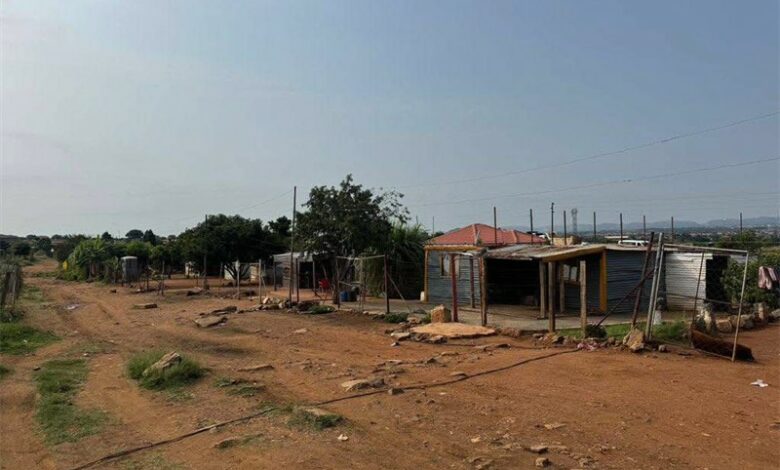
The long-awaited formalisation of the Marry Me Informal Settlement in Soshanguve has once again been delayed, leaving residents frustrated and uncertain about their future.
MMC for Housing and Human Settlements, Alderman Aaron Maluleka, and Ward 89 councillor Tshepo Malefane recently addressed the community during a follow-up meeting.
The metro acknowledged the progress made since the shack-marking process earlier this year, but also confirmed that the project is running behind schedule.
Originally, it had committed to finalising the process by June/July this year. However, that deadline has lapsed, and the metro now admits that completion will only be possible after a new contractor is appointed in October.
Maluleka explained that the delay stems from the lapsing of the contract of the service provider responsible for the township establishment application.
“To resolve this, a tender process has been undertaken to appoint a new service provider.
“Appointment is anticipated in early October, only after which a timeline for completion can be determined,” said Maluleka.
Resident Jonas Maposa said, “We are tired of promises. Every year, we are told that this project will be done, but nothing changes.
“Our children are growing up without proper homes. I have been here for over 10 years.”
The metro also raised alarm over new shacks being erected outside the demarcated boundaries of Portion 15 of the farm Wentzelrust 223 JR, which belongs to the municipality.
To curb further land invasion, the Tshwane Metro Police Department (TMPD) has been put on standby to intervene.
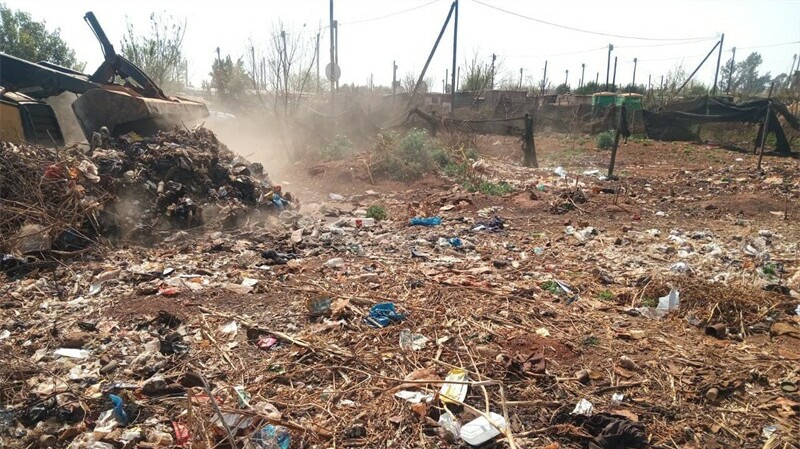
Description: A bulldozer clears a large pile of debris and trash in an open area of the Marry Me Informal Settlement in Soshanguve, with dust rising into the air.
According to the MMC, about 3 000 stands will be allocated and registered during the formalisation process.
Allocation will prioritise those already registered in the existing Marry Me database, including residents who signed up years ago but have yet to receive housing.
In addition, about 552 households will be relocated to Kopanong, where walk-up housing units will be constructed. The municipality has promised relocation assistance and consumer education during the transition.
Thabo Khumalo of Soshanguve Ext 10 said the metro must accelerate this formalisation process for the betterment of the surrounding communities.
“I don’t live at the informal settlement, but that place contributes to crime because the people commit crimes here and go hide at Marry Me.
“The local government must speed up the process so that we can be safe as a community.”
One of the key frustrations for residents is the lack of basic services such as electricity, water, and sanitation.
The metro insists that electricity installation will only begin once the informal settlement has been blocked out.
Maluleka conceded that no timeline could be provided at this stage, because of dependencies on township approvals and funding.
The metro has confirmed that a budget of R650 000 has been allocated for formalisation purposes during the 2025/26 financial year.
Maluleka further assured that accountability measures under the Municipal Financial Management Act (MFMA) will be applied to avoid delays similar to those experienced in other housing projects, such as the Chantelle project.
The metro previously said that Region 1 (North-western), which includes areas such as Soshanguve, Winterveldt, and Mabopane, is home to 137 informal settlements, one of the highest concentrations in the municipality.
While these communities reflect the deepening housing crisis in the capital, they also pose serious challenges for service delivery, infrastructure, and urban planning.
Metro spokesperson Lindela Mashigo said that 146 informal settlements in Tshwane receive rudimentary services, and 108 have basic sanitary services.
He said that due to budgetary constraints, not all informal people have been catered for.
In Region 1, north of Pretoria, many residents still rely on temporary water tanks, pit toilets, and illegal electricity connections.
“The provision of rudimentary services is not demand-driven but informed by Section 27 of the Constitution and the available budget,” said Mashigo.
Older informal settlements are prioritised for upgrades, while newer ones remain in limbo.
To tackle this growing crisis, the metro has earmarked R649.8-million under the Informal Settlements Upgrading Partnership Fund in the draft 2025/26 budget.
Mashigo said in areas such as Soshanguve South Extensions 30 and 31, reblocking has been completed, with over 500 households formalised.
ALSO READ: Weskoppies power restored as CBD blackout nears end.
Do you have more information about the story?
Please send us an email to bennittb@rekord.co.za or phone us on 083 625 4114.
For free breaking and community news, visit Rekord’s websites: Rekord East
For more news and interesting articles, like Rekord on Facebook, follow us on Twitter or Instagram or TikTok.