Montana tap water confirmed safe as reservoir stabilisation continues
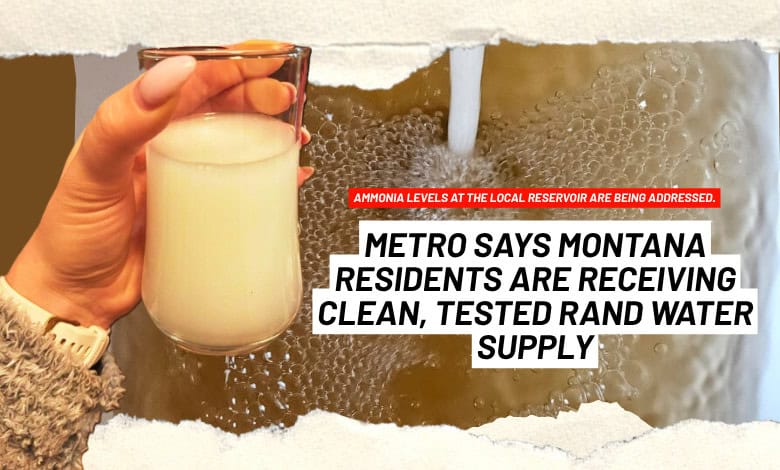
Metro says Montana residents are receiving clean, tested Rand Water supply while ammonia levels at the local reservoir are being addressed.
The metro has assured residents of Montana and surrounding suburbs that the water from their taps is safe to drink and fully compliant with the South African National Standard (SANS 241) for drinking water quality.
The metro confirmed that while the Montana Reservoir undergoes stabilisation due to fluctuating ammonia levels, the area continues to receive clean, potable water directly from the Rand Water bulk line.
Metro spokesperson Lindela Mashigo said the city is taking all necessary precautions to ensure residents receive high-quality drinking water.
He emphasised the temporary supply arrangement from Rand Water remains in place to guarantee compliance with all microbiological, chemical, and physical standards.
This follows public concern over reports of discoloured and odorous water previously experienced in Montana, Sinoville, Magalieskruin, Doornpoort, and Annlin.
According to the metro, investigations confirmed that the Montana Reservoir, normally responsible for supplying these areas, had shown fluctuating levels of ammonia in its treated water.
While all other parameters were within acceptable limits, the high ammonia levels prompted the metro to take additional measures before restoring full reservoir operations.
Mashigo said residents can rest assured that no microbiological contamination has been detected, and the water remains safe for human consumption.
He explained ammonia can occur naturally in raw surface water and may increase following power interruptions or operational disruptions at water treatment facilities.
To address the ammonia issue, the metro has introduced pre-chlorination at the Montana Reservoir.
This process neutralises ammonia compounds, helping to stabilise overall water quality, and Mashigo explained that the process is gradual and must reach complete chemical balance before the reservoir can be safely brought back online.
“The metro continues to conduct frequent water tests through accredited laboratories, both at Rand Water and at our municipal Rietvlei laboratory.
These laboratories participate in national proficiency testing schemes to ensure accuracy and reliability of all results,” said Mashigo.
He added that bacteriological tests, including E. coli, total coliforms, and heterotrophic plate counts, all remain within acceptable limits, confirming that the water distributed through the Rand Water system is not contaminated.
Mashigo also explained that the Roodeplaat Water Treatment Works, previously identified as the source of taste and odour issues, remains under close observation.
“It will only resume supply to Montana once its treated water fully complies with national standards.”
Long-term upgrades to improve the removal of ammonia and organic compounds are underway at the plant, along with stricter process controls to prevent future recurrences.
The municipality reaffirmed its commitment to transparency and science-based communication, promising to keep residents informed through official channels.
“We appreciate the patience and understanding of our residents during this time. Our foremost priority remains the health and safety of Tshwane’s communities.”
Mashigo said Rand Water’s quality control processes are rigorously monitored and audited to ensure every drop of water delivered meets the required national standards.
The supply from Rand Water will continue until ammonia levels at the Montana Reservoir stabilise within the prescribed range, ensuring residents in Montana and nearby suburbs continue to receive reliable, clean, and safe water.
Residents in the affected areas have reported that their tap water has a brownish colour and smells like it comes straight from the Roodeplaat dam.
Councillors of wards 87 and 50, Freddie Pienaar and Lenise Breytenbach, who have been at the forefront of the campaign to get answers over the issue from the metro, previously told Rekord that residents’ concerns stem from visible changes in the water.
According to Pienaar, the issue was compounded by power outages that disrupt the purification process.
“We as ward councillors have engaged with the metro on several platforms. The power outages affecting Kameeldrift, particularly on the DW Line, cause the wastewater purifying plant not to operate at maximum capacity. Human waste causes an increase in ammonia levels.”
Mashigo said power outages have a direct impact on the functionality of the plant, and whenever a power failure occurs, all operations at the plant stop, including the pumping of treated water to the Montana Reservoir.
He said this interruption can temporarily affect water availability but not water quality.
ALSO READ: R20 million worth of cocaine seized on Midrand plot
Do you have more information about the story?
Please send us an email to bennittb@rekord.co.za or phone us on 083 625 4114.
For free breaking and community news, visit Rekord’s websites: Rekord East
For more news and interesting articles, like Rekord on Facebook, follow us on Twitter or Instagram or TikTok.