City bows to wage ruling as opposition warns of crisis
Unions are welcoming the metro’s decision to drop the salary wage appeal, but opposition parties warn the move could cripple the metro’s finances and derail service delivery.
The Tshwane Metro has confirmed it will not challenge the decision of the South African Local Government Bargaining Council (SALGBC) decision compelling it to pay backdated 2021/22 salary increases to municipal employees.
The announcement follows the Council’s rejection of the metro’s application for exemption from implementing the 3.5% wage hike agreed upon in the national salary and wage collective agreement.
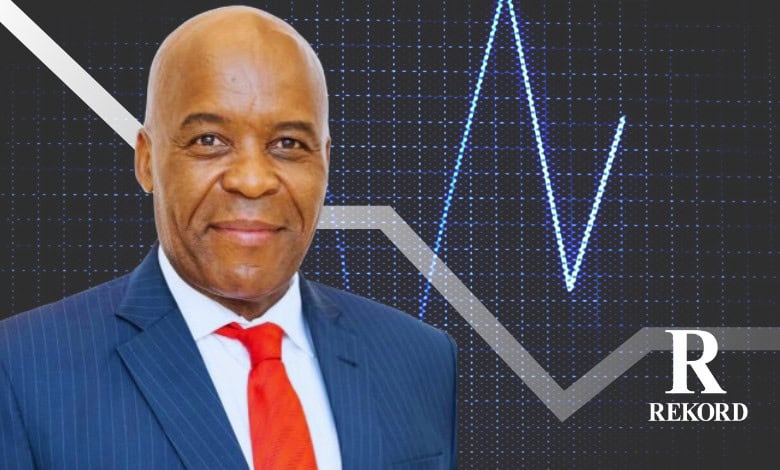
Deputy mayor and MMC for Finance, Eugene Modise, said the metro respects the outcome of the process and will now work with organised labour to find practical and sustainable ways to implement the decision.
“After due consideration of the ruling and the factors presented, the city will not pursue an appeal or review of the Bargaining Council’s decision,” Modise said.
“We respect the outcome of the process and remain committed to upholding the principles of collective bargaining, good governance, and labour stability.”
Modise added that the metro would engage with trade unions to ensure that the implementation process is both compliant and considerate of the metro’s financial realities.
He said the process would also prioritise fairness while ensuring that service delivery is not compromised.
He described municipal employees as ‘the backbone of effective service delivery’, reaffirming the administration’s commitment to their fair treatment and development.
However, the DA has sharply criticised the decision not to appeal, warning that the Bargaining Council’s ruling is ‘legally flawed and financially ruinous’.
DA Tshwane spokesperson Jacqui Uys said the outcome could have dire consequences for service delivery and infrastructure maintenance if left unchallenged.
“The decision by the SALGBC to award backdated salary increases to officials of the metro is not only legally flawed – it is financially ruinous,” Uys said.
“If not taken on review, the decision will be paid for by residents in the form of deteriorating service delivery and infrastructure.”
Uys said the DA’s main concern centres on affordability.
She explained that earlier this year, the metro successfully argued in the Labour Court that it could not afford to pay 5.6% salary increases for the 2023/24 financial year.
“The court ruled that the Bargaining Council had misdirected itself in concluding the city could absorb those costs.”
According to Uys, the same principle applies to the 2021/22 salary increases.
She said implementing the 3.5% backdated adjustment will cost the city at least R1.4-billion as a one-off, with an additional R400-million in recurring annual expenses thereafter.
“The commissioner who made the award concedes that the financial implications will be ‘very huge’ but fails to assess whether the city can actually afford such expenditure,” Uys said.
“The metro has strong grounds to take this decision on judicial review. Failure to do so would derail Tshwane’s entire financial recovery process.”
The DA argues that the exemption granted in 2023, supported by the ANC and ActionSA, saved the metro roughly R600-million.
Those funds, the party said, allowed the metro to reach a crucial payment arrangement with Eskom.
Uys said the latest ruling threatens to undo that progress, potentially plunging the municipality into deeper financial distress.
“We are calling on City Manager Johann Mettler to release a detailed financial assessment of the ruling’s implications,” she said.
She added that transparency would confirm that the backdated increases are ‘completely unaffordable’.
The Freedom Front Plus (FF Plus) has also raised the alarm, calling the decision a potential ‘financial disaster’ for the metro.
FF Plus Tshwane spokesperson Grandi Theunissen said the latest ruling by the SALGBC could cost the metro billions once all related expenses are considered.
“The latest decision by the SALGBC on backward pay increases for Tshwane metro employees could mean a financial disaster of R2-billion for the metro,” Theunissen said.
He explained that on November 1, the SALGBC confirmed that the 3.5% increase applies retroactively from July 1, 2023, to June 30, 2024.
He added that the decision did not come as a surprise, arguing that the Bargaining Council is politically influenced.
“The ruling is no surprise, as the conditional council comprises representatives from the trade unions Samwu and Imatu and the Salga local government association, which in turn is under complete ANC control,” he said.
“The compilation leaves little doubt that political considerations, not financial reality, influenced this decision.”
The FF Plus believes the current governing coalition of the ANC, EFF, and ActionSA has continuously sided with unions at the expense of the metro’s fiscal health.
Theunissen pointed to the 2023 Samwu strike, where the coalition allegedly showed sympathy with union demands.
“During the unlawful Samwu strike in 2023, the current coalition of ActionSA, the ANC and the EFF already sided against the metro’s financial sustainability,” he said.
“They have openly shown sympathy with Samwu’s claims, indicating that they support salary increases, irrespective of what the costs will be for the metro and its residents.”
He warned that allowing the increases to go ahead would be a decision driven by political motives ahead of the next municipal elections.
“Should the ruling ANC/EFF/ActionSA coalition allow the increases, it will be nothing but a populist decision in view of the upcoming municipal elections, at the expense of Tshwane’s financial survival and sustainable service delivery.”
Theunissen added that the conditional council had failed to consider the metro’s actual financial circumstances.
“This decision will make the metro’s so-called ‘funded budget’ finally unfunded,” he said.
“Should the ruling coalition accept and execute this statement, they will have to bear full responsibility for the financial collapse that follows.”
The FF Plus has called on the metro to take the matter to the Labour Court urgently so the dispute can be resolved on ‘healthy, financially just grounds’.
Theunissen said the previous coalition administration, which included the FF Plus, made a difficult but responsible decision not to approve unaffordable increases.
“It was exactly the previous coalition administration, of which the FF Plus was part, that made the difficult but responsible decision not to allow unsustainable increases,” he said.
“It was a step that gave the metro a chance at financial recovery. This progress is now being erased by political opportunism.”
Do you have more information about the story?
Please send us an email to bennittb@rekord.co.za or phone us on 083 625 4114.
For free breaking and community news, visit Rekord’s websites: Rekord East
For more news and interesting articles, like Rekord on Facebook, follow us on Twitter or Instagram or TikTok.