Metro expands fleet to improve essential service operations
The introduction of 22 new vehicles across key departments is aimed at improving efficiency, response times, and service delivery despite ongoing infrastructure challenges.
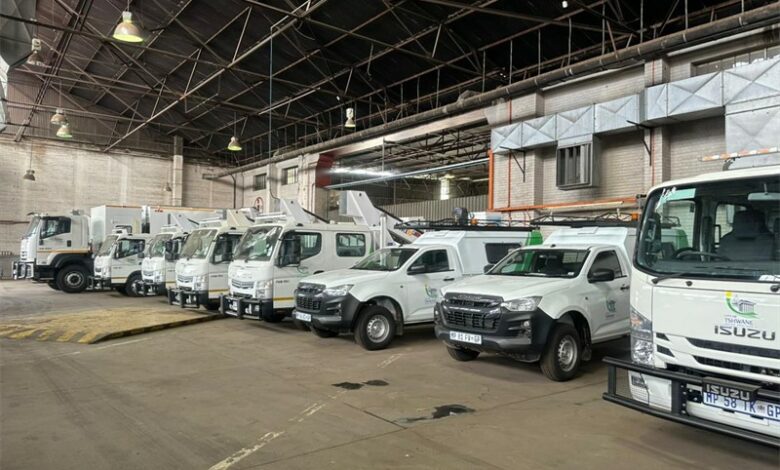
The Tshwane Metro is working to balance the ongoing struggle of infrastructure challenges with efforts to improve the reliability of its essential services.
While thousands of residents continue to experience power cuts and disruptions, the metro has rolled out 22 new vehicles across several departments to help improve response times and strengthen operations.
The new fleet, delivered at the start of November, includes vehicles for departments such as Electricity, Waste Management, Water and Sanitation, Environmental Management, Marketing, and Emergency Services.
MMC for Corporate and Shared Services, Kholofelo Morodi, said the new additions will help boost efficiency in service delivery, allowing teams to respond faster and work more safely.
“This investment is a key step in strengthening our internal capacity and ensuring residents receive efficient, reliable services,” said Morodi.
“We are building a metro that works – equipped, prepared, and focused on serving its communities.”
The Electricity Department has received advanced cherry picker trucks to help teams maintain power lines and repair faults faster.
In Waste Management, new compactors and collection vehicles have been added to support cleaner neighbourhoods.
“Other departments, including Water and Sanitation, have also received water tankers and street sweepers to improve service coverage and meet community needs,” said Morodi.
She added that for Emergency Services, specialised firefighting and rescue vehicles have strengthened the metro’s readiness to respond to incidents.
Morodi said these upgrades form part of the metro’s broader plan to improve service delivery through better tools, infrastructure, and internal resources.
“These vehicles are not just assets,” said Morodi. “They are an investment in reliability, accountability, and progress. Every new vehicle on the road represents our commitment to serve residents better.”
With stronger operational capacity and community co-operation, the city hopes to deliver more reliable, responsive, and effective services across Tshwane.
Notwithstanding these positive steps, the metro continues to battle serious service disruptions caused by cable theft and vandalism.
Frans Boshielo, MMC for Utility Services, said they have recorded around 2 000 unplanned power outages every month across all seven regions.
He said the central and western region (Region 3) is reportedly the hardest hit, followed by the central and western region (Region 4) and the north-western region (Region 1).
“Theft and vandalism cost the city between R8-million and R10-million each year,” said Boshielo.
“This is money that belongs to our residents. It is money that should be used to improve infrastructure, expand our services, and build a better city for everyone.”
He said the damage caused by criminals goes beyond inconvenience.
“The theft of batteries, network cables, and earthing conductors at substations leads to longer power cuts, equipment damage, and serious safety risks.”
He said in extreme cases, it could cause fires or explosions due to overheated equipment.
“We cannot allow criminals to destroy what is meant to serve our communities,” Boshielo added.
“Protecting public infrastructure is a shared responsibility, and we urge residents to report any suspicious activity around electrical sites to the Tshwane Metro Police Department or the city’s 24-hour call centre.”
Do you have more information about the story?
Please send us an email to bennittb@rekord.co.za or phone us on 083 625 4114.
For free breaking and community news, visit Rekord’s websites: Rekord East
For more news and interesting articles, like Rekord on Facebook, follow us on Twitter or Instagram or TikTok.