Parties clash over costly wage ruling
ActionSA and the DA are trading blame after Tshwane was ordered to pay R1.6 billion in backdated wage increases.
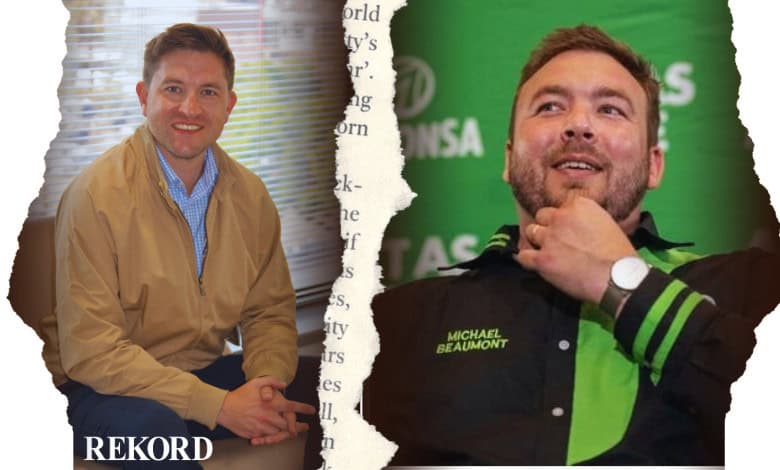
Tensions between political parties in the Tshwane council erupted again this week as the fallout from the South African Local Government Bargaining Council’s ruling on backdated municipal wage increases continues to reshape political dynamics.
What began as a technical labour dispute has grown into a full-scale political confrontation, with ActionSA accusing the DA on 18 November of cheap electioneering and the DA countering that the current administration has squandered its last viable legal remedy.
At the heart of the dispute lies a staggering R1.6-billion obligation the metro must now settle for salary increases dating back to 2021/2022.
The ruling, issued on 3 November, confirmed the metro is required to honour wage increases that the DA-led administration had refused to implement four years earlier.
Those increases, had they been paid in 2021/2022, would have amounted to R489-million.
Because the metro opted instead to fight the obligation through multi-year litigation, the eventual bill has ballooned to more than three times that amount.
Michael Beaumont, ActionSA’s national chairperson, said this financial shock was entirely predictable and constitutes yet another burden inherited from what he called eight years of failed DA governance.
Beaumont argued that the DA’s conduct in office created the very crisis it now seeks to campaign on.
“For years, during our involvement in DA-led coalitions, we raised concerns about the approach taken by DA mayors toward negotiated wage agreements that carry the force of law,” Beaumont said.
“ActionSA consistently held the view that the metro must renegotiate these agreements or honour them, because simply ignoring them and waiting for a multi-year legal process to conclude was irresponsible.
“We warned repeatedly that such an approach exposed the metro to a massive contingent liability. On November 3, these concerns came crashing down on its residents.”
The ruling, Beaumont argued, confirms that the metro is now liable for R1.6-billion in backdated salary increases, instead of the far smaller amount that would have been due had the metro complied in 2021.
He framed the development not merely as a financial failure, but as evidence that the DA’s reputation for good governance in Gauteng is ‘a myth that collapsed under the weight of reality’.
He also accused the DA and former mayor Cilliers Brink of attempting to weaponise the crisis for political gain.
“One would imagine that such an expensive revelation of the DA’s myth of good governance would have resulted in humility, but one would be wrong,” Beaumont said.
“The DA has sought to campaign on this latest crisis of its own making as it continues a campaign of ambulance-chasing in a desperate attempt to deflect from the reality that it drove our capital city into the ground.”
For the current multi-party government led by Mayor Dr Nasiphi Moya, the ruling adds yet another major financial strain to a city still grappling with R6.7-billion in Eskom debt inherited from previous administrations.
Beaumont said ActionSA remained confident that the new administration could absorb the impact while still driving improvements in governance, fiscal management, investment and service delivery.
But Cilliers Brink, the former mayor and DA caucus leader in the council, rejected Beaumont’s assertions outright.
He maintained that the metro had a reasonable and winnable case to take the bargaining council’s decision on review to the Labour Court, just as it had successfully done with the more recent 2023/2024 wage freeze.
That victory, Brink noted, saved the metro R600-million and enabled a favourable payment arrangement with Eskom.
“The metro had a strong case to take the bargaining council decision on the 2021/22 backdated salary award on review,” Brink said.
“As it is, the same bargaining council had to be compelled by Labour Court order to consider the 2021/22 exemption application. Back then it simply refused to hear the matter, forcing the metro to approach the Labour Court.
“When the bargaining council finally made its decision, it was as fundamentally flawed. The commissioner who described the award as ‘very huge’ did not consider whether the metro has the means to pay the backdated increases.
“He also did not take account of the prejudice caused by the bargaining council’s initial refusal to hear the exemption application. This unreasonable delay led to the salary obligation compounding.”
Brink argued that the current administration, rather than inheriting an unavoidable crisis, has instead destroyed the metro’s prospects of overturning the ruling.
He said a unilateral political announcement scuppered a viable legal strategy.
“The metro has messed up any chance of a Labour Court review,” Brink said.
“The unilateral announcement by the ANC deputy mayor and finance MMC Eugene Modise that the metro would simply pay the backdated salary increases, without any indication of how they would be paid, will induce a cash flow crisis in Tshwane within the next six months.”
He dismissed ActionSA’s criticism as opportunistic and politically incoherent, pointing out that the party voted in favour of wage freezes while serving under a DA-led coalition and now supports backdated increases under an ANC-aligned administration.
“As for ActionSA, these are not serious people,” Brink said. “They were happy to serve under a DA-led coalition, and voted in favour of the salary freezes in 2021 and 2023. Now they are happy to serve under an ANC-led coalition and to award backdated salary increases.”
Do you have more information about the story?
Please send us an email to bennittb@rekord.co.za or phone us on 083 625 4114.
For free breaking and community news, visit Rekord’s websites: Rekord East
For more news and interesting articles, like Rekord on Facebook, follow us on Twitter or Instagram or TikTok.