Warning signs you shouldn’t ignore
An expert warns that ignoring a small braking issue is not only dangerous but will also be more expensive to fix the longer you leave it.
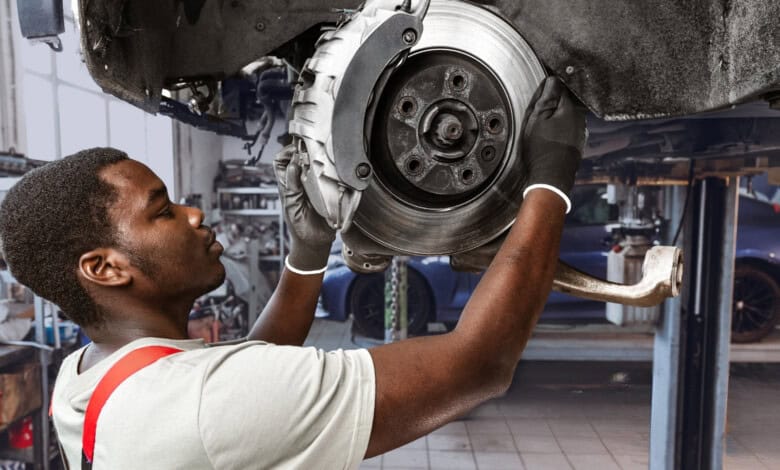
If you’re burying your head in the sand about strange noises coming from your brakes, it’s time to face reality.
Your brakes are on the way out or about to fail completely.
The Tyre, Equipment, and Parts Association (TEPA), an affiliate of the Retail Motor Industry Organisation (RMI), warns that ignoring a small braking issue is not only dangerous, but will also be more expensive to fix the longer you leave it.
TEPA national vice chairman, Dylan Petzer, said brakes give you warnings.
Petzer said, unlike a fan belt that just snaps or a battery that just dies, brakes almost always tell you they’re unhappy long before they fail.
“They squeal, grind, shudder and feel funny. Do them a favour and listen,” said Petzer.
He said any change in pedal-feel – specifically spongy, soft or a pedal that sinks to the floor – needs urgent attention.
“This is, in my opinion, the most dangerous warning sign of all,” he said.
He said a grinding brake will still stop you, and a spongy pedal is a sign of impending total failure.
“As we covered in Part 1, your brakes work on hydraulic pressure (pushing a liquid). A soft, spongy pedal means there is air in the brake lines,” said Petzer.
He said this could be from old, boiled fluid (that’s turned to steam) or a fluid leak somewhere in the system.
“Air compresses; liquid doesn’t. When you push the brake pedal, you’re just squishing a bubble of air instead of pushing the brake pads against the disc.”
One more hard stop or one more bubble, and that pedal will go straight to the floor with zero stopping power.
“This is a sign to drive slowly to a fitment centre NOW – not later!”
Petzer warns ignorance is financial doom when it comes to brakes.
Here are some dreaded scenarios when ignorance is bliss …
– You hear squealing (wear indicator): You need new brake pads, however, delaying could double or even quadruple your expenses if other components become damaged.
– You ignore grinding noises (metal on metal): You’ve now destroyed your brake rotors and will be facing costs that could be 100–300% higher than just changing the pads alone.
-You keep ignoring the noises: The extreme heat from the grinding metal can damage the brake calliper. You might also panic-stop, warp the new components or worse, have an accident. Continued neglect can even risk severe damage or accidents, with costs rising many times over or resulting in a total write-off.
What your brakes are really trying to tell you:
– Squealing is usually the first warning. It’s a high-pitched, metallic ‘squeeeee’ sound that often happens when you first apply the brakes. This is the wear indicator – a tiny piece of metal designed to screech against the rotor when your brake pads are getting thin. This is your brakes begging for some TLC.
– Grinding is the sound of metal-on-metal. This means your brake pads are completely gone! The metal backing plate of the pad is now grinding directly against your metal brake rotor. This is your car screaming, “Stop! You are destroying me and your ability to brake”.
– Shaking (shuddering) is a vibration you feel through the steering wheel or the brake pedal. It means your brake rotors are no longer flat; they are warped, usually from being overheated. Because the surface is uneven, the pads ‘grab and slip’ rapidly, causing that judder. It’s your car saying, “I’m compromised! I can’t provide smooth, predictable stopping power anymore”.
If you experience any of these, get your brakes checked immediately.
“The festive season is around the corner, so there’s no time to waste in getting your vehicle holiday-ready too,” said Petzer.
“Ensure your brakes won’t let you down by having them thoroughly assessed for a long trip at an accredited fitment centre, especially if you’ve heard unusual noises.
“If your vehicle has ABS, ensure it is functioning correctly as it helps maintain control during sudden stops. Also check the handbrake to prevent unexpected rolling when parked on inclines,” he added.
“For total peace of mind, other pre-holiday checks must include the battery, tyres, windscreen wipers, all fluids, windscreen chips or cracks and all lights. Pack an emergency kit that includes items like a first aid kit, torch, extra batteries, blanket, water, non-perishable snacks and basic tools.”
Having an emergency kit can help you handle unexpected situations and keep you safe until help arrives.
Do you have more information about the story?
Please send us an email to bennittb@rekord.co.za or phone us on 083 625 4114.
For free breaking and community news, visit Rekord’s websites: Rekord East
For more news and interesting articles, like Rekord on Facebook, follow us on Twitter or Instagram or TikTok.