Here is when you will see August’s full moon and lunar eclipse
The August Full Moon and a spectacular partial lunar eclipse will light up South African skies later this month.
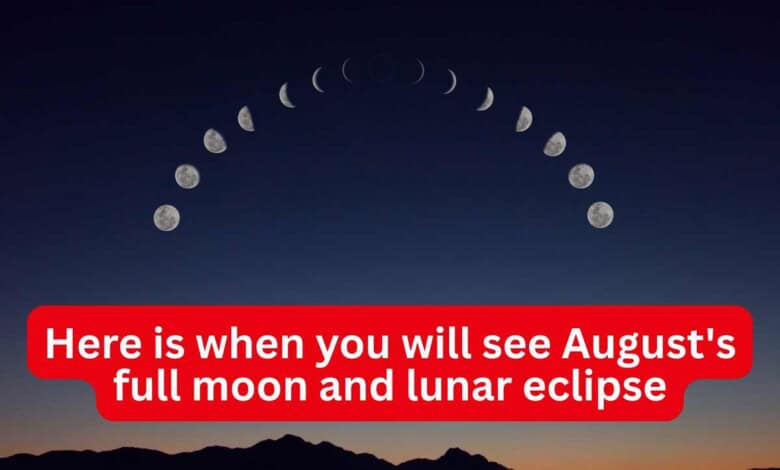
Stargazers across South Africa are in for a spectacular celestial display later this month as the August Full Moon coincides with a dramatic partial lunar eclipse, offering one of the year’s best opportunities to witness a remarkable astronomical event.
According to the astronomical website Time and Date, the Sturgeon Moon will reach its full phase during the early hours of Friday, August 28, while the lunar eclipse unfolds during the same morning. Weather permitting, the event will be visible across South Africa.
Unlike a solar eclipse, a lunar eclipse is completely safe to view with the naked eye and requires no special equipment.
It said the eclipse will begin when the Moon enters Earth’s outer shadow at around 03:23 SAST. The more noticeable partial eclipse begins at approximately 05:10 SAST, reaching its maximum at around 06:12 SAST.
At its peak, around 93% of the Moon’s diameter will be covered by Earth’s dark shadow, creating the appearance of a giant bite taken out of the Full Moon. Depending on atmospheric conditions, the eclipsed portion of the Moon may also take on a reddish or copper-coloured glow.
It furthermore said the best viewing opportunity for South Africans will be before sunrise.
As the Moon sets in the western sky during the eclipse, those with an unobstructed view of the western horizon are likely to enjoy the best views before moonset.
While the August Full Moon is internationally known as the Sturgeon Moon, the Centre for Astronomical Heritage (CfAH) has given it a uniquely South African name – the Peace Moon. According to the CfAH, the first Full Moon of August symbolises resilience and serves as a reminder that violence is unacceptable, encouraging South Africans to celebrate peace and unity under one shared sky.
According to astronomy publication Sky & Telescope, lunar eclipses occur when Earth passes directly between the Sun and the Moon, causing Earth’s shadow to fall across the lunar surface. The deeper the Moon moves into the shadow, the more dramatic the eclipse appears.
With a brilliant Full Moon and one of the year’s most impressive lunar eclipses occurring together, the early hours of August 28 promise to deliver one of 2026’s standout astronomical events for photographers, amateur astronomers and anyone who enjoys looking up at the night sky.
Also read: Electrocuted at Planet Fitness: Pretoria man finally discharged after month in hospital
Do you have more information about the story?
Please send us an email to bennittb@rekord.co.za or phone us on 083 625 4114.
For free breaking and community news, visit Rekord’s websites: Rekord East
For more news and interesting articles, like Rekord on Facebook, follow us on Twitter or Instagram or TikTok or WhatsApp Channel.