Contaminated water in Bronkhorstspruit causes over 400 illnesses
More than 400 people have fallen ill in Tshwane following a chlorination breakdown at the local water treatment facility, prompting a political dispute over municipal management.
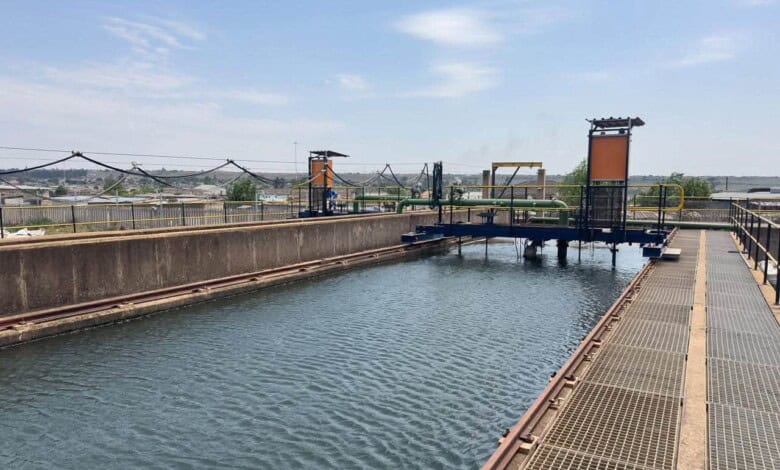
Bronkhorstspruit residents were warned of tap water after pathogens caused illness in water supplied by the Bronkhorstspruit Water Treatment Works (BWTW) caused widespread illness.
More than 400 people, mostly children under four years old, have fallen ill in Bronkhorstspruit after drinking tap water contaminated due to a breakdown in chlorination at the local treatment plant.
According to a statement from Water and Sanitation Minister Pemmy Majodina, departmental investigations found that water from the BWTW was not chlorinated between September 24 and October 14 after the city experienced issues with its chlorine supplier.
No deaths have been reported to date, and most patients have been rehydrated and discharged within a day.
In a joint statement released on the evening of Monday, October 19, Majodina said laboratory test results of stool specimens from infected patients by the National Institute for Communicable Diseases (NICD), coupled with test results of water emanating from the facility, indicated that the illness was caused by contaminated water.
She said the plant abstracts water from the Bronkhorstspruit River, which is significantly contaminated with sewage pollution from upstream dysfunctional wastewater treatment works under Victor Khanye Local Municipality as well as from dysfunctional Tshwane sewage pump stations.
Majodina said no cholera bacteria were found in the sampled stools; however, NICD tests detected norovirus, Campylobacter and Shige in three of four specimens analysed, together with other pathogens that cause stomach cramps and diarrhoea.
“The findings of mixed pathogens in the samples and the rapid spread pointed to a common water supply being the likely source of illness.”
She added that this was corroborated by water quality tests conducted by the department on October 14, which found extremely high levels of Escherichia coli and other bacteria in water supplied from the facility and in the Ekandustria and Zithobeni reservoirs.
Majodina said further tests are currently being conducted to confirm whether any other harmful contaminants are present in the water, while further specimens are being collected by the NICD to strengthen epidemiological evidence and determine whether a formal outbreak declaration is required.
Subsequent departmental investigations found that Tshwane experienced difficulties with its chlorine supplier, resulting in water emanating from the plant remaining unchlorinated for nearly three weeks.
She criticised Tshwane for allegedly failing to warn residents that water supplied from BWTW had not been chlorinated and therefore should not be consumed or used for cooking, washing or bathing, even after boiling, as required by the 2025 Compulsory Standards for Water Services issued under the Water Services Act.
She said as part of the department’s regulatory function, necessary accountability steps have been initiated against those responsible for the water pollution and for adherence to norms and standards governing provision of water and sanitation.
The BWTW was closed on October 14, and the chlorine supply was restored on October 15, while the plant reopened on October 16.
However, Tshwane warned residents that the water was not yet suitable for drinking and has been distributing safe drinking water using water tankers.
Both the department and Tshwane conduct onoging tests on the water tankers to ensure the water supplied is safe and drinkable.
Democratic Alliance (DA) raises cholera risk
Brink claimed the DA received whistleblower information that tests at BWTW detected cholera bacteria in water samples, warning that, if confirmed, residents must be informed immediately.
Brink said this was an extremely serious development in the unfolding crisis in Bronkhorstspruit, which has already resulted in more than 160 people being hospitalised.
According to the mayoral candidate, the DA revealed that the city allegedly failed to chlorinate water at the BWTW for three weeks before the outbreak.
“We warned Mayor Nasiphi Moya and her ANC-ActionSA coalition; she cannot plead ignorance to this.”
Brink believes this crisis exposes the consequences of an administration that prioritised water tankers over fixing infrastructure.
Brink alleged that during the 2024/25 financial year, the ANC-ActionSA coalition spent R777m on water tankers, compared to just R181m on repairs and maintenance of water infrastructure.
“The ANC and ActionSA have sold Tshwane to the water tanker mafia, and residents are paying the price,” he alleged.
Tshwane Mayor disputes cholera claims
Tshwane Mayor Dr Nasiphi Moya acknowledged the failure at BWTW and rejected claims by DA Tshwane mayoral candidate Cilliers Brink that the water from BWTW contains cholera.
“I am deeply disappointed by the continued attempts by former executive mayor Cilliers Brink to exploit the water crisis in Bronkhorstspruit for political advantage, including through misleading claims about cholera and the recycling of allegations about the city’s expenditure on water tankers that have already been publicly addressed.”
Moya claimed that at a time when residents are understandably concerned about their health and safety, Brink has chosen to amplify fears of another cholera outbreak without adequately explaining the scientific findings available to date.
“Let me be absolutely clear: cholera has not been identified as the cause of the gastrointestinal illness outbreak in Bronkhorstspruit.”
She said that while a variant of Vibrio cholerae was identified in water samples, the technical information provided to the city indicates that this is not the variant associated with epidemic cholera.
According to her, Brink knows the distinction between identifying bacteria in environmental samples and establishing the cause of an outbreak.
“During the devastating Hammanskraal cholera outbreak in 2023, when he was mayor, he himself cautioned against premature conclusions and emphasised the importance of scientific investigations.”
She said it is therefore particularly irresponsible for him to create the impression that another cholera outbreak has been confirmed when the available evidence does not support that conclusion.
“Political differences should never become an excuse for creating unnecessary fear among residents.”
Moya purported that the financial record contradicts his claims of neglected infrastructure.
“Brink has attempted to portray the current administration as having neglected the BWTW in favour of water tanker contractors.”
She said the city’s approved budgets show that refurbishing the plant is a longstanding project, but also that funding has increased substantially under the current administration.
“During Brink’s mayoralty, the city approved an adjusted allocation of R1.2m for the plant in 2023/24 and an initial R5m for 2024/25. Following the change of administration, the latter allocation was increased to R6m.”
In 2025/26, the city recorded approximately R20.8m in actual expenditure on the plant’s refurbishment.
The current administration has subsequently approved R57m for 2026/27, with a further R30m provided for in 2027/28.
She said this represents more than R107m in expenditure and planned investment over the three financial years from 2025/26 to 2027/28 alone.
Moya said repeating the R777m claim without acknowledging the reconciliation does not make it true.
“Approximately R180m in unpaid invoices for water tanker services incurred during the 2023/24 financial year, under Brink’s administration, had to be settled in the following financial year after the budget for these services had been exhausted.”
Moya asserted that Tshwane will continue working with the national and provincial governments, the department, and independent technical experts to address the situation in Bronkhorstspruit.
“The people of Bronkhorstspruit deserve accurate information and practical solutions, not attempts to turn a public-health emergency into an opportunity for political campaigning.”
Moya apologised to the residents of Region 7 for the municipality’s failure to resolve the water issue that has plagued the area for years.
Do you have more information about the story?
Please send us an email to bennittb@rekord.co.za or phone us on 083 625 4114.
For free breaking and community news, visit Rekord’s websites: Rekord East
For more news and interesting articles, like Rekord on Facebook, follow us on Twitter or Instagram or TikTok or WhatsApp Channel