
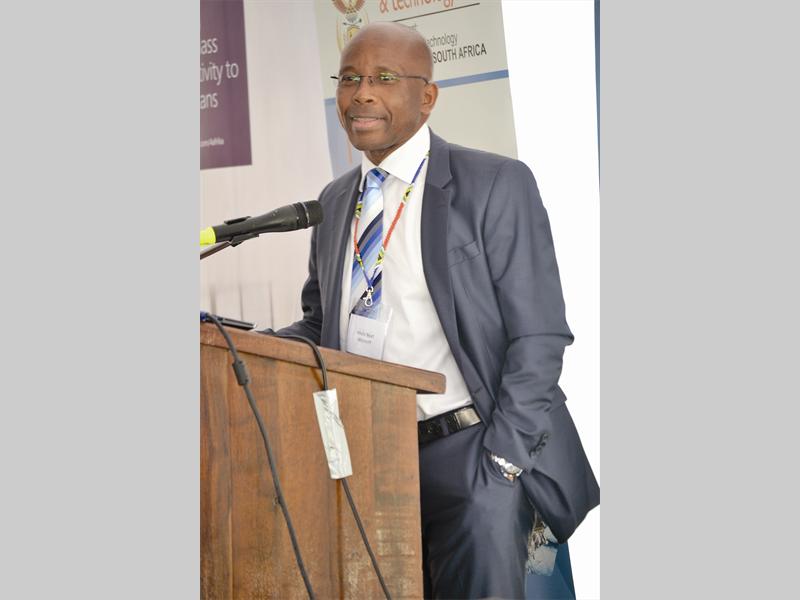
POLOKWANE – The Microsoft 4Africa initiative and partners, the Council of Scientific and Industrial Research (CSIR), DSTV and Multisource, celebrated the implementation phase of the Limpopo TV White Space (TVWS) project.
The ceremony was held last Wednesday at the University of Limpopo.
According to Mteto Nyati, managing director of Microsoft South Africa, TVWS could be an important technology for getting more South Africans online.
He said the project could only achieve its objective of enabling a quality education for all and creating opportunities for young people through technology, partnerships and programmes such as the TVWS project.
The Microsoft 4Africa initiative is a multi-year initiative that represents Microsoft’s increased commitment to Africa to explore new ways to link the growth of technology with initiatives that accelerate growth for the continent.
To do this, the initiative focuses on three critical areas: world-class skills, access to technology, and innovation.
The TVWS project is run in conjunction with the University of Limpopo’s Council for Scientific and Industrial Research, and local network builder Multisource.
White spaces are unused frequencies for television broadcasters to deliver wireless internet services over ranges of up to 5,4km.
According to Nyati, the Limpopo project would use TV white spaces and solar-powered base stations to provide wireless broadband access to five secondary schools in remote parts of the province, using the university as a hub for a white space network deployment to also connect nearby schools.
“Reducing the cost of broadband access means millions more South Africans will get online.
“This will create new opportunities for education, healthcare, commerce and the delivery of government services across the country.”
The schools that will benefit from this project are Mountainview Secondary School, Doasho High School, Mamabudusha High School, Mphetsebe Secondary School and Ngwanalaka Secondary School.
“TV white spaces technology, when combined with other low-cost wireless technologies such as Wi-Fi, offers a substantial opportunity for businesses, consumers and governments around the world to improve the economics of broadband network deployment and service delivery,” said Paul Garnett, director of Microsoft’s technology policy group.
Ngwanalaka Secondary School learners said the TVWS project had changed their lives. They explained that they used the internet to do research and to augment their school lessons.