
Muslim community honours Prophet at Eid-ul-Adha festival
Nirvana Soccer Stadium was a hive of activity in the early hours of Monday morning when the city’s Muslim community gathered on the pitch to take part in the Eidgah Salaat, or prayer. The origin of the Eid ul-Adha festival lies with the Prophet Ibrahim, or Abraham, and the offering of his son, Ishmael. Prophet …
Nirvana Soccer Stadium was a hive of activity in the early hours of Monday morning when the city’s Muslim community gathered on the pitch to take part in the Eidgah Salaat, or prayer.
The origin of the Eid ul-Adha festival lies with the Prophet Ibrahim, or Abraham, and the offering of his son, Ishmael. Prophet Ibrahim was commanded by God to sacrifice that which was dearest to him, his son. He didn’t hesitate and set out to obey. When he told his son, his son submitted and told his father to do as God had commanded him. When he was ready to sacrifice his son, God replaced the boy with a ram. The command had been a test of faith.
Today Muslims all over the world celebrate this test and miracle by slaughtering animals on Eid ul-Adha. According to tradition the meat from the sacrificed animals should be divided into three parts. The family retains one third of the share, another third is given to relatives, friends, and neighbours, while the remaining third is given to the poor and needy.
The Hajj pilgrimage to Mecca and one of the five pillars of Islam takes place over five days; Eid ul-Adha is commemorated on the third day.
During Hajj hundreds of thousands of people converge on Mecca and perform a series of rituals. Each person circumambulates the Ka’aba seven times in an anti-clockwise direction, goes back and forth between the hills of Al-Safa and Al-Marwah, drinks from the Zamzam well, goes to the plains of Mount Arafat to glorify God, spends a night on the plain of Muzdalifa and performs symbolic stoning of the devil by throwing stones at three pillars, at the points where the Prophet Ibrahim encountered the devil trying to stop him from carrying out God’s command.
The well of Zamzam also has its roots in the life of Prophet Ibrahim. According to Islamic tradition, he was ordered by God to leave his wife Hagar and son Ishmael alone in the barren valley of Bakkah. In search of water Hagar desperately ran seven times between the two hills of Safa and Marwah but found none. Returning to Ishmael, she saw the baby kicking the ground with his heels and a fountain sprang forth. The Well of Zamzam is located within the Masjid al-Haram in Mecca, 20 m east of the Kaaba, the holiest place in Islam.
While gathering at Muzdalifa, pilgrims become as one due to the simplicity of this ritual. This is a very humbling experience as people sleep on the uneven plains beneath the open sky, without tents; there are no walls or roofs to protect them from the elements of weather. This is also where they gather the pebbles for the symbolic stoning of the devil.
During the stoning of the devil, Muslim pilgrims throw pebbles at three walls, formerly pillars, called jamar?t in the city of Mina just east of Mecca. This is a symbolic re-enactment of Prophet Ibrahim’s hajj, where he too, stoned three pillars representing the temptation to disobey God and preserve Ishmael.
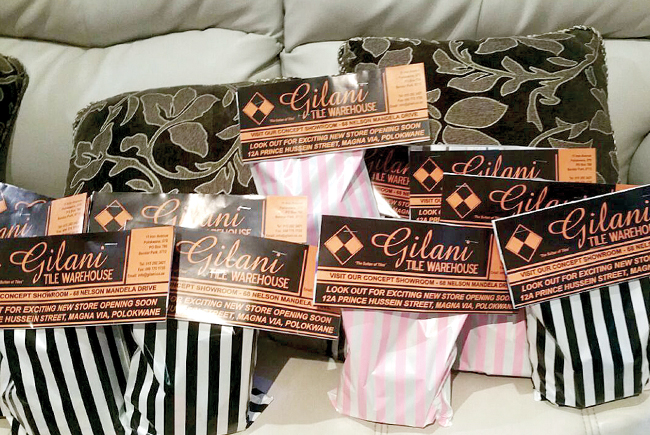
The lesson of the morning sermon in Nirvana on Monday, delivered by Sheikh el Hachmi, was that all true believers should be like Prophet Ibrahim whose willingness, trust and faith in God was inspiring. When God tests believers and they stay true, He will reward them. After the event, Gilani Tile Warehouse handed out packets of sweets to the children who attended the prayers as part of the celebrations.
Story and photos: MARKI FRANKEN
>>marki.observer@gmail.com
Featured photo: Gilani Tile Warehouse handed out packets of sweets to the children who attended the prayers.