Volkswagen renews its commitment to curb rhino poaching in SA
Volkswagen has been in partnership with the Forever Wild Rhino Protection Initiative since 2011 and in the last five years, the sponsored VW Amarok bakkies have assisted in protecting rhino’s and apprehending poachers.
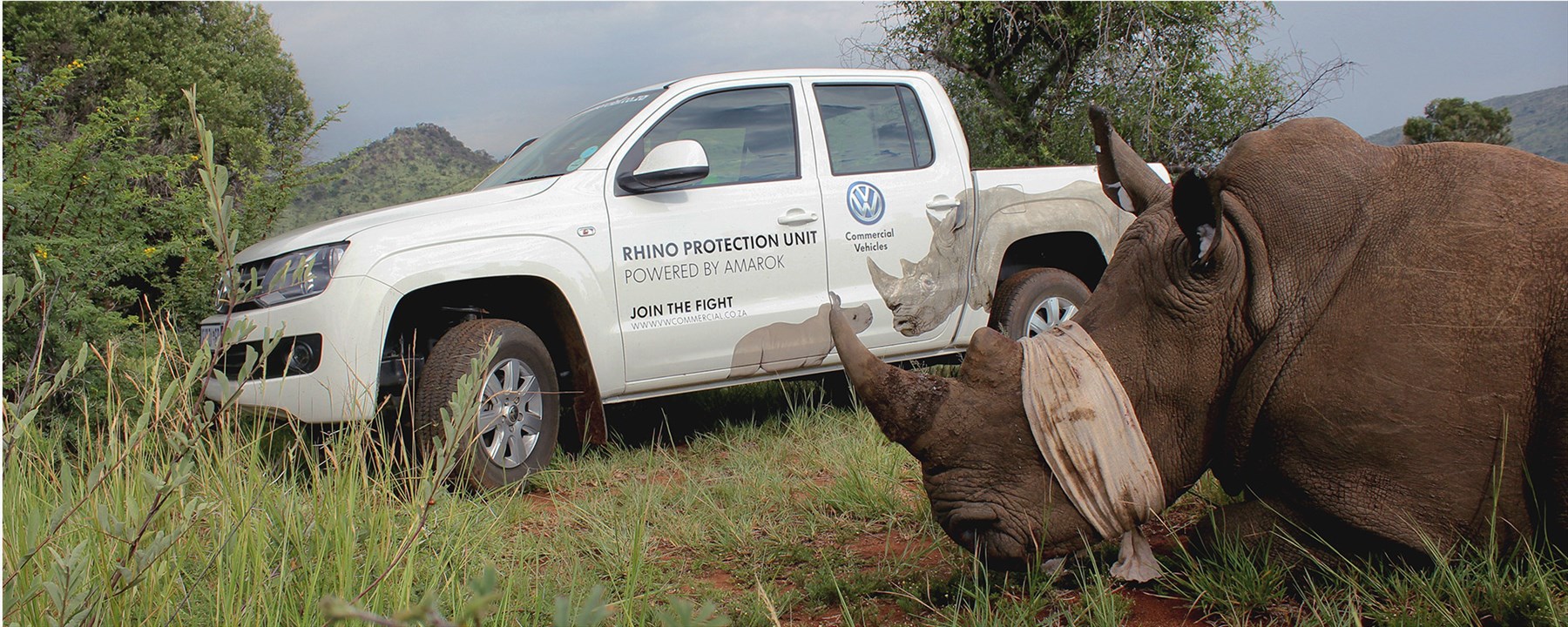
The bakkies have been used by the programme in the arrest of suspected poachers, the confiscation of firearms, the recovery of rhino horns, extended patrols in game parks around the country, rhino tracking exercises, the relocation of rhinos for safety reasons and provided support to aerial teams across the country.
Recently, Volkswagen Commercial Vehicles renewed its support of this initiative by extending their sponsorship in the form of six new Amarok double cab bakkies for another year.
The Forever Wild Rhino Protection Initiative is managed by Wilderness Foundation Africa. The six Amarok’s will be deployed for proactive rhino protection and anti-poaching activities in hot-spot areas across the country.
“The renewal of the vehicle sponsorship reaffirms our pledge to assist environmental conscious organisations that are making a difference in the sustainability of the endangered species in our country,” says Thomas Schaefer, Chairperson and Managing Director Volkswagen Group South Africa.
Volkswagen’s relationship with the Wilderness Foundation Africa dates back to 1985 when its founding member, the late Dr Ian Player, invited former managing director of Volkswagen, Peter Searle, and David Ogilvy, founding member of Ogilvy & Mather to a game reserve in KwaZulu Natal.
“The Forever Wild Rhino Protection Initiative is an extension of our long standing relationship with Volkswagen that was started by Dr Player over three decades ago,” says Andrew Muir, Chief Executive Officer of the Wilderness Foundation Africa.
The Forever Wild Rhino Protection Initiative is concerned with maintaining populations of free-ranging rhino within state and privately managed conservation areas. It supports conservation agencies and organised private game reserves to protect their rhino populations as part of functioning natural ecosystems.
The campaign also aims to focus the attention of politicians and decision makers, on applying pressure both nationally and abroad to address the issue of the illegal trade in rhino horn and other wildlife products.
“The deployment of the Amarok bakkies in hot-spot areas has immensely improved our capacity to conduct proactive operations to gather intelligence and respond speedily to rhino poaching incidents. The prominent visibility of the vehicles during patrols has helped as a deterrent in some of the areas and has resulted in the arrests of suspected poachers,” says Matthew Norval, Chief Operating Officer at Wilderness Foundation Africa.
Norval adds they are very grateful to Volkswagen for entrusting them with these vehicles.
“They are more than just anti-poaching vehicles, they are also an important component in our conservation initiatives across the country,” he concluded.