Drastic water restrictions double hit amid recession
Residents of the city were dealt another blow with the announcement that the country had entered its third recession since 1994 during the last quarter of 2019 on Tuesday. This after Polokwane Municipality’s Mayoral Committee last Thursday recommended drastic new water tariffs for consumers in the city, Seshego and Mankweng. The decision stemmed from a …
Residents of the city were dealt another blow with the announcement that the country had entered its third recession since 1994 during the last quarter of 2019 on Tuesday. This after Polokwane Municipality’s Mayoral Committee last Thursday recommended drastic new water tariffs for consumers in the city, Seshego and Mankweng. The decision stemmed from a scenario characterised by water shedding, water wastage, illegal water connections and a reluctance to pay for municipal services as well as the restrictions on bulk supply recently imposed by the Department of Water and Sanitation.
Communications and Marketing Manager of the municipality, Matshidiso Mothapo confirmed after the council meeting that although the recommendation was that the restrictions should be implemented with immediate effect, the resolutions would have to be fine-tuned before the matter is subjected to public participation and that it will only be implemented after it was promulgated.
At time of going to print on Wednesday (yesterday) morning, the final council resolution was not available as yet.
A fine of R8 000 will be applicable for any transgression of the restrictions and the proposed tariffs provides that for domestic consumption, houses and residential structures, town houses and flats and agricultural holdings, the following additional surcharges to the existing tariff per month will be applicable:
10 – 15 kilolitres: R5,00 surcharge per kilolitre
15 – 20 kilolitres: R10,00 surcharge per kilolitre
21 – 30 kilolitres: R20,00 surchage per kilolitre
More than 30 kilolitres: R40,00 surcharge per kilolitre.
For schools and tertiary institutions:
A surcharge of R5,00 per kilolitre per month for the first 500 kilolitres and thereafter R10,00 per kilolitre per month with a quota of 20 litres per day per scholar, 125 litres per hostel dweller per day and 10 kilolitres per day for sport fields.
For industrially zoned erven including business/commercial and any other business, additional to the existing tariff:
30 – 50 kilolitres: R10,00 surcharge per kilolitre
50 – 100 kilolitres: R20,00 surcharge per kilolitre. For moire than 100 kilolitres there will be a R40,00 surcharge per kilolitre.
The use of municipal water for gardening is prohibited. Only registered car wash businesses may wash cars and illegal car washers are strictly prohibited.
The watering of municipal parks and gardens that are not using boreholes, is also suspended and borehole water may also not be used for residential and industrial gardening.
On Monday, Statistics South Africa announced on its website that the country’s economy contracted by 0,8% and 1,4% during last two quarters of 2019 and that South Africa is therefore in a recession.”Transport and trade were the main drags on overall activity, according to the latest gross domestic product (GDP) figures,” the statement reads.
The indicator of a recession is a period in which there is a negative economic growth in two or more consecutive quarters. “Seven of the ten industries contracted in the fourth quarter. Finance, mining and personal services managed to keep their heads above water, but this was not enough to prevent the economy from sliding into its third recession since 1994,” Statistics South Africa stated.
Political parties and the local business sector reacted to the announcement:
Polokwane Chamber of Business
President of the chamber, Ashley Rasebotsa said load shedding and the drought had a negative impact on the economy and in particular the mining and manufacturing sectors. “Exports are down and government will have to embark on very serious infrastructure development projects to stimulate the economy. Eskom has to be stabilised as a priority,” Rasebotsa reckoned.
Democratic Alliance (DA)
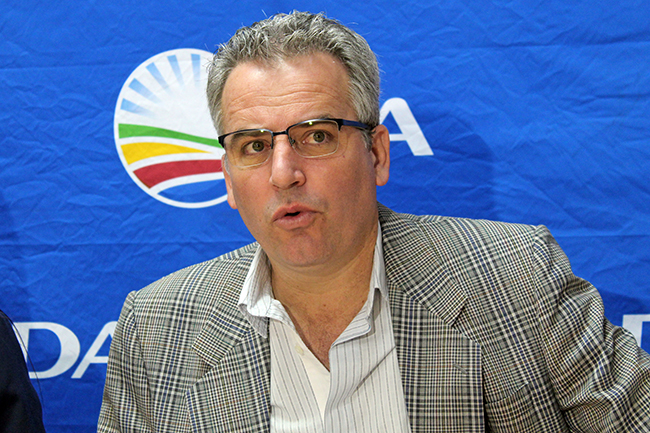
Provincial Leader Jacques Smalle reckons that in view of the recent job losses, a recession could have been expected. “Load shedding had a massive impact on the economy,” Smalle said and added that government currently spends R25 billion per month more than its income. Smalle reiterated that real investors require long- term security and even farmers are reluctant to make medium and long-term investments. “We are nearly at junk status and political insecurity about matters such as land reform and contributions to ailing state entities are rife,” Smalle said.
Freedom Front Plus (FF Plus)
FF Plus spokesperson on Finance, Wouter Wessels said that the fact that there was a contraction of the South Africa economy in the last quarter of 2019 while the National Treasury had forecasted a growth rate of 0,3% does not bode well for the upcoming financial year, particularly considering that the national budget that was announced last week is based on an expected growth rate of at least 0,9%. “If economic growth is not 0,9%, the budget deficit will be so much greater. Government will have to borrow more money to meet all its financial obligations and that will raise debt levels and financing costs even further,” he reckoned.
African National Congress (ANC)
ANC Limpopo spokesperson Donald Selamolela did not respond to messages left on his mobile phone at time of going to print.
Economic Freedom Fighters (EFF)
EFF Provincial Leader Jossey Buthane was approached for comment on Tuesday and at time of going to print on Wednesday (yesterday) his response was still being awaited.
Story: BARRY VILJOEN
>>barryv.observer@gmail.com