Making it through lockdown, from a Muslim perspective
The Quran teaches Muslims to see life’s difficult circumstances as a test, a temporary hardship that strengthens them. Such a perspective allows Muslims to show resilience in times of hardship and tribulation.
The national lockdown has an impact on the life of every individual in South Africa, not only on a social or financial level, but also in terms of religion.
For the Muslim community, the Islamic cultural, spiritual and theological dimensions offer many ways of coping with the current status quo.
One woman we spoke to, who opted to remain anonymous, says as a faith, Muslims strongly believe that victory comes with patience, relief with affliction, and that with hardship, comes ease.
“Just as we have a physical immune system, we also have a spiritual and psychological immune system. This is the ability of a Muslim to withstand and overcome these forms of a test. This is our resilience.”
On social distancing:
Muslims in general have relatively large families and maintain extended family relations. Prophet Muhammad encouraged Muslims to keep strong family ties and The Quran inspires Muslims to be generous to kin and treat the elderly with compassion.
“These teachings have resulted in Muslims either living together as large families or keeping regular weekly visits and gatherings of extended family members. Many Muslims feel conflicted about the need to apply social distancing and the need to be close to family and relatives for comfort and support.”
She explains that one of the first changes brought about by social distancing has been to the Muslim custom of shaking hands followed by hugging friends and acquaintances of the same gender.
“Visiting the sick is also considered a good deed in Islam. Such visits are, however, not possible. Checking up on those who are sick with phone calls, messages and social media is still possible and is encouraged.”
On personal hygiene:
Prophet Muhammad emphasised that cleanliness is of utmost importance, and he encouraged Muslims to wash their hands before and after eating, bath at least once a week and after marital relations, brush their teeth daily, and to groom their nails and private parts. Additionally, Muslims have to perform a ritual ablution before the five daily prayers. The ablution involves washing hands up to the elbows, including interlacing of fingers, washing the face and feet, and wiping of the hair.
On the closure of mosques and Friday services
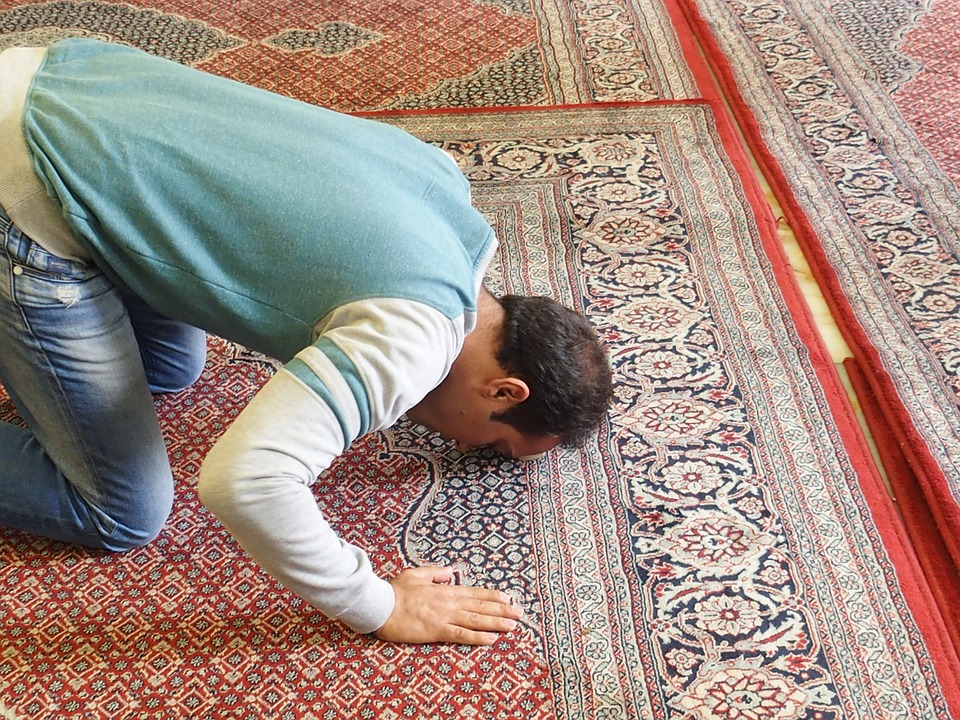
“Congregational prayers in mosques are important for Muslims in terms of instilling a sense of being in the presence of the sacred, and a sense of being with other believers. Accordingly, they line up in rows with shoulders touching. This arrangement is extremely risky during a pandemic.”
She explains that deciding to skip optional daily congregational prayers was perhaps the least difficult, but they experienced halting the Friday prayers as more challenging. Friday prayer is the only Muslim prayer that has to be performed in a mosque.
“Stopping Friday prayers on a global scale has not occurred since it was introduced by Prophet Muhammad in 622. The closure of mosques does not mean they stop daily prayers altogether. In Islam, individual prayers and worship play a greater role than communal ones. Muslims can pray five times a day wherever they are.”
The void left by the temporary ending of Friday sermons in mosques has been filled to some extent by Friday sermons offered online. The men now have to pray their compulsory five prayers at home, while for the women it has always been a practice to pray at home.
Effect on Ramadan and the annual pilgrimage to Mecca
Two of the five pillars of the Islamic practice are the fasting in Ramadan and the annual pilgrimage to Mecca. Ramadan is now two weeks away and lasts for a month. During this time, Muslims refrain from eating, drinking and marital relations, from dawn to sunset. This will however, not be affected by the lockdown.
“The evening breaking of fast dinners, called iftar, and daily evening congregational prayers, called tarawih are affected. Muslims generally invite their friends and family members to these dinners. Iftar dinners have already been cancelled. Eid, the three-day end of Ramadan festive celebrations will also be limited to the family that lives together.”
She explains the impact on their annual pilgrimage is far greater.
“Hajj, the main pilgrimage, takes place in late July. Though there is a possibility of the virus-spread slowing down by then, a pilgrimage involving more than two million people would certainly flame the virus into a second wave. Saudi Arabia is likely to cancel the main pilgrimage. This is the first time in pilgrimage may be called off due to a pandemic.”
She continues by explaining, the Quran teaches Muslims to see life’s difficult circumstances as a test, a temporary hardship that strengthens them. Such a perspective allows Muslims to show resilience in times of hardship and tribulation, with sufficient strength to make it to the other side intact.
“I’m extremely proud of our Muslim community as they have been disciplined and respect the rules of the lockdown without any reservation.”
* Notice: Coronavirus reporting at Caxton Local Media aims to combat fake news
Dear reader,
As your local news provider, we have the duty of keeping you factually informed on Covid-19 developments. As you may have noticed, mis- and disinformation (also known as “fake news”) is circulating online. Caxton Local Media is determined to filter through the masses of information doing the rounds and to separate truth from untruth in order to keep you adequately informed. Local newsrooms follow a strict pre-publication fact-checking protocol. A national task team has been established to assist in bringing you credible news reports on Covid-19.
Readers with any comments or queries may contact National Group Editor Irma Green (irma@caxton.co.za) or Legal Adviser Helene Eloff (helene@caxton.co.za).