
LNW: ‘Water situation in Polokwane will improve in due course’
Lepelle Northern Water says if the Ebenezer and Olifantspoort schemes function without interruption, the water situation in Polokwane will improve in due course.
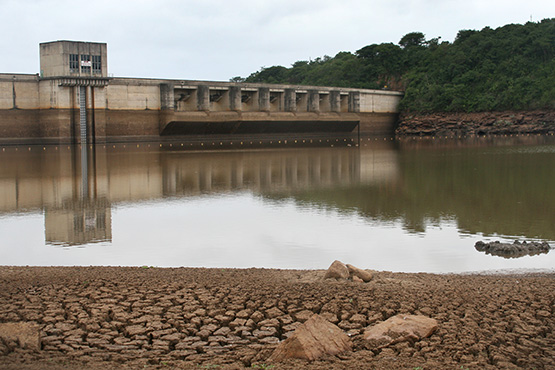
The province is currently in the midst of its rainy season and dam levels have improved in recent weeks, however, water supply to the city remains a problem.
Observer recently published a story; Empty taps: Residents want answers, in which the Polokwane Municipality puts the blame squarely on the shoulders of Lepelle Northern Water (LNW) as the bulk supplier, and Eskom and Tzaneen Municipality as suppliers of electricity to the extraction points and pump stations.
LNW Marketer/Media Liaison Officer, Yolande Nel responded by saying that the challenges in delivering bulk water to the Polokwane Municipality are complex, but still being addressed head-on to enable LNW in conjunction with Polokwane Municipality to deliver an excellent service to its stakeholders, and the communities it serves.
In the two weeks that have gone by, the situation remains the same: Bulk water supply is a problem.
Following multiple media enquiries, LNW’s communications officer, Simon Mpamonyane, gave clarity on the provision of bulk water supply:
Background
Lepelle Northern Water (LNW) is the bulk water service provider for Polokwane Municipality, which occurs via two bulk schemes; Ebenezer and Olifantspoort.
Challenges at the Ebenezer scheme
“LNW is currently unable to supply adequate bulk water to Polokwane Municipality due to operational challenges. LNW has taken the municipality in its confidence in dealing with the situation, to resolve the challenges and reaching lasting solutions to the benefit of residents and consumers,” Mpamonyane said.
He noted that LNW has a contractual responsibly of supplying 32Ml/day from Ebenezer Dam, which was at 12% recently.
“An abstraction restriction of 20% was put on LNW with the aim of sustaining the dam levels until the rainy period. After the recent rains, dam levels increased and LNW requested the Department of Human Settlements, Water and Sanitation to set aside the restriction, to which a response is still awaited. After heavy rains, LNW faced operational challenges at the plant, which could not handle the high turbidity levels, resulting in less water being abstracted from the dam,” Mpamonyane added.
He said the condition contributed to less water being released to the supply areas, including reservoirs for Polokwane Municipality.
“LNW embarked on the process of backwashing sand filters to improve its effectiveness. The plant has 10 sand filters which get backwashed four times daily under normal circumstances, but in this crisis period, they are backwashed eight to 10 times per day. The process is proving to be successful since more water can be purified and be pushed towards Polokwane reservoirs,” he explained.
Mpamonyane said LNW has employed the use of four high lift pumps as reservoirs levels are expected to pick up soon.
Challenges at the Olifantspoort scheme
The scheme supplies water to water services authorities such as the Capricorn and Sekhukhune district municipalities, which supply water to the Lepelle Nkumpi, Greater Tubatse and Fetakgomo local municipalities.
“The capacity of the plant is 60Ml/day and the allocation to Polokwane Municipality is 27Ml/day. Olifantspoort is currently functioning well and pumping more water to Polokwane reservoirs than the determined allocation,” Mpamonyane explained.
He said that it has to be noted that should both schemes function without interruption, the water situation in Polokwane will improve in due course.
“LNW is doing everything in its power to get the schemes back to full operation status to turn the situation around. The challenges experienced at Ebenezer scheme have not happened before and took the organisation by surprise. LNW regrets finding itself in this situation and is doing everything to get out of this dire situation,” Mpamonyane concluded.
Observer spoke to the municipality’s Communications and Marketing Manager, Matshidiso Mothapo, who said there has been a gradual improvement in the reservoir levels since the implementation of LNW’s measures.
“Most areas have been restored. The reservoirs were at 0% the past week as a result of challenges experienced at Ebenezer. The reservoir levels are, however, still in the red zone and we encourage all stakeholders to continue using water sparingly in order for the reservoirs to stabilise,” Mothapo noted.
Reservoir levels for the past two days:
15 February at 18:40
- Ext 34 (Ivydale): 80%
- Potgieter: 6%
- 50Ml Krugersburg: 20%
- 30Ml D Krugersburg: 9%
- 30MI F Krugersburg: 5%
- Olifantspoort: 263l/s
- Ebenezer: 66l/s
- Seshego: 9%
- Seshego: 84l/s
16 February at 08:23
- Ext 34 (Ivydale): 80%
- Potgieter: 2%
- 50Ml Krugersburg: 18%
- 30Ml D Krugersburg: 8%
- 30MI F Krugersburg: 8%
- Olifantspoort: 92/s
- Ebenezer: 170l/s
- Seshego: 6%
- Seshego: 84l/s