All connected, ears are the doorway to your brain
Hearing loss can happen due to various reasons. Review spoke to Candice McConney at the Ear Institute Polokwane about the different parts of the ear and hearing.

POLOKWANE – Hearing is one of the most important senses. Hearing loss can happen due to various reasons. Review spoke to Candice McConney at the Ear Institute Polokwane about the different parts of the ear and hearing.
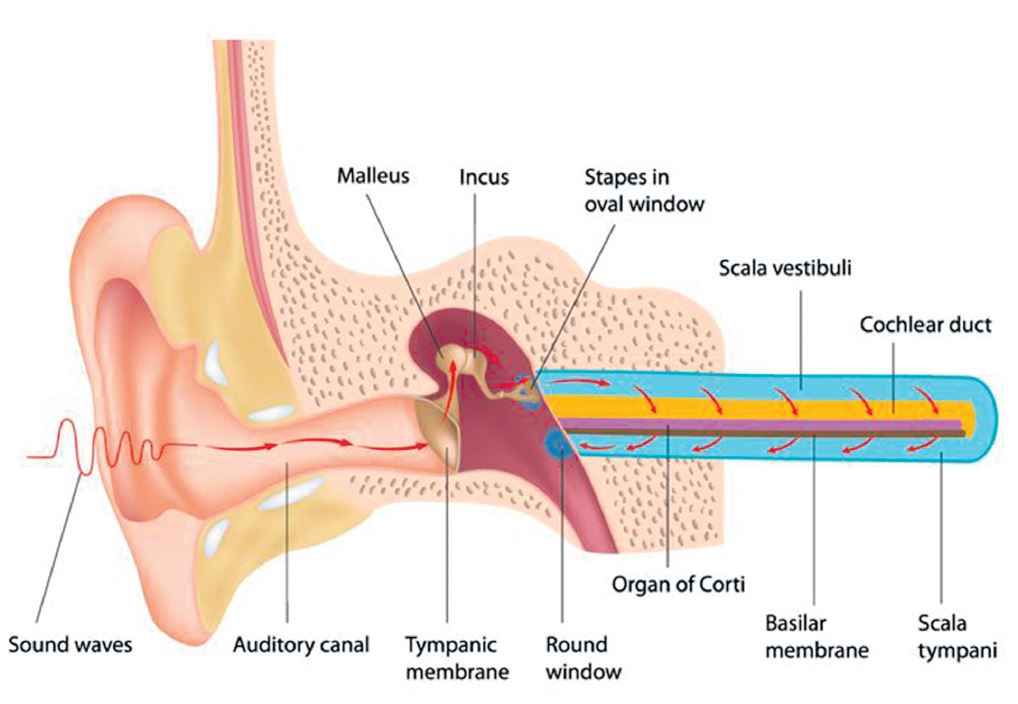
“When we hear, the sound waves travel into our ears until they reach the eardrum. The eardrum then passes the vibrations through the middle ear bones into the inner ear. The inner ear is shaped like a snail and is called the cochlea. There are thousands of tiny hair cells inside the cochlea. These hair cells change the vibrations into electrical signals that are sent to the brain via the hearing nerve. Every time you listen to loud music through your headphones or have to hear loud noises the hairs go down and it takes a while for it to stand up again. Later on the hair will not stand up anymore.”
She explains how just after birth a test, the otoacoustic emission test, is conducted to rule out all hearing problems. If the baby passes the test it means all the hair is standing up, if he fails, the hair is damaged and your baby may have hearing loss.
“It is important to wear hearing protection for loud noises around you. When you are shooting or working with industrial equipment, protect your ears. If you have a hearing loss, do something.
“The sooner you treat it the better. A symptom of hearing loss is tinnitus which is the perception of a ringing sound in your ear.”
EXTRA FACTS
• Children born with a shorter eustachian tube which is the canal that connects the middle ear to the nasopharynx, which consists of the upper throat and the back of the nasal cavity, are at higher risk of having middle ear infection.
• Impulses move along the nerve to the brain.
• If there is a sound at your right-hand side, your left ear will pick it up.
• Sometimes you will not know you have a hearing loss as you adapt to your environment.
• If a child is not articulating his words well or certain sounds, he might be unable to hear.
• If there is no early intervention, the child may suffer from poor school performance, low self-esteem and speech problems.
Outer ear:
Audiologists use an outo-scope that is like a torch see if there are any obstructions in the outer ear. If they cannot see the eardrum, they are not quite sure what they are dealing with.
An earbud pushes ear wax back into the ear. If there is an obstruction it can be easily removed in the consulting room.
The eardrum is thinner than paper and is between the outer ear and the middle ear.
Middle ear:
If there are no problems in the outer ear the middle ear needs to be tested. Audiologists do a Tympanometry test that measures the movement of the eardrum. If it is unable to move or stiff, there might be a problem. This is also temporary and can be manipulated.
Hearing loss can also occur when there is fluid behind the eardrum. If it goes untreated, the eardrum can burst.
With a Tympanometry test audiologist do not always pick up if there is a problem with the three bones in the middle ear.
Inner ear:
If audiologist suspect the problem is in the inner ear, they will conduct a hearing test.
Hearing aids:
A person can live a normal live with a hearing aid.
They are not supposed to get wet, and there are hearing aid dryer kits available.