IEC launches Limpopo Road to 2026 Local Government Election
Stakeholders gathered in Limpopo as the electoral body outlined key milestones on the road to election day.
POLOKWANE – From today (Thursday) until November 4 when South Africans head to the polls for the 2026 Local Government Election, the Independent Electoral Commission (IEC) in Limpopo has officially set the wheels in motion.
Stakeholders briefed on election roadmap
Stakeholders gathered at The Ranch Resort on Thursday for the launch of the province’s election programme, a moment marked by both anticipation and frank discussions about the work that still lies ahead.
Government officials, community leaders and political party representatives attended the event as the IEC outlined the roadmap for the coming months.
The focus now shifts to voter registration weekends scheduled for June 20-22 and August 1–2, followed by special voting on November 2–3 and the official election day on November 4.
Election theme unveiled
This year’s election theme, unveiled by provincial manager Nkaro Mateta, is: ‘Get Up, Show Up, Vote’.
Readiness and operational updates
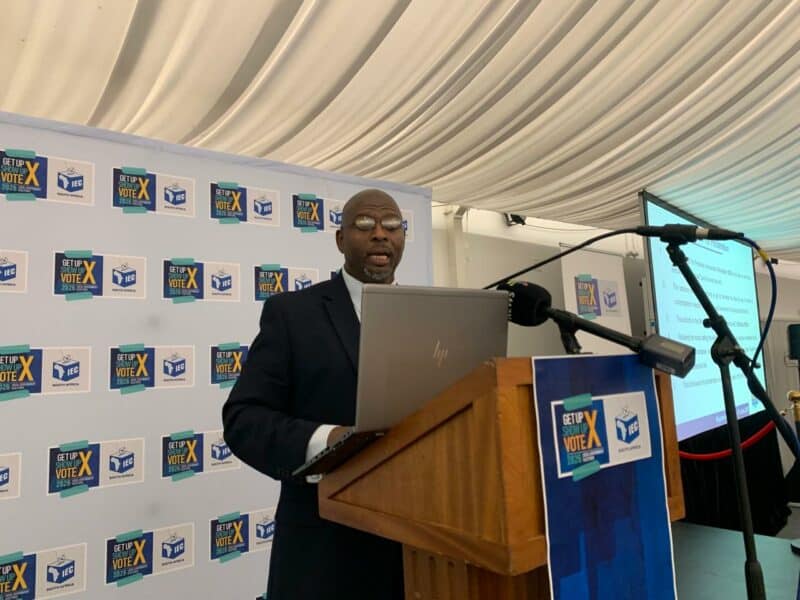
Electoral operations manager Itumeleng Seanego provided an update on the IEC’s state of readiness.
He spoke about election infrastructure and the often-contentious process of nominating councillor candidates, an issue that has stirred tensions in several Limpopo communities and, at times, threatened the quality of democratic participation.
Voting station infrastructure challenges
In the Polokwane area alone, the IEC has identified hundreds of voting stations, including 21 churches, one community hall, 239 schools and 35 other venues. A task team of service providers is already working to ensure these facilities have the basic services required for both special voting and election day, including electricity and water.
Challenges do, however, remain.
Seanego revealed that 18 voting stations still have no electricity, 14 lack toilet facilities, 21 have no water supply, 38 have no network signal, 96 are not adequately accessible to people living with disabilities, particularly wheelchair users, and six can only be reached via inaccessible roads.
Addressing these shortcomings, he said, is essential to ensuring a smooth and inclusive voting process.
IEC on neutrality and credibility
Seanego also responded to concerns raised by residents about alleged manipulation of councillor nomination processes in some communities. He said the commission had received numerous calls from residents asking it to intervene, but he stressed that the IEC cannot interfere in partisan political matters.
“Our role is to administer elections fairly and impartially, not to settle political or community disputes.”
IEC commissioner Glen Mashinini said the commission remains committed to its constitutional mandate of being independent and non-partisan, creating space for political parties and citizens to participate on equal terms. He acknowledged that IEC officials are citizens with their own personal views, but said rigorous training and preparation ensure that personal beliefs do not influence the electoral process.
“We commit to continuous improvement, to prioritising the voter, and to demanding professionalism from temporary election staff, permanent staff and service providers,” Mashinini said.
“The journey to November 4 has started, and the IEC says its eyes are fixed on one thing which is to deliver a credible and inclusive election.”