AG sums up 2020/21 success stories and failures
The province's overall outcomes regressed from the previous year, after showing a significant improvement.
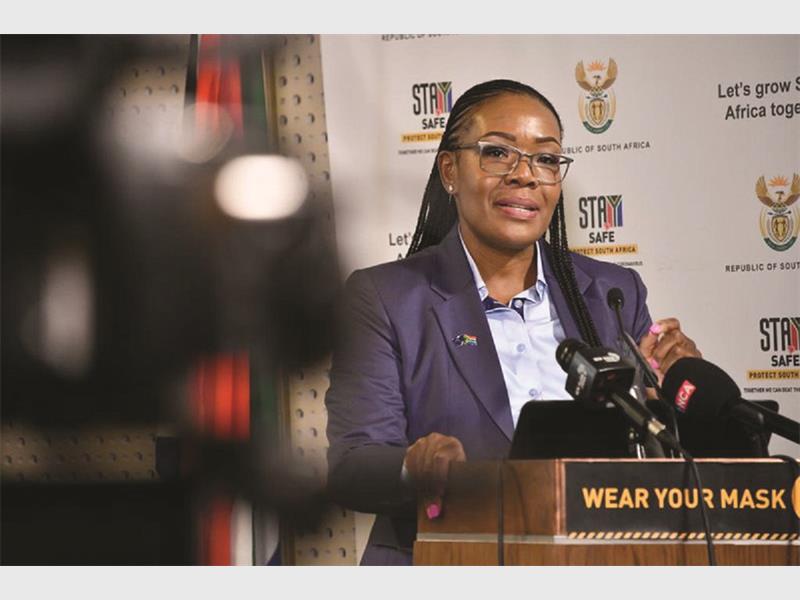
POLOKWANE – The Auditor General’s 2020/21 report on provincial audit outcomes, released on December 8, has shown a regression in the audit outcomes of the Provincial Legislature, the Limpopo Economic Development Agency (Leda), the Department of Health and the Gateway Airport Authority.
The Department of Health declared unpaid claims in the 2020/21 year-end that exceeds its entire operational budget for the next financial year – like six other provincial Health departments. This is but one of the shocking findings of the Auditor-General in its audit findings of the provincial departments and government entities.
The audit report reflects the outcomes of 19 auditees in the province, 12 departments, the provincial legislature and seven public entities. The outcomes of 12 small public entities were excluded. These 19 auditees obtained five clean audits, ten unqualified audits, three qualified audits and one disclaimer. The AG commended the Provincial Treasury, which achieved a clean audit outcome for the fifth consecutive year.
According to the AG, Tsakani Maluleke, a culture of basic accounting disciplines embedded at the Provincial Treasury, the Office of the Premier, the provincial Department of Transport and Community Safety and the Limpopo Gambling Board enabled them to sustain their clean outcomes.
“We also commend the Provincial Treasury, which achieved a clean audit outcome for the fifth consecutive year. These auditees must share their best practices with other departments and entities in the province to drive improved audit outcomes.” The Department of Economic Development, Environment and Tourism improved its audit outcomes, also achieving an unqualified audit with no findings.
The Premier, Chupu Mathabatha, in his address during the Rising of the Legislature on December 9 congratulated all deserving departments and entities, but warned those departments and entities that haven’t shown improvement in their audit outcomes that it won’t be business as usual. “I want action to be taken against accounting officers who have received unqualified and qualified audits with findings year after year. If repeat findings are addressed, these auditees can achieve clean audits,” he said, adding that quality audit opinions must at all times translate into provision of quality basic services to the people.
The province’s irregular expenditure amounted to R3.,4 billion, attributed to failure to use conditional grants for their intended use (R1.73 billion) and continued widespread non-compliance with supply-chain legislation.
Risham Maharaj, MPL and DA Spokesperson for the Treasury, ascribed this blatant disregard to officials not being held accountable for their transgressions. The Department of Public Works and Infrastructure tops the list incurring R1.594 billion of irregular expenditure, Roads Agency Limpopo (RAL), accumulated R734 million, the Department of Cooperative Governance, incurred R403.8 million and the Department of Education incurred R468 million in irregular expenditure.
Unauthorised spending for the year amounted to R17 million, and fruitless and wasteful expenditure was R48 million.
Fourteen out of the 19 auditees (74%) reported material non-compliance findings.
Gateway Airport Authority Limpopo regressed from a qualified opinion to an adverse opinion. Material misstatements identified in the 2019-20 financial statements were not addressed in the 2020-21 financial year and further material misstatements were identified. An adverse opinion means that the financial statements included so many material misstatements that the AG’s office disagree with virtually all the amounts and disclosures.
“The province does not adequately implement performance management and there is no effective appraisal structure in place to timeously hold officials accountable for poor performance and intentional contravention of laws and regulations; and administrative and provincial leadership need to take decisive action to hold officials accountable and, where applicable, recover any losses from those responsible. Only by strengthening the control environment and implementing preventative controls will the province be able to prevent regressions and improve on the number of clean audits in the future,” according to Maluleke.
“The premier must pay close attention to identified material irregularities and regularly follow up on the progress made to ensure that executive authorities implement consequence management where necessary,” he remarked.