
Justice Minister exposes failures at Polokwane High Court
The Justice Minister, Mamoloko Kubayi, has called for urgent reforms after uncovering poor conditions and staff shortages in Limpopo's justice system.
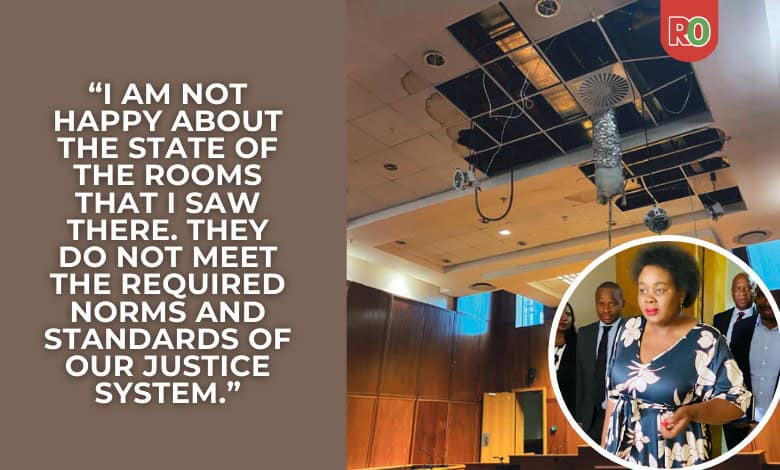
POLOKWANE – A high-level oversight visit by the Minister of Justice and Constitutional Development, Mamoloko Kubayi, exposed several pressing challenges at the Polokwane High Court and the Master’s Office, raising serious concerns about service delivery and working conditions in the city’s justice system.
The minister’s visit, part of a broader national assessment of departmental institutions, gave members of the media rare insight into the administrative hurdles hampering access to justice in the province.
Among the key issues identified were the lack of adequate infrastructure for vulnerable witnesses, staffing shortages, outdated filing systems and poor working conditions.
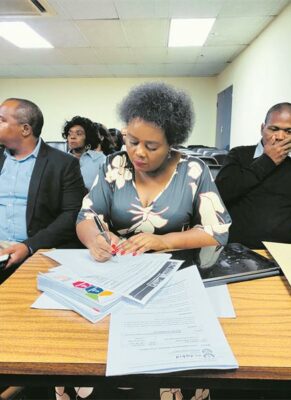
One of the most pressing concerns emerged at the children’s court, where Kubayi found the facilities lacking in both equipment and infrastructure necessary to protect minor witnesses during testimony.
This has raised alarms among child protection organisations, particularly Lentswe Laka Foundation’s Bridget Ramokone, who is currently involved in high-profile cases involving child victims of violent crimes.
“I am not happy about the state of the rooms that I saw there. They do not meet the required norms and standards of our justice system. We will have to fix it,” Kubayi said firmly.
Despite these concerns, the minister praised the family advocate’s office in Polokwane, noting its child-friendly design and focus on providing safe spaces for minors in sensitive family matters.
The minister also flagged the high number of acting or unfilled posts, which she linked to slow and ineffective service delivery.
She cited poor interpretation of public service regulations as a major obstacle in making permanent appointments.
“Misinterpretations of public service regulations that delay appointments and result in prolonged acting roles must be resolved,” she said, urging national office executives to act swiftly.
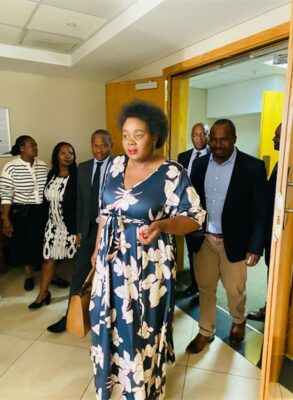
In addition, Kubayi acknowledged the risks posed by the outdated filing system, which increases the likelihood of crucial court documents being lost.
“Even a single missing document could derail an entire court case,” she warned.
At the Thohoyandou Master’s Office, staff are currently operating from a temporary structure that lacks basic ablution facilities.
While the original building is undergoing renovations, the minister described the current arrangement as an affront to worker dignity.
Similar concerns were raised about the Polokwane High Court, where irregular water supply continues to affect operations.
Kubayi held a full staff engagement session to round off her visit, during which she addressed ongoing public complaints related to operating hours, consistency in services, and internal performance management.
She reminded officials that performance tools should be used to support and grow employees, not as instruments of punishment.
With challenges laid bare and expectations made clear, Kubayi called on senior leaders to urgently address the issues within their power.
“We cannot allow these problems to persist when solutions are within reach,” she said.