Stats SA survey finds Limpopo has lowest piped water access in SA
Just over 60% of Limpopo households have piped water, the lowest in SA, as the province's access rate continues to decline over the past decade.
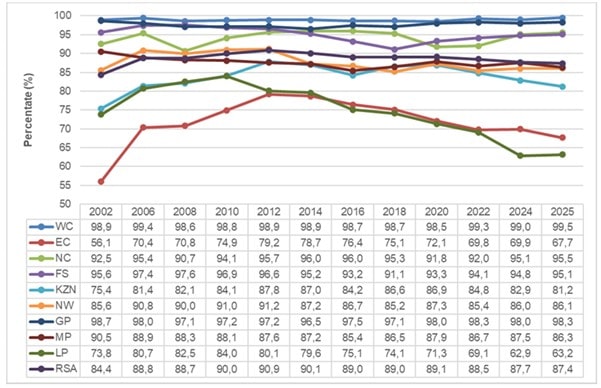
LIMPOPO – Access to piped water in Limpopo has fallen sharply over the past decade, with just 63.2% of households having access in 2025 – the lowest rate in the country – according to Statistics South Africa.
The figures, contained in Stats SA’s May 2026 release of the General Household Survey 2025, paint a grim picture of a province where reliable water access is becoming increasingly rare.
The survey measures access to tap water inside dwellings, on-site or off-site, including water accessed from a neighbour’s tap or a public or communal tap.
A decade of decline
More than a third of Limpopo households do not have access to piped or tap water, and even those who do face frequent, prolonged interruptions .
Limpopo’s access to piped water peaked at 84% in 2010 but has since declined steadily, reaching 63.2% in 2025. Stats SA notes that this represents a drop of 10.6 percentage points since 2002, even though the absolute number of households with access has increased as the population has grown.
One of the worst provinces for interruptions
The problem is not just about access, with reliability being just as concerning a factor.
According to the same survey, Limpopo has the second highest percentage of households experiencing weekly water interruptions in the country, at 25.9%, topped only by Mpumalanga at 36%.
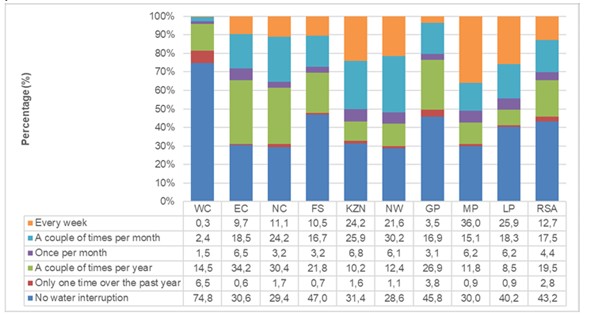
For households that do have access, the interruptions are frequent and often prolonged. When water interruptions do occur, they last for extended periods.
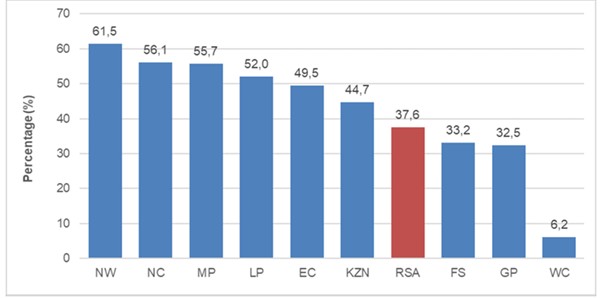
In Limpopo, 52% of households reported interruptions that lasted at least two days or longer than 15 days, the fourth-highest figure in the country.
A broken system
The figures come amid longstanding concerns about Limpopo’s water services. In 2023, the South African Human Rights Commission (SAHRC) found that most of Limpopo’s water services authorities were failing to comply with their legal obligations to provide sufficient water.
The commission’s inquiry, conducted in response to complaints from communities across the province, identified a lack of skills, poor planning, inadequate execution, and failures to spend allocated water grants among the factors contributing to the province’s water problems.
The SAHRC made 26 recommendations directed at Limpopo’s 10 water services authorities and provincial and national oversight bodies. The commission has continued monitoring the situation since the report was released, including inspections and engagements with municipalities over ongoing water challenges.
The human cost
Behind the numbers are communities that go days or weeks without water. For these communities, the statistics point to a persistent problem.
Reliable access to piped water remains significantly lower than in other provinces. With weekly interruptions affecting more than a quarter of households, the issue is not just access but trust in a system that seemingly continues to fail them.