
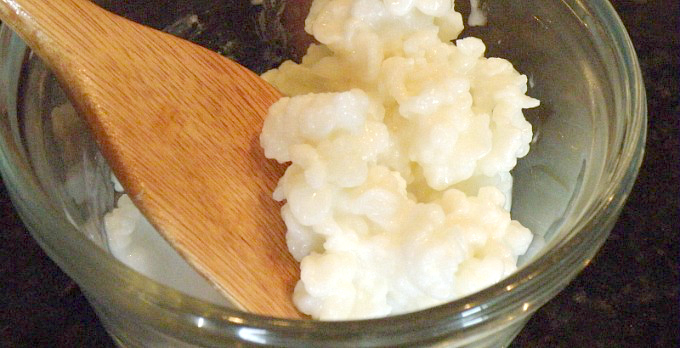
Kefir, or búlgaros, is a fermented milk drink made with kefir “grains” (a yeast/bacterial fermentation starter) and has its origins in the north Caucasus mountains. It is prepared by inoculating cow, goat, or sheep milk with kefir grains.
Remember that people with candidacies lack milk-digesting bacteria, so you may have to build up your “tolerance” of kefir. Start with about 120 ml in the morning on an empty stomach. Every second day increase the amount until you are able to drink a full 240 ml.
If you are just beginning the therapeutic version of the Body Ecology Diet by Donna Gates (available from Amazone.com), it might be best to wait three to six months before introducing kefir. You may first need to clear your body of accumulated toxins and see your symptoms disappear. Moreover, people with candidacies have what Chinese medicine calls the condition of dampness, unfermented and improperly combined dairy products can lead to even more dampness and excess mucus.
Here are some suggestions for introducing kefir, while conquering dampness.
1. Eat Body Ecology Diet foods, which are drying.
2. Use proper food combining techniques to make kefir less mucus-forming.
3. Drink plenty of water and eat grains that have been soaked before cooked. These add moisture and fibre to the colon.
4. Clean your colon. If a colon is free of blockages, kefir is tolerated more quickly. People who reported having trouble with kefir, often have not followed the advice on colon cleansing, you probably also need to add acidophilus and bifidus bacteria to your small and large intestines. These wonderful bacteria also help to clean and improve the health of your entire digestive tract.
5. Be sure to get adequate exercise as exercise stimulates the colon and improve elimination.
Time and temperature are two important factors that determine how thick and tasty your kefir will be. In the warmer months kefir may be ready to drink in 18 hours. If you let it sit out too long at room temperature, it will become thick and eventually start turning into cheese and whey. If your kefir is “lumpy” and too sour, you are definitely leaving it out too long. It should be creamy and “drinkable” a little thicker than milk. At this point, shake it well and place the kefir into your refrigerator. It will thicken a little more since it is continuing to culture, but at a much slower pace.
Making kefir is an art, not an exact science. With each batch you make, adjust the time until you get it just the way you like it.
Lizel Britz 072 243 7707.