
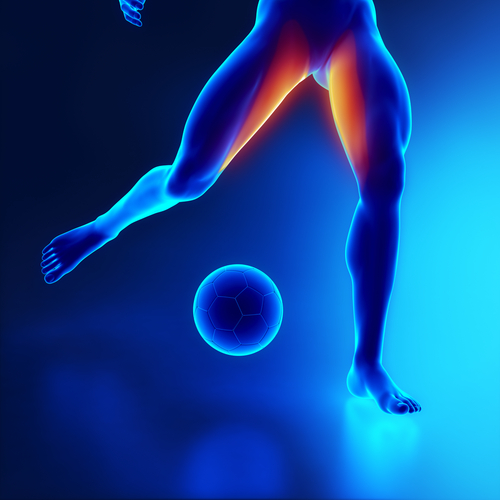
Groin strains make walking, lifting the knee, or moving the leg away from or toward the body difficult and painful. Groin strains can occur from overuse of the muscles, or from a sudden contraction of the muscles.
Injury occurs when the muscles are either too forcefully contracted or too forcefully overstretched.
A muscle strain can be graded according to the amount of muscle damage:
• Grade 1: Mild or partial stretch or a tear of a few muscle fibbers. The muscle is tender and painful but maintains its normal strength. Use of the leg is not impaired, and walking is normal.
• Grade 2: Moderate stretch, or tearing of a greater percentage of the muscle fibers. There is more tenderness and pain, noticeable loss of strength, and sometimes bruising. Use of the leg is noticeably impaired, and limping when walking is common.
• Grade 3: Severe tear of the muscle fibers, sometimes a complete muscle tear. A “popping” sound may be heard or felt when the injury occurs. Bruising is apparent, and sometimes a “dent” in the muscle may be seen under the skin at the site of the tear. Use of the leg is severely difficult, and putting weight on the leg is very painful.
When groin muscles are strained or torn, muscle fibers and other cells are disrupted. Bleeding can occur, which causes bruising. Within a few minutes to a few hours after the injury, swelling can occur, causing the injured area to expand and feel tight and stiff. Although groin strains most often occur in athletic activities such as football, soccer, and dance, they can also occur during everyday activities such as lifting heavy items, slipping while walking, or climbing stairs or ladders.
A groin strain causes sharp pain or spasms in the groin area. The pain can quickly resolve, or it can persist, developing into a throbbing pain at rest with sharp stabs of pain when you try to walk or move your leg. The muscles can feel tight or weak. Trying to lift the leg or knee, or bringing the knees together, can also cause sharp pain. These movements can feel tight or even cause the groin muscles to spasm. If the groin strain involves a Grade 3 (complete) tear, a “pop” may be felt or heard when the muscle tears at the time of injury.
With a groin strain, you may experience 1 or more of the following:
• Pain and spasms in the groin area
• Swelling in the groin area
• Bruising in the groin area
• Tightness in the groin area
• Weakness in the leg when trying to walk, climb stairs, or move the leg
• Limping when walking
• Difficulty performing daily activities that require standing and walking. More on groin strain next week.
Lizel Britz 072 243 7707