Madlanga Commission tightens focus on credibility as testimonies and cross-examinations deepen institutional scrutiny
The Madlanga Commission hearings intensified, with testimony and cross-examination revealing inconsistencies in accounts on drug investigations, inter-agency coordination, and decision-making, heightening scrutiny of credibility and accountability.
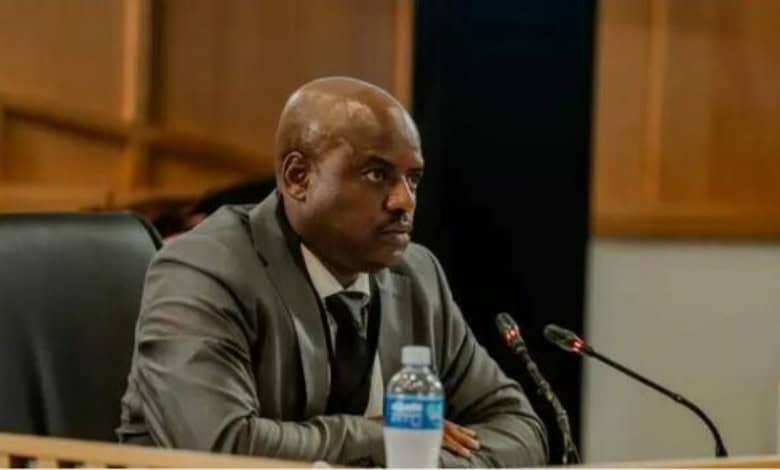
The Madlanga Commission, established by South African President Cyril Ramaphosa and chaired by Mbuyiseli Madlanga, continued its hearings from June 22 to 25 at the Brigitte Mabandla Justice College.
The week was defined less by new revelations and more by the commission’s increasingly exacting method of testing testimony through sustained cross-examination, with witnesses repeatedly challenged on contradictions between oral accounts and documentary records.
On Monday, proceedings returned to the handling of a major narcotics investigation linked to the Port Shepstone corridor, with testimony focusing on the chain of custody and operational decision-making. During cross-examination, evidence leaders pressed witnesses on discrepancies in timelines and authorisation procedures, questioning whether key decisions regarding the movement and storage of seized drugs were properly documented or retrospectively justified. The exchanges exposed gaps between procedural claims and the written record, with commissioners repeatedly seeking clarification on who bore ultimate responsibility for key operational choices.
Tuesday’s hearings introduced testimony from “Witness K”, whose evidence broadened the scope of the inquiry into alleged intersections between organised criminal networks and elements within law enforcement operations. The witness described sensitive investigative interactions and alleged awareness within institutional structures of broader criminal activity. Under cross-examination, commissioners focused heavily on consistency, pressing the witness on exact timelines, the basis for specific assertions, and whether key details were independently corroborated. The questioning reflected the commission’s increasing insistence that even serious allegations must be anchored in verifiable fact before they can be weighed as evidence.
On Wednesday, the commission heard from a former senior official with experience in enforcement operations, whose testimony revisited longstanding concerns about procedural weaknesses and institutional drift. The witness described recurring failures in documentation, inconsistent adherence to protocols and patterns of operational improvisation in high-pressure investigations. Cross-examination probed the relevance of these historical claims to current institutional practice, with commissioners asking whether systemic shortcomings had been formally addressed or simply repeated under new operational contexts.
Thursday’s proceedings focused on reconciling conflicting versions of earlier testimony, with commissioners returning to witnesses from previous sessions for further clarification. Evidence leaders confronted them with documentary exhibits that appeared to contradict earlier oral accounts, particularly regarding decision-making authority and communication between operational units. The cross-examinations were notably precise, often narrowing in on specific inconsistencies rather than broad narrative disputes, signalling the commission’s shift toward evidentiary consolidation.
The hearings demonstrated a clear procedural evolution: testimony was no longer simply received but actively deconstructed. Commissioners increasingly relied on cross-examination to test the durability of each account, measuring it against documentary records and prior statements. Witnesses who had initially provided broad operational explanations were required to account for inconsistencies under sustained questioning, with several explanations revised or qualified during the course of proceedings.
This week’s hearings reflected a commission increasingly focused on credibility as the central axis of its inquiry. Testimonies spanning narcotics investigations, institutional conduct and historical enforcement practices were subjected to detailed cross-examination, revealing not only contested facts but also the difficulty of constructing a coherent institutional narrative from fragmented and sometimes conflicting accounts.
The week underscored that the commission’s ultimate findings will depend less on the volume of testimony presented than on what survives rigorous scrutiny.