
2024 marks 30 years of media freedom, what’s next for the future?
Professor Mandla Radebe acknowledged media activists, such as Zwelakhe Sisulu and Percy Qoboza who made an impact in journalism.
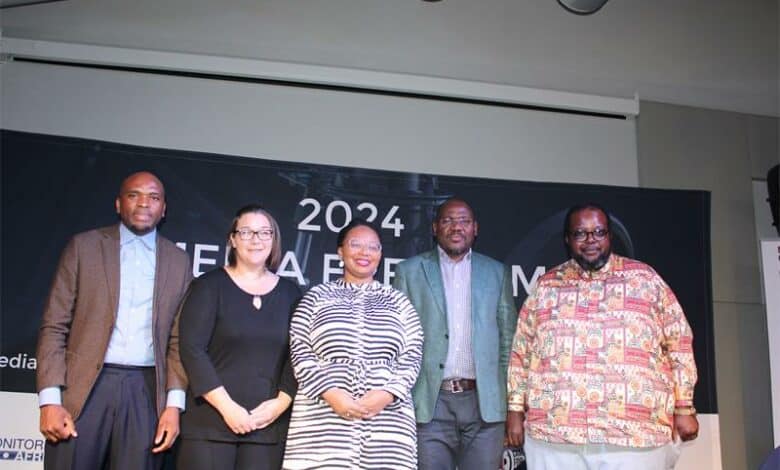
Celebrating 30 years of Media Freedom, what’s next for the future? That was the question that took centre stage at Media Monitoring’s Media Freedom Festival’s Day 3 dialogue on October 17 at the Goethe-Institut South Africa in Parkwood.
University of Johannesburg’s centre for data and digital communication associate professor and director Mandla Radebe recognised media activists who played a role in our 30-year-old media freedom.
“It is important to note that the 30-year-old media freedom we celebrate today did not come cheap. We must acknowledge the role of media activists such as Zwelakhe Sisulu, Percy Qoboza, and many who risked their lives for us to have the media freedom we have today.”
Radebe added that after 1994, the media reconfigured along liberal lines which created dichotomies within society based on the role the media must play in democracy.
Also read: Voices for change: media freedom festival champions journalistic integrity
He said, “If you look at the commercialised media and its location in society, it is caught in the realities faced daily. There are several issues that I think the media should have played a critical role in, being a voice of the people, but it did not, and what the media does, due to its location in its structures, which forces the media to play a particular role. An example is the discourse on land expropriation. The media played a critical role in dismissing the discourse as a reckless discourse, which would chase away investors and drive SA to a failed state, without locating those issues of the people who are dispossessed, landless, and marginalised.”
Chief director for policy development, analysis, and market modelling at the Government Communication and Information System (GCIS) Sandile Nene commended how far mass media has come in South Africa.
“What we appreciate as the government is that we can rely on content-distributive platforms to ensure information reaches our citizens. Without the assistance of media we would not be able to achieve the constitutional obligation around media freedom.”
Media Development and Diversity Agency’s (MDDA) acting executive manager Lethabo Dibetso concluded and said he hoped to see a community media sector that continuously strives for digitization, ensures that it broadcasts and publishes in the communities it serves, and that journalistic independence is safeguarded.
Follow us on our Facebook, X, Instagram and TikTok pages. Join our WhatsApp group for any story ideas you may have.
Related article: Spark Media encourages clients to leap into local