
Media Monitoring’s Media Freedom festival explores the legal boundaries of freedom of expression and hate speech
The festival handled the tricky topic in a game show format, with the contestants, the journalists, getting real world scenarios in which to discuss whether or not it constituted hate speech.
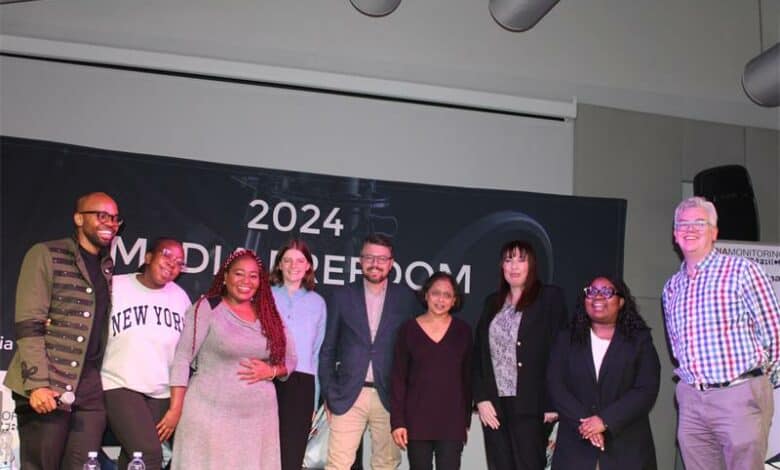
To demonstrate how tricky it is to define hate speech, Media Monitoring Africa hosted its Media Freedom Festival Day 2 third topic: Exploring the legal boundaries of freedom of expression: Rate the hate challenge, in a game show fashion on October 16 at the Goethe-Institut.
Read more: Voices for change: media freedom festival champions journalistic integrity
The setup of the game was:
• The host: A facilitator who kept conversations moving, kept track of time, and read different scenario posts.
• The judge: Advocate Ben Winks, a hate speech expert. He was also the game master whose role was to assess the response by teams, give them a score, and comment on their views.
• The teams: There were two teams, each had two journalists and a legal eagle to offer guidance and support.
The game comprised four scenarios from real examples, debates, and cases.
Winks unpacked what constituted hate speech. “We often hear people defending themselves after having said, published, drawn, or painted something that caused injury or offense by saying: ‘I have a right to free speech’. Every society for centuries imposed limits on speech, you cannot defame people, use other people’s intellectual property, or infringe on people’s privacy.”
Winks added that limits on speech were nothing new, but in South Africa, for example, the idea of limiting speech that injured people’s dignity and equality, based on who they were, are factors the law drew the line at.
Also read: Synergy Business Events hosts successful Music and Lifestyle Expo 2024 media launch
“The Constitution states that everyone has freedom of expression which should not extend to propaganda, incitement of imminent violence, and the advocacy of hatred based on race, religion, or ethnicity that constitutes incitement to cause harm.”
The advocate noted that hate speech posed a danger because it strikes not only individuals but a group’s dignity.
“In some parts of the world, it is called group defamation. Same for hate crimes, where, for example, people are killed for being gay or having albinism, which strikes fear and indignity to an entire community. That is why countries legislate against it separately from harming people’s reputations.”
Follow us on our Facebook, X, Instagram and TikTok pages. Join our WhatsApp group for any story ideas you may have.
Related article: Spark Media encourages clients to leap into local