
Know your ward and what councillors do
Residents often turn to their local representative first, but understanding where civic authority ends is key to effective community action.
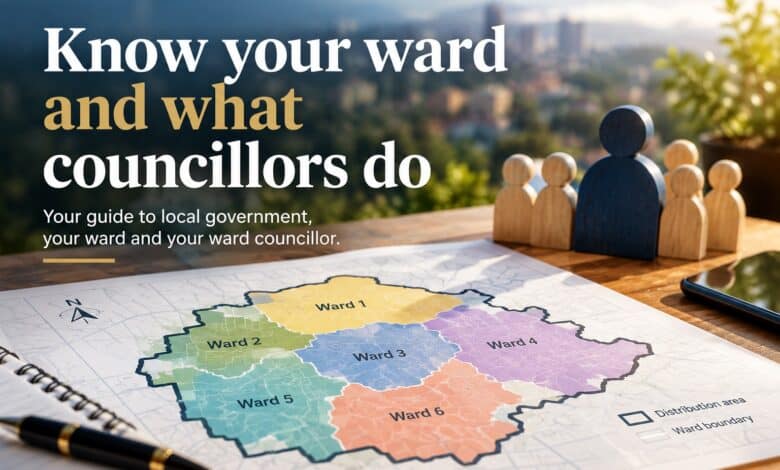
When a water pipe bursts, a pothole develops, or residents have concerns about service delivery, a ward councillor is often one of the first people they contact.
While councillors play an important role in representing communities, their powers and responsibilities have limits. Understanding where those responsibilities begin and end can help residents know who to approach, what to expect from their elected representatives, and how the different structures of local government work.
How a ward councillor is elected
In metropolitan municipalities, such as Johannesburg, voters receive two ballot papers at local government elections. One is for a ward councillor; the other is for a political party, the proportional representation (PR) ballot. According to the Electoral Commission of South Africa (IEC) and the Municipal Structures Act, ward councillors are elected directly by voters in a geographically defined ward on a first-past-the-post basis – the candidate with the most votes wins. Candidates may stand as independents or as nominees of a registered political party. Unless they are independent, they represent a particular political party and its politics.
Also read: METRO MATTERS: Contractors and workers bear the brunt of city’s cash flow problems
Half the seats on a metropolitan council are filled by these ward councillors. The other half are filled by PR councillors allocated according to each party’s share of the party-list vote. Councillors serve five-year terms, with a vacant ward seat triggering a by-election.
Role of the ward councillor
Political analysts Levy Ndou and Jarrod Delport describe the ward councillor as the essential link between residents and the municipality. “Councillors should maintain regular contact with residents, identify challenges affecting their communities and raise those concerns within the structures of council,” said Ndou.

Caption: Jarrod Delport, political analyst. Photo: Supplied
Description: Jarrod Delport, political analyst. Photo: Supplied
Delport added that their responsibilities include being accessible to residents, identifying local problems, raising service-delivery issues with the relevant municipal departments and participating in council and its committees.
The national code of conduct for councillors (Schedule 7 of the Municipal Structures Act and the 2023 Regulations) states that councillors must be accountable to local communities and report back at least quarterly on council matters, including municipal performance. The City of Johannesburg has historically expected ward councillors to hold at least one public meeting per quarter.
Under the City of Johannesburg’s description of councillors’ duties, and the roles outlined by Ndou and Delport, residents should expect a ward councillor to:
• Be reasonably accessible to the community,
• Communicate important municipal information,
• Raise and escalate unresolved municipal problems,
• Represent ward needs when priorities, plans and budgets are discussed,
• Participate in council and relevant committees,
• Facilitate community participation,
• Report back regularly (at least quarterly),
• Chair and work with the ward committee, and
• Provide feedback on escalated matters, even where the councillor cannot personally resolve them.
Limits of civic authority
Delport said residents need to understand that councillors do not personally control water, electricity, roads, refuse collection or other municipal services. “They cannot simply instruct a municipal official to fix a pothole or restore someone’s electricity.” Those functions sit with the municipal administration and its entities.
The useful distinction, drawn from the code of conduct’s prohibition on councillors interfering in administration and practical explanations by analysts, is this:
• Resident’s role: Log the service request through the official municipal channel and obtain a reference number.
• Councillor’s role: Track or escalate persistent or systemic problems, identify repeated failures in the ward, seek explanations from the administration, raise matters in council structures, and communicate feedback.
• Department or entity’s role: Dispatch personnel, appoint contractors, and carry out the actual repair.
Beyond potholes: helping determine priorities
Delport said residents often think councillors exist mainly to deal with day-to-day breakdowns. “Their wider role is to represent community priorities in municipal planning.”
Johannesburg Council approves the city’s budget and Integrated Development Plan (IDP). If a community wants a road upgraded, a park rehabilitated or new infrastructure prioritised, the councillor’s role includes making those needs visible through planning processes. Engaging the councillor during IDP and budget consultations is often more effective than only contacting them after a crisis.
Ward councillors versus PR councillors
In metropolitan municipalities such as Johannesburg, voters receive two ballot papers. One elects a ward councillor who represents a specific geographic area. The second is a party ballot, known as the proportional representation or PR ballot.
Also read: METRO MATTERS: Illegal connections and debt deepen crisis at City Power as losses near 27%
Delport said, “Each ward will elect one person from a party to be a councillor, and then they will also get a second ballot on who you vote for a party. Now that second ballot, that PR ballot, stands for proportional representation. So depending on how many votes a party in a city or a town gets, that’s the allocation, so if they get 25% of the votes, they get 25% of the seats. That is then combined with the council of votes to see how many seats in total a party would get.”
PR councillors therefore enter council according to their party’s overall share of the vote rather than by winning a particular ward.
Delport said their role is to “assist the other councillors in ensuring that service delivery is done for the residents. They also work on policy, and they work on proposing municipal bills and laws within the city itself.”
Unlike ward councillors, who focus on the day-to-day concerns of one geographic area and chair the ward committee, PR councillors operate across a broader municipal level. They support service delivery efforts, contribute to policy development and help shape the by-laws that govern the city, while still sitting on council with the same voting rights as their ward counterparts.
According to the IEC and standard explanations of the mixed electoral system used in South African local government:
• Ward councillor: Elected directly by voters in a specific ward. Chairs the ward committee. Expected to focus on that geographic area and remain accessible to its residents. Can stand as an independent or for a party.
• PR councillor: Allocated to a party according to its share of the party-list vote. Does not represent a single ward in the same way. Often assigned by the party or the speaker to support one or more wards, but primary accountability is to the party list and the council as a whole.
Both sit on council with equal voting rights, but residents can usually knock on the ward councillor’s door.
Does my councillor work for residents or their political party?
A councillor is accountable first to the community that elected them and to the municipal council. The code of conduct requires them to act in good faith, honestly and transparently, and in the best interests of the municipality. At the same time, party-affiliated councillors are also accountable to their political party. Ndou noted that a councillor may have to account both to the community and to the political party they represent. When the two pull in different directions, the formal legal obligation remains to the community and the code.
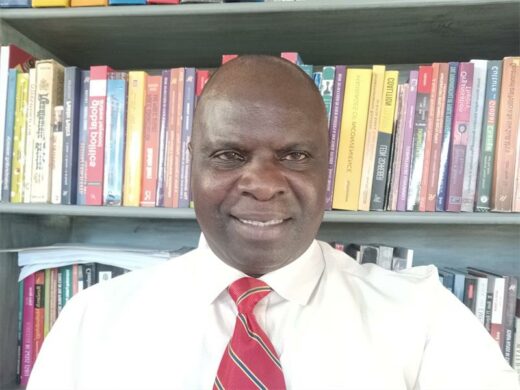
Caption: Levy Ndou, political analyst. Photo: Supplied
Description: Levy Ndou, political analyst. Photo: Supplied
Function of ward committees
Ward committees are established under sections 72–78 of the Municipal Structures Act. A committee consists of the ward councillor (who chairs it) plus not more than ten members representing different sectors and interests in the ward, with equitable representation of women. Political parties may not be represented as such.
“Should include equitable representation of women” means that when a ward committee is formed, the group of up to ten members must reflect a fair balance of men and women. It is not enough for the committee to be made up mostly of men (or mostly of women). The purpose is to ensure that the views, needs, and priorities in the ward are heard equally, because ward committees are meant to bring different sectors and interests of the community together; gender balance is treated as a core part of that diversity.
Also read: METRO MATTERS: Behind Joburg’s rubbish crisis
Registered voters in the ward elect members at a public meeting. Every ward in a municipality that has adopted the system should have a functioning committee.
Ndou said ward committees help bring government closer to communities by delivering collective rather than only individual views. Delport described them as a formal mechanism for community participation whose value lies in giving residents a structured voice beyond the ballot.
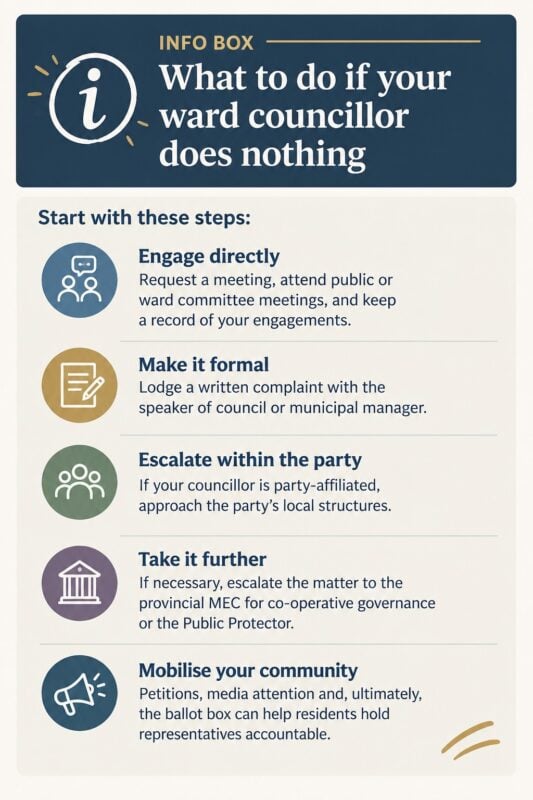
Councillors also have rules
Under the Code of Conduct for Councillors, a councillor must, among other things:
- Attend council and relevant committee meetings (absence from three consecutive meetings without leave can lead to removal).
- Perform the functions of office in good faith, honestly and transparently.
- Act at all times in the best interest of the municipality.
- Disclose relevant financial interests and any conflict of interest, and withdraw from discussions where necessary.
- Avoid using the office for private gain.
- Report back to communities at least quarterly.
Know your ward and where to vote
The map below shows the wards that fall within our distribution area. The main outline marks the overall area we cover, while the individual ward boundaries show where each ward begins and ends.
Click on the map to zoom in and explore the wards in more detail. Use it to find your ward and identify your local ward councillor. Here is a more comprehensive list of your local voting stations; click here.
[INSERT WARD MAP XXXXXXXXXXXXXXXXXXXXXXXXXXXXXXXXX]
Follow us on our WhatsApp channel, Facebook, X, Instagram and TikTok for the latest updates!