Youth asked: ‘What does freedom mean to South Africa’s ‘born free’ generation?
The Nelson Mandela Foundation is a space rooted in memory.
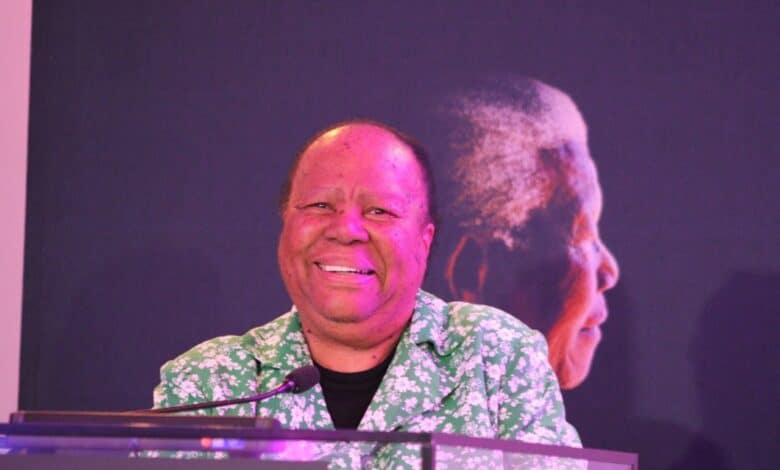
To tackle the question, ‘What does freedom mean to South Africa’s ‘born free’ generation, the Nelson Mandela Foundation on June 26 hosted a youth dialogue.
The panellists were the foundation’s board chair, Dr Naledi Pandor, digital activist, Amahle-Imvelo Jaxa, UJ College of Business and Economics lecturer Marievonne Daya, and life coach, Vukosi Mashele.
The foundation’s coordinator for dialogue and advocacy, Nomahlozi Ramohloki, said, “We are gathered at the Nelson Mandela Foundation, a space rooted in memory and in an ongoing struggle for justice and equity to reflect, challenge and reimagine.”
Also read: JMPD officers observe vehicles accelerating in Parkwood
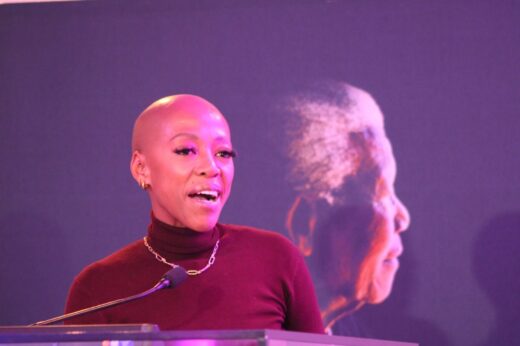
Giving a speech titled ‘Lessons from my father’s cell’ was Jaca, who is Sotomela Ndukwana’s daughter, a former ANC member and Robben Island detainee who was sentenced to 10 years in 1976 for recruiting students to the ANC’s military programme.
The first lesson the digital activist learned was:
Freedom without dignity is not freedom. The digital activist explained that her father believed that being legally free but not economically free was no better than being in chains.
“That’s the painful irony of us as this ‘born free’ generation. Yes, we are free to vote, but how many of us are registered to vote when the time comes to vote? Yes, we are free to speak our minds, but who listens when unemployment is almost at 45% in this country?”
She further questioned how we were free when GBVF continued to be a shadow that followed us home, when trust in political leadership was at an all-time low.
Also read: Embracing AI: A new era for South Africa’s classrooms
Jaca noted that many of us, young, brilliant but disillusioned, were tuning out instead of rising, and this was not apathy but exhaustion.
“We are tired of carrying the hope on our backs while those in power carry corruption on theirs. We are a generation that is expected to thrive with no tools, told to ‘hustle’ our way out of systemic failure.”
Pandor said that June 1955 and 1976 were epic moments in the historic struggle of the people of South Africa against apartheid.
“June 1955 was the adoption of the Freedom Charter, and in 1976, the young people of South Africa rose in protest.”
Pandor explained that the societal problems described by various analysts were largely poverty, poor quality education and the absence of diverse skills offerings in post-school education.
Also read: Bootcamp boost for Mrs South Africa semi-finalists
“Young people need to probe further and argue in public through organisations. Our youth has the potential to take up these challenges, and I believe can resolve them.”
Follow us on our Whatsapp channel, Facebook, X, Instagram, and TikTok for the latest updates and inspiration! Have a story idea? We’d love to hear from you – join our WhatsApp group and share your thoughts!