The Social Media 4 Peace (SM4P) project aims to contribute to peace narratives and advance human rights for all
SM4P works to strike a balance between addressing the spread and impact of harmful content while protecting freedom of expression
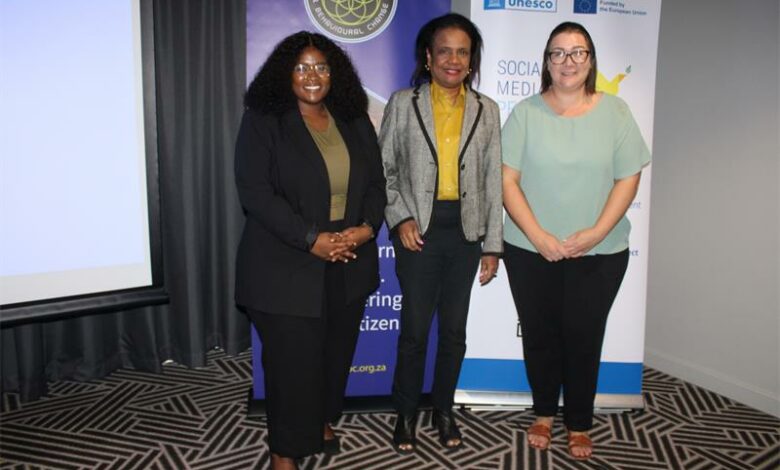
The Centre for Analytics and Behaviour Change (CABC) and Moxii Africa partnered to present the Social Media 4 Peace (SM4P) project on Harmful Online Content and Peacebuilding Narratives on March 17 at Radisson Red Rosebank.
The Social Media 4 Peace project, implemented by Unesco in partnership with national and regional actors, seeks to enhance the resilience of societies against harmful online content, including hate speech, disinformation, and incitement to violence, particularly within socially polarised and conflict-affected contexts.
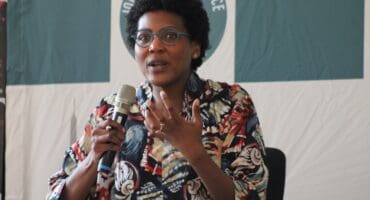
Moxii Africa head of programmes, Thandi Smith, said, “The purpose of these workshops is to look at countering online harms and digital hate. It’s about informing participants, creating awareness, and producing practical steps to mitigate online harms.
Read more: The Johannesburg Philharmonic Orchestra launched its 2026 World Symphony Series Summer Season
We focused on online harms in the lead-up to the local government elections, and we’ll be continuing these discussions over the coming months around what people can do when people identify online harm.”
The workshop consisted of a panel of experts who contextualised the digital landscape within the South African and broader African experience.
The CABC’s role in the project is to conduct social media analytics, including a four-year review of harmful content trends, real-time monitoring, visual dashboards, and pattern analysis.
Kyle Janse from CABC, in a presentation format, outlined and identified prominent digital harms in 2026, which included:
- Disinformation: False or misleading information, intentionally designed and shared to deceive, manipulate, or cause public harm for political, economic, or social gain.
- Misinformation: Is incorrect, inaccurate, or misleading information that is spread regardless of whether there is intent to deceive.
- Hate speech: Abusive or threatening speech or writing that expresses prejudice based on ethnicity, religion, sexual orientation, or similar grounds.
- Gender harassment: A form of discrimination involving unwelcome, hostile, or demeaning behaviour based on a person’s gender, sexual orientation, or gender identity.
According to the Research ICT Africa (RIA) website: “This project extends Unesco’s Social Media 4 Peace initiative into South Africa, generating new evidence on freedom of expression, hate speech, and content governance in one of the world’s most socially complex and politically significant digital landscapes.
South Africa’s post-apartheid context, with its persistent inequalities, racialised tensions, and evolving online mobilisations, makes it a critical site for understanding how harmful content affects democratic life and how governance structures can be made more inclusive and rights-based.”
Also read: Waverley based NPO empowers youth through entrepreneurship and financial literacy
RIA’s role is to lead a literature review of South Africa’s digital media landscape, an analysis of historical conflict dynamics, legal and constitutional frameworks, platform policies, civil society initiatives, and alignment with international standards.
Researcher and executive research assistant to the executive director at RIA, Tshepiso Hadebe, delved into human rights and election linkage in a presentation.
South Africa does not regulate online harms through a single law:
Instead, it relies on a layered framework that includes:
- The Constitution, which anchors all regulations in rights and proportionality.
- Equality legislation addressing discrimination and hate speech
- Sector-specific legislation regulating online content and harmful communications.
- Emerging policy debates on platform governance and systemic accountability.
The law is evolving, but the Constitution remains the anchor:
In 1996, the Constitution of the Republic of South Africa established strong protection for freedom of expression with clear limits for incitement and hate.
- 2000 Promotion of Equality and Prevention of unfair Discrimination Act: Introduced a civil framework to address hate speech and systematic discrimination.
- 2002 Electronic Communications and Transactions Act: Created early rules for online content and intermediary liability in the digital economy.
- 2020 Cybercrime Act: Criminalised malicious digital communications and harmful online conduct.
- 2019 Film and Publications Amendment Act: Extended content regulation into the online space, particularly for harmful material.
- 2023 Prevention and combating of Hate Crimes and Hate Speech Act: Introduced criminal offences for hate crimes and certain forms of hate speech.
Also read: Easter kindness flows at St Columba’s Presbyterian
Smith’s presentation focused on strategies to combat hate speech, which include prevention, responding and accountability.
Responses must operate at multiple levels:
Prevention:
- Media and information literacy
- Pre-bunking harmful narratives
- Training journalists in conflict-sensitive reporting
- Gender-transformative storytelling
Response:
- Counter-speech
- Fact-checking
- Rapid response and monitoring
- Documentation and reporting
Accountability:
- Escalating severe cases
- Policy reform and regulatory clarity
Follow us on our Whatsapp channel, Facebook, X, Instagram, and TikTok for the latest updates and inspiration!