Municipalities to enforce Level 1 water restrictions
Furthermore, Lesufi announced that all 11 municipalities in Gauteng will enforce Level 1 water restrictions. He said these restrictions are aimed at curbing non-essential water use, such as filling swimming pools, washing cars with hoses, and watering gardens during peak hours.
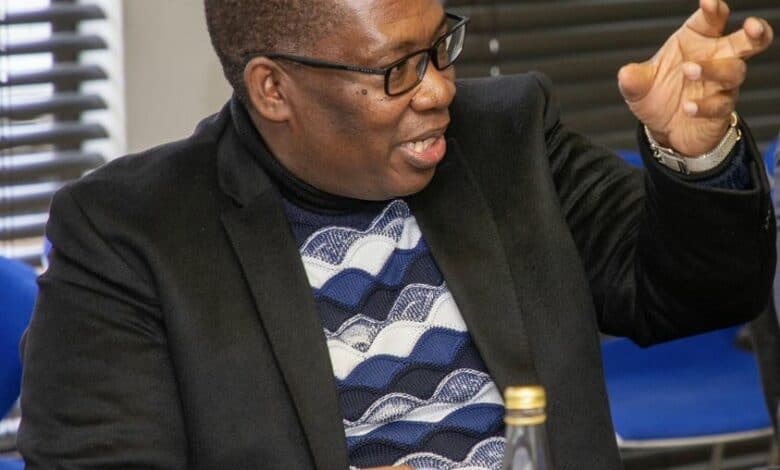
Gauteng Premier Panyaza Lesufi has unveiled new water security protocols to enhance water management and infrastructure. This is in a plight to address water shortages in the province.
Speaking during the Gauteng Provincial Government’s 100-day update, Lesufi emphasised the province’s commitment to tackling water challenges together with all levels of government and stakeholders.
“Gauteng does not suffer from water shortages, but the biggest challenges are illegal connections and water leakages. We are putting together a team of law enforcement agencies that will assist us in disconnecting all illegal water connections in the province.”
Lesufi revealed that the new water security plan includes infrastructure upgrades, improved water management practices, and strengthened water supply monitoring.
Furthermore, the premier announced that all 11 municipalities in Gauteng will enforce Level 1 water restrictions. He said these restrictions are aimed at curbing non-essential water use, such as filling swimming pools, washing cars with hoses, and watering gardens during peak hours.
“Our water usage needs to reflect that we are currently in a crisis, and therefore, we call on all our residents to use water sparingly to secure water availability and enhance service delivery as the province deals with the growing water demand due to population growth and climate change.”
In preparation for the December peak period, the Gauteng Provincial Government has requested Rand Water’s leadership to present potential water-saving scenarios.
A new water data hub, developed through the Platform for Water Secure Gauteng (PWSG) Dashboard Working Group, has also been launched.
According to Lesufi this water dashboard will allow residents to monitor water shortages, track repairs, and understand the extent of issues affecting their areas.
“We developed the water dashboard to provide residents with meaningful, reliable, and up-to-date information, enabling them to make informed water-use decisions. You can find the information for all cities in the province in a single location.”
Earlier in October, Rand Water highlighted that the water supply systems in Gauteng, including its reservoirs, are critically low, adding that the situation is expected to worsen with the ongoing heat wave. The water utility alerted Gauteng communities that water storage could soon be depleted if municipalities do not implement recommendations. “It is essential to act now to prevent the impending disaster.
Rand Water emphasises that it is operating at full capacity and cannot pump additional water into the system. Due to the limitations imposed by the organisation’s extraction license from the Department of Water and Sanitation, Rand Water cannot extract more water from existing sources. Rand Water emphasised that the only viable solution to address the issue is through Water Conservation and Demand Management.
“In light of this, Rand Water has advised municipalities to reduce the physical losses of 33% identified in the No Drop report, repair leaks, enforce by-laws, and address illegal connections.
“Additionally, Rand Water reminds consumers that the organisation is a bulk water supplier, therefore, any water shortages should be reported to the respective municipalities.”