
NWU launches groundbreaking GBVF centre
In a groundbreaking step towards addressing gender-based violence and femicide (GBVF), the North-West University (NWU) Vanderbijlpark Campus has launched its first-ever GBVF Empowerment Centre, a safe space designed to offer comprehensive, trauma-informed support to survivors. Positioned as a one-stop response hub, the centre will provide a range of critical services, including psychosocial support, legal case …
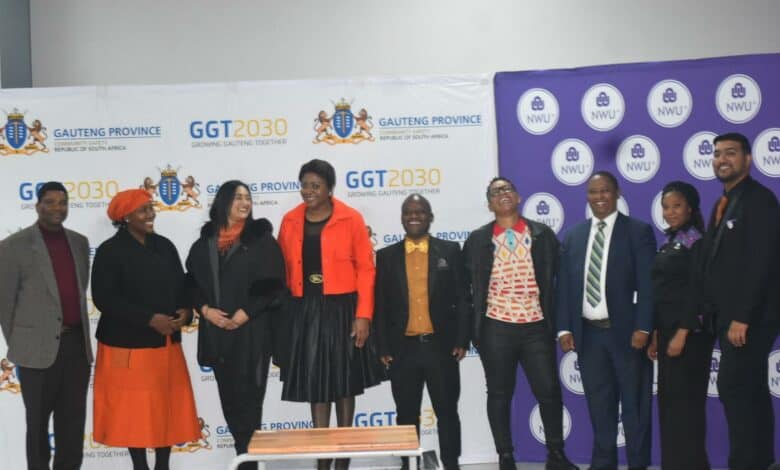
In a groundbreaking step towards addressing gender-based violence and femicide (GBVF), the North-West University (NWU) Vanderbijlpark Campus has launched its first-ever GBVF Empowerment Centre, a safe space designed to offer comprehensive, trauma-informed support to survivors.
Positioned as a one-stop response hub, the centre will provide a range of critical services, including psychosocial support, legal case navigation, survivor-centred reporting mechanisms and ongoing advocacy. It forms part of the broader institutional commitment of the NWU to actively contribute to eradicating GBVF in South Africa.
The recent launch drew a diverse gathering of stakeholders, including representatives from the Gauteng Department of Community Safety, civil society organisations, the SAPS, academic institutions, the diplomatic corps and student leaders.
Delivering the keynote address, Professor Jeffrey Mphahlele, deputy vice-chancellor for Research and Innovation, praised the initiative as forward-thinking and transformative.
“The GBVF Empowerment Centre at the NWU is more than a response to crisis – it is a trend-setting initiative,” said Prof Mphahlele.
“It positions our institution as a leader in institutional reform, social justice, survivor support and policy-driven advocacy. The centre stands as a clear commitment that the NWU will not be a passive observer in the face of GBVF. We are declaring loudly and visibly that our university is serious about safety, dignity and justice. This centre will become a living model for how universities can respond proactively and responsibly.”
The centre was spearheaded by Ujeet Maharaj, head of Student Judicial Services and project lead, who highlighted that the facility was developed through collective insight and lived experiences.
“After various GBVF events on and off campus, we knew we had to act,” said Maharaj. We engaged widely, listened deeply and built this centre from the ground up. It is not just a service point. It is a place of safety, healing, advocacy and education.”
Backed by a network of strategic partners, including the Gauteng Department of Community Safety, Sonke Gender Justice, Higher Health, the ikhaya le Themba Empowerment Centre and international collaborators such as the University College Dublin and the Dublin Rape Crisis Centre, the centre combines global best practices with local relevance.
Social worker and lecturer at the School of Psychosocial Health, Dr Vedhna Dayanand-Lalla, alongside senior lecturer at the School of Theology Prof Vhumani Magezi, report that the collaborations have culminated in the formation of an international initiative titled UNI – University Networks of Impact in partnership with UCD.
Mmemme Makane-Sibanda, chief director and provincial secretariat of the Gauteng Department of Community Safety, commended the NWU for its leadership.
She lauded the university for institutional courage and foresight.
The event concluded with a symbolic ribbon-cutting ceremony at the new centre, followed by a guided tour.