
The Unfinished Struggle: Disability Rights and Leadership in South Africa
This article is not merely a bureaucratic suggestion, it is a call to action.
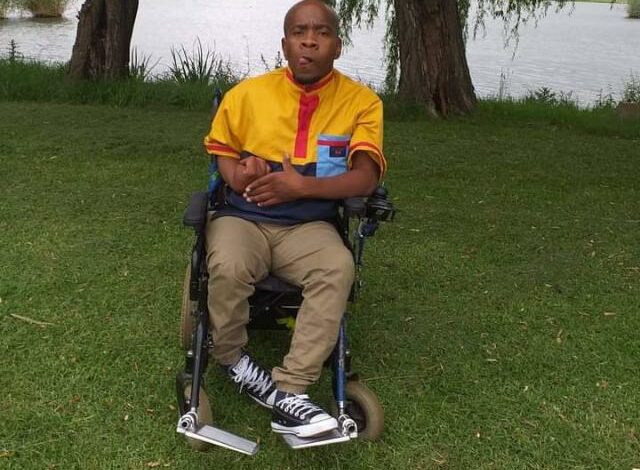
SEDIBENG.- It is now well-documented that the South African disability sector has waged a relentless struggle against ableism for over four decades.
This movement, like many other socio-political struggles, has been shaped by visionary leadership, individuals and collectives who dared to imagine a society where persons with disabilities are not only included but empowered.
Their efforts culminated in a historic milestone – the ratification of the United Nations Convention on the Rights of Persons with Disabilities (UNCRPD), a global framework that affirms the dignity, rights, and freedoms of persons with disabilities. Before the tragic burning of the South African Parliament, the nation bore witness to genuine disability representation.
Wheelchair users, deaf parliamentarians, and individuals with sensory and physical disabilities were not only present but visible, televised, heard, and counted.
Their presence was a testament to the progress made. But representation alone is not enough. Leadership values evolve, and with that evolution comes the risk of regression. Visionary leadership has a lifespan, and without renewal, the movement risks stagnation.
Article 39 of the UNCRPD offers a clear directive – establish a committee to oversee implementation, monitor progress, and issue recommendations. This article is not merely a bureaucratic suggestion, it is a call to action. It demands that the global vision of disability rights be localized, adapted to the unique socio-political landscape of each nation.
In South Africa, this means that Parliament, provincial legislatures, and municipal councils must move beyond symbolic gestures and commit to substantive, measurable change.
Where is this committee? Who are its members? What have they done? These are not rhetorical questions. They are demands for transparency and accountability. Just as the National Youth Development Agency (NYDA) has identifiable leadership and public engagement, so too must the UNCRPD implementation committee. Its members must be known, accessible, and decisive. They must embody the values of the Convention, not just in policy but in practice.
At the heart of the issue lies a deeper crisis – fragmentation within the disability sector itself. The absence of a unified voice, coherent strategy, and coordinated leadership has led to confusion and inertia. It is not enough to have ratified the UNCRPD. The South African state must ensure that its implementation is not muddled by competing interests, unclear mandates, or political indifference.
As of now, the Permanent Representative of South Africa to the United Nations is Ambassador Mathu Joyini. Her role is pivotal, not only in representing South Africa on the global stage but in ensuring that international commitments like the UNCRPD are reflected in domestic policy. Questions about her engagement with disability rights may unsettle some in leadership, but they are necessary.
Silence and ambiguity serve no one.
The disability sector in South Africa stands at a crossroads. It can either continue to drift in fragmented efforts or reclaim its legacy of bold, visionary activism. This requires more than nostalgia, it demands a recommitment to values, structures, and leadership that center the lived experiences of persons with disabilities.
The path forward must include transparent governance. We need clear identification of committee members tasked with UNCRPD implementation. The committee must be inclusively representation by ensuring persons with disabilities are present in decision-making bodies at all levels. Regular reporting, public engagement, and responsiveness to community concerns must be a norm.
South Africa has the tools, the history, and the moral imperative to lead.
What remains is the political will and the courage to act.
(Lucky Tumahole is a Disability Advocate, and this is his opinion)