Good news for turtles
The status of loggerhead turtles has been upgraded from endangered to vulnerable.
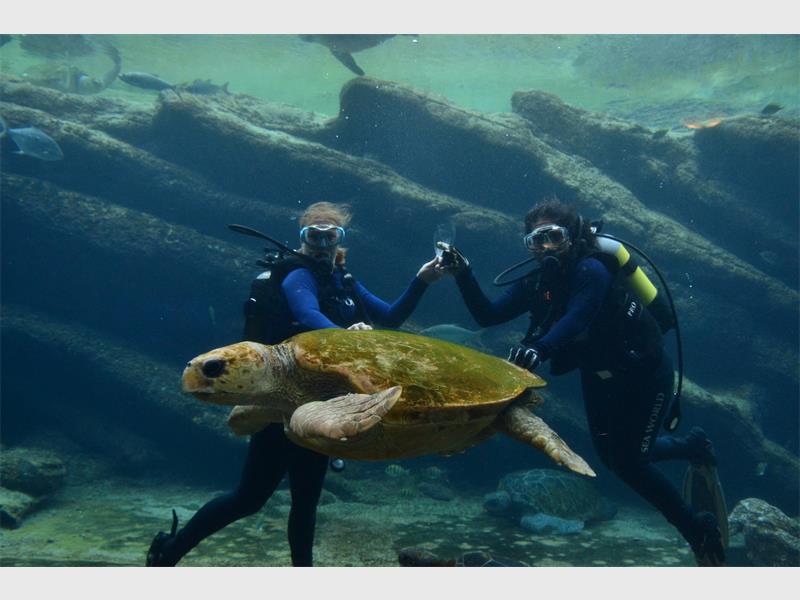
WITH the upgrading of the global conservation status of loggerhead turtles from endangered to vulnerable by the International Union for Conservation of Nature (IUCN), local nature lovers have reason to celebrate the start of the new year.
The South African Association for Marine Biological Research (SAAMBR), based at Durban’s uShaka Marine World, has played an integral part in a number of conservation projects that support the Southern African populations of these turtles. They lay their eggs on the beaches of northern KwaZulu-Natal and Mozambique.
Well-known turtle expert, Dr George Hughes started his PhD research on South East African sea turtles in 1969 when he was based at SAAMBR’s Oceanographic Research Institute (ORI). His work resulted in one of the longest-running (and still currently active) conservation projects on the continent – the protection of the nesting beaches of these turtles along the east coast of southern Africa.
ORI scientists contributed to the identification and declaration of the St Lucia and Maputaland Marine Protected Areas of the iSimangaliso Wetland Park. Not only do these areas offer protection to the loggerhead and leatherback turtle nests found on their beaches, but also secure core populations of many other marine species.
The scientists have also been actively involved in protecting turtles offshore. In the early 2000s, Dr Sean Fennessy and colleagues noted with concern the numbers of sharks, rays and turtles that were being caught by the shallow-water prawn trawling fishery in the region.
Research on the ways in which to decrease this by-catch was initiated and successful trials with a turtle exclusion device were conducted in Mozambique in 2005. Due to consumer pressure from countries to which prawns are exported, legislation requiring the use of turtle exclusion devices in prawn trawler nets has been passed and is starting to be enforced in Mozambique and Madagascar.
SAAMBR’s uShaka Sea World division has an international reputation for successfully rehabilitating turtles that are stranded on KwaZulu Natal and Cape beaches. In order to increase their populations to sustainable levels, the survival of every turtle is important, and uShaka Sea World strives to rehabilitate as many turtles as possible, while endeavouring to bring the plight of the turtles to the attention of their guests through appropriate educational displays.
Even though their conservation status has improved, the IUCN has made it clear that the survival of the 10 sub-populations of loggerhead turtles will continue to be dependent on intense conservation efforts into the foreseeable future.
Loggerhead turtles are exposed to many and varied threats, and consequently conservation efforts have to be tailored to address these. SAAMBR is proud of its contribution to the conservation of these iconic marine animals and pledges to continue to play an active role.
Everyone can play a small part in this conservation effort, by placing litter in the bin, thereby reducing the chance of turtles eating plastic, and by actively supporting the maintenance of South Africa’s marine protected areas, which in turn protect the homes of our incredibly diverse marine life.