Mother whale cradles her calf
Quite unusually the mother was actually cradling the calf in her mouth.
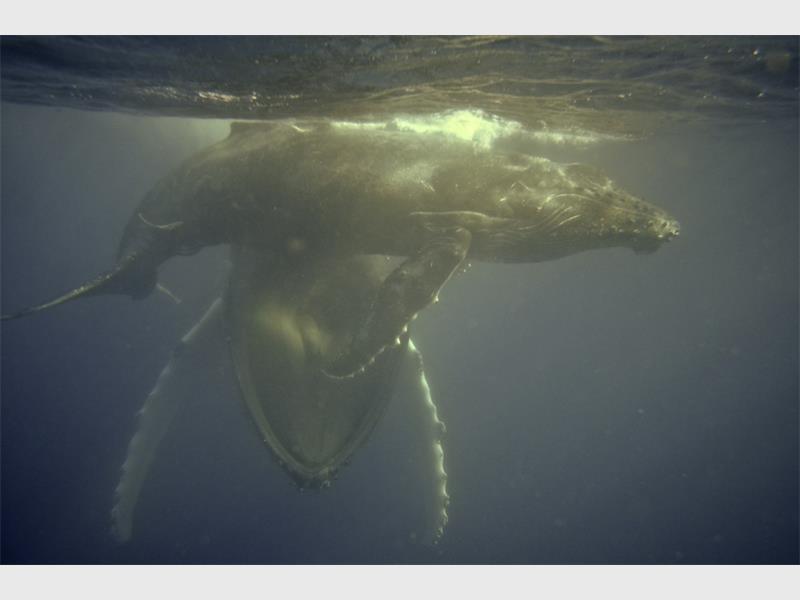
A recent dive at Aliwal Shoal saw John Miller of Shark Cage Diving KZN, swimming alongside a humpback whale mother and her calf.
Upon approaching the pair, Miller realised that – quite unusually – the mother was actually cradling the calf in her mouth.
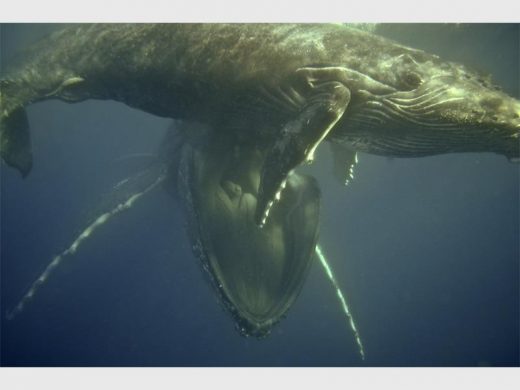
“It was an amazing experience, I’ve never seen or heard of anything like this before. Once the mother realised I was there, the calf started moving slowly from the mother’s mouth, the mother moved below the calf and gave me a proper stare before they both turned and swam away.”
According to Dr Stephanie Plön of Bayworld Centre for Research and Education in Port Elizabeth, much about whale behaviour is still being discovered, however the bonding between mother and calf is often physical.
“What we do know is that during the initial development phase of the calf there is little, if any, vocal communication.
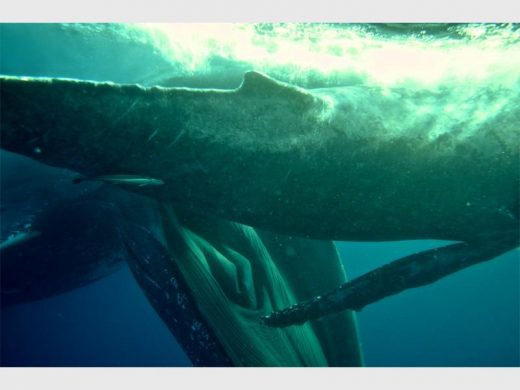
“We do see that there is physical bonding – like cuddling – so it’s possible this was a physical display of the bond. It also needs to be recognised that whales have limited use of their limbs, so using the mouth may be a natural way to compensate.”
Aliwal Shoal, which is just five kilometers offshore of Umkomaas is one of two Marine Protected Areas on the KZN South Coast, alongside Protea Banks, eight kilometres off Shelly Beach.
Both of these are world-revered dive sites which have prompted several international documentaries and attracted an influx of global tourists.
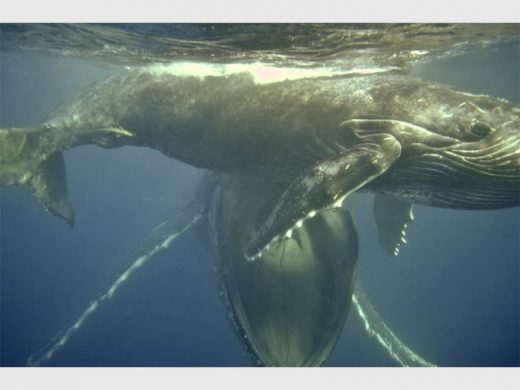
Alongside migrating humpback whales, Aliwal Shoal and Protea Banks are home to a variety of incredible marine species, including big game fish and numerous shark species.
Popular whale and dolphin viewing spots
* Umtentweni Conservancy Whale Deck
* Ramsgate Whale Deck
* Umdoni Golf Club Whale Deck
HAVE YOUR SAY
Like the South Coast Herald’s Facebook page, follow us on Twitter and Instagram