Under the sea to the shore
Although they may not be your everyday idea of 'sea animals', sponges, sea cucumbers and various other types of seaweed can be classified as animals.
The ocean continues to remain a mystery and somewhat of an unchartered wonder even in today’s society.
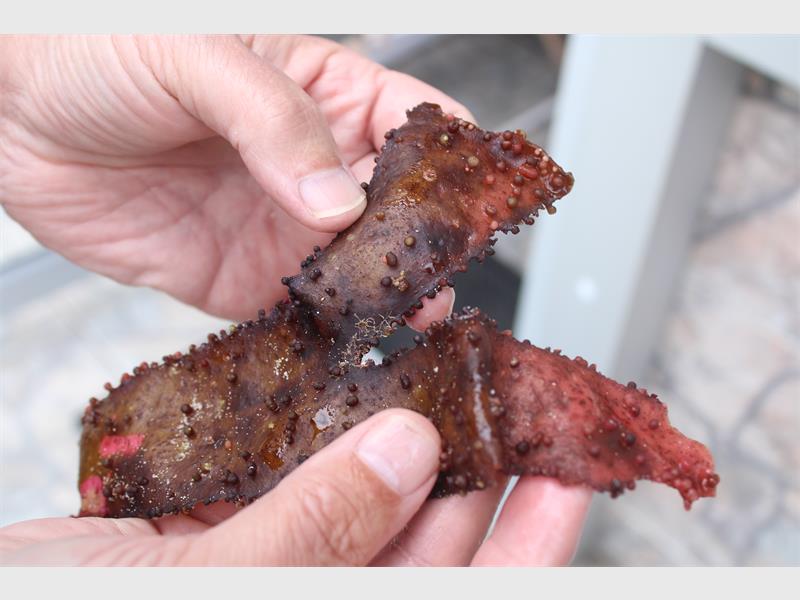
Fabio Petronio, a former resident of Gauteng who now lives in Uvongo, stumbled across a beautiful display of washed up sea vegetation at Uvongo beach recently.

However, what was thought to just be under water vegetation turned out to also be sea animals.
Although they may not be your everyday idea of ‘sea animals’, sponges, sea cucumbers and various other types of seaweed can be classified as animals.
“I was on a morning walk on the beach when I noticed what looked like plants that had washed up on the shore. When I went to take a look, I saw that there were quite a few sea cucumbers, sponges and interesting types of seaweed that I had not seen before,” Petrinio said.

Upon finding the creatures, Petronio immediately put them in a bucket of sea water in an effort to revive them.
Sponges are similar to other animals in that they are multicellular, heterotrophic (an organism that cannot produce its own food), lack cell walls and produce sperm cells.
Sea cucumbers on the other hand are part of a larger animal group called echinoderms (a marine invertebrate), which also contain starfish and sea urchins.
If you feel clued up on what species of seaweed was found, email tebuhoz@dbn.caxton.co.za
HAVE YOUR SAY
Like the South Coast Herald’s Facebook page, follow us on Twitter and Instagram