Radio operators celebrate 101 years
Operators must be qualified and have a ham radio licence.
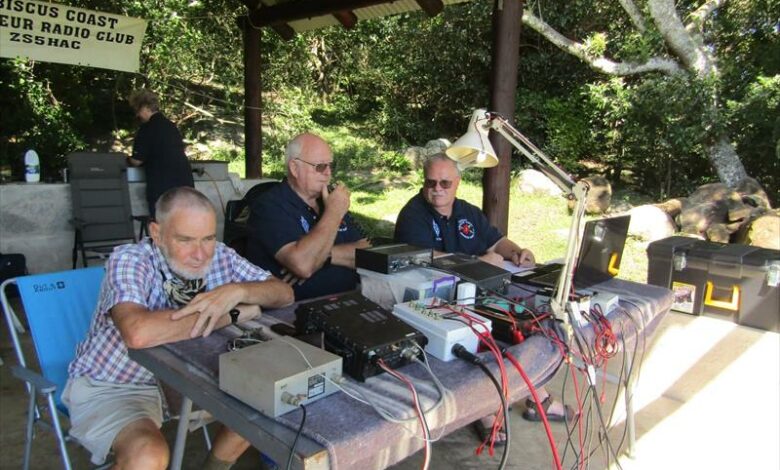
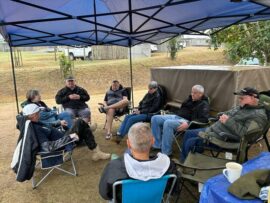
Amateur radio in South Africa turns 101 this year and, as part of this, the local club got together for its South African Radio League (SARL) National Field Day recently.
This is an annual, two-day amateur radio contest and emergency preparedness exercise.
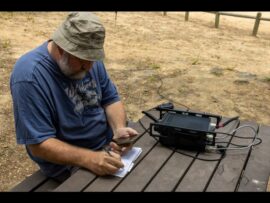
The event challenges operators to set up stations in remote areas to make contact with others – in order to win the contest.
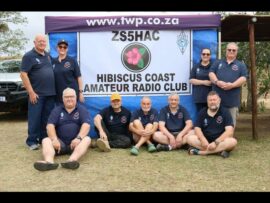
The local club is called the Hibiscus Coast Amateur Radio Club (ZS5HAC).
Members meet bi-monthly and are always available for enquiries through their email zs5hac@gmail.com or Facebook page.
Broadened horizons
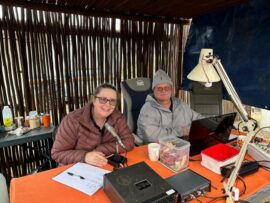
Louise Larsen (ZS5BSR), who joined the club in 2022, said that ham radio had broadened her outlook on the world.
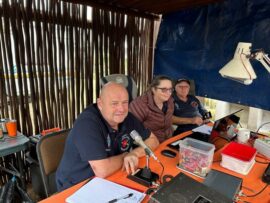
“Conquering the challenge of a competition and being able to make contact with other operators around the world is exciting,” she said.
She said that being a member of the club, along with her husband Tim, had seen her make new friendships and had added social aspects to her life.
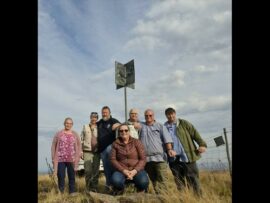
“We climb mountains to set up and then hope a radio station out there is going to be listening out for our call of CQ and that they will respond to it,” she explained.
Badge of pride
Ham radio is a colloquial term for amateur radio that originated in the early 20th century, likely stemming from a derogatory 19th-century telegrapher term for unskilled, ‘ham-fisted’ operators.
Amateur radio enthusiasts later embraced the term, turning it into a badge of pride for their radio hobby.
It is recognised by the International Telecommunications Union as a service and is an inclusive hobby, with more than three million members of different ages and backgrounds around the world.
Radio amateurs utilise radio transmission and two-way communication between radio ham operators through voice, digital techniques, video and Morse code.
Emergencies and disasters
Amateur radio typically does not rely on the internet or cellular networks, making it especially helpful during emergencies or disasters when those systems become unreliable.
Operators must be qualified and have a ham radio licence.
Friendly competitions are often held throughout the year, including Summits On The Air (SOTA) and Parks On The Air (POTA).
73 (best regards) to ham radio operators.
HAVE YOUR SAY
Like the South Coast Herald’s Facebook page, follow us on Twitter and Instagram