Tent Travels: Farewell to Kruger
Our last night in the national park was spent in one of its prettiest rest camps.
BERG-en-Dal, one of Kruger Park’s newer rest camps, is a wonderful little gem, a cool, green place set alongside the Matjulu spruit in a ring of low, rocky mountains.
The rest camp has all the mod cons including top notch facilities, a well-stocked shop, a small museum, a conference centre, a swimming pool, a laundry and a wonderful walking trail that takes walkers right around the camp.
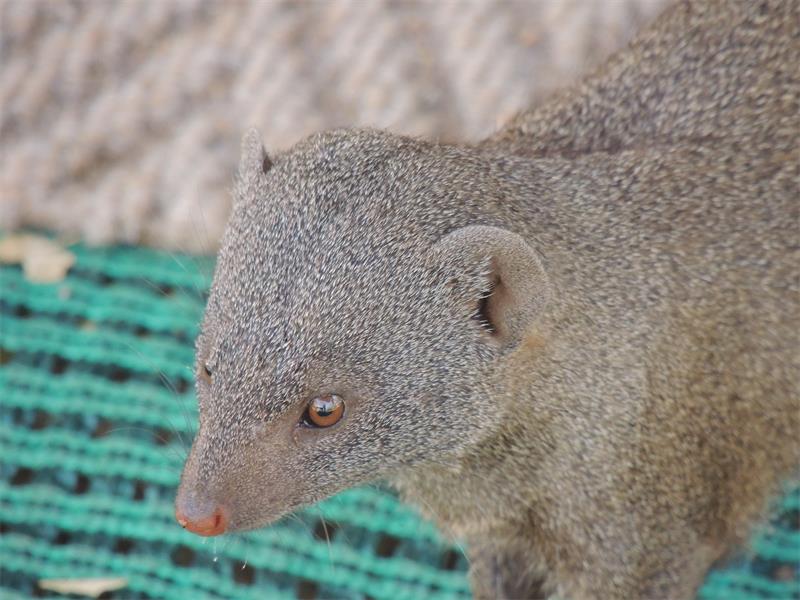
The attractive facebrick administrative buildings and chalets give the camp a neat, modern look and they are set in absolutely exquisite natural gardens, planted out with magnificent flowering indigenous trees, shrubs and aloes. This lushly bushy environment attracts plenty of birds and small creatures like the charming dwarf mongooses that like to play among the tents.

It was here, in this lovely place that we would spend our last two nights of our Kruger trip. As it was so pleasant in the camping area, we were a bit laid back about the way we spent our last full day in the park. We did wake up early and we were on our way soon after gate opening day.
With the drought turning the landscape into what seemed like an inhospitable waste land in the immediate vicinity of the camp we decided not to do the little loops in that area, which we would normally have loved to do.
Instead, we took a slightly greener route, back-tracking along the H3 to the Afsaal picnic site where we treated ourselves to a really delicious traditional South African chicken pie. I love the way some of the Kruger Park picnic site restaurants are serving up traditional South Africa food. Our foreign guests must appreciate these delicious local is lekker dishes.

After breakfast we took a drive a little way along the Voortrekker Road to the site of Kruger’s first concrete dam and this proved a good idea. The Voortrekker Road route is usually productive and this time round it didn’t disappoint.
We saw plenty of elephants of all shapes and sizes, lovely kudu, the usual impala, plenty of zebra and quite a few giraffe. Returning back to camp, we found some cars parked alongside a spot where someone claimed to have seen a leopard.
It would have been nice to round off our Kruger sightings with even a glimpse of Mr Spots, but it was not to be. Anyway it is always a good idea to leave something for the next visit when I am sure we’ll have more luck with our leopard hunts.

It was nearly midday by the time we returned to our pretty campsite and we spent the afternoon, resting in the shade and watching the constant passing parade of birds and little creatures. With a long journey ahead of us the next day, it was early to bed that night.
Then, after our final peaceful Kruger night in one of park’s prettiest camps, we were up and away early. Even though it was so dried out by the drought, the bush was looking so lovely in the soft morning light and it was so really hard to drive out Malelane Gate and to say farewell to Kruger National Park.
Our trip, though short, had been so wonderful and the mobility our Kombi camper had given us had been a real bonus.
We’d managed to stay in eight different camps in just 11 days and had been able to venture quite far north, as far as Tsendze Rustic Camp. We’d missed that leopard and cats had been a bit scarce on the ground but we’d had a lovely cheetah sighting that more than made up for this. We’d been thrilled to enjoy quality rhino sightings in certain areas of the park but for security reasons I don’t like to mention where these benighted animals were seen. Isn’t that sad?

Elephants had, been the real joy this time round and we had often been royally entertained by these noble giants. Some of our most precious moments, though, were those we spent in the company of the smaller Kruger denizens like mongooses, honey badgers, a wild cat and hyenas.
I would love to go back to Kruger after the rains soaked into the dry earth.
Travelling through drought-stricken park had been distressing at times, although we were always so impressed by how well Mother Nature and her creatures were rolling with the punches. Nature is just so amazingly resilient.
We returned to our sunny KZN South Coast home via Swaziland, a pleasant route that was shorter than the meandering but scenic one we’d taken to get to the park It was a long day on the road but we didn’t mind. After our wonderful Kruger explorations we had plenty to talk about and we hardly noticed the kilometers going by.

Since we’ve been home we’ve heard more and more wonderful reports of rain falling over Kruger, even in the dreadfully dry areas around Berg-en-Dal and Satara, and its seems that South Africa can expect good rains this summer.
In Africa, rain is such a blessing, but even so the drought has not been all bad news. I am confident our great and wonderful Kruger National park will emerge from its hard years leaner, meaner and more ready to sustain the myriad life that it enfolds within its confines.
HAVE YOUR SAY
Like our Facebook page, follow us on Twitter and Instagram
For news straight to your phone, add us on BBM 58F3D7A7 or WhatsApp 082 421 6033