Invasives and Natives: Peanuts and a proudly South African export
The invasive peanut butter cassia has a strong smell.
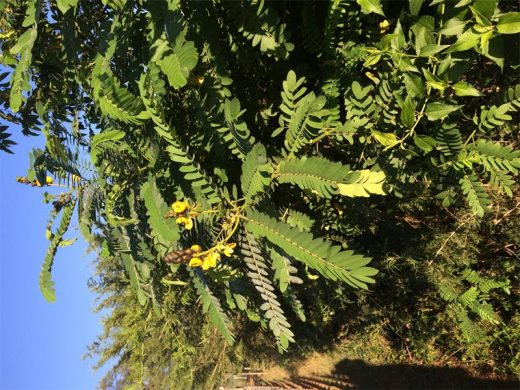
WITH its distinctive brown and yellow flowers and its habit of crowding out the locals along our riverbanks and road verges, the peanut butter cassia is easy to spot.
Formally addressed as Senna didymobotrya and a member of the extensive legume or Fabaceae family, its common name comes from the fact that it has a distinct peanut butter smell.
YOU MIGHT ALSO BE INTERESTED IN : Invasives and natives: Goosebumps, goosefoot and a black-eyed maiden
It is an attractive shrub, with its eye-catching flowers, matching dark brown pods and dark green compound leaves so it’s not surprising to learn that it was originally imported from tropical Africa for ornamental use.
According to the Wildlife and Environmental Society of South Africa’s handbook on Invasive Alien Plants in KwaZulu-Natal, it was once a popular garden plant in spite of the fact that its seeds are poisonous.
Like so many foreign imports it hopped over the garden wall into the wilds where it has become a serious invasive weed. It is now categorised as a Nemba 1b invasive in our province, so make sure its not lurking illegally in your garden.
There is no herbicide registered to use to fight this menace but it only reproduces by seed and it can be removed from our wild places fairly easily through good old fashioned weeding. Still, evicting them from our conserved area and stopping them from clogging our waterways involve plenty of time, money and hard work.
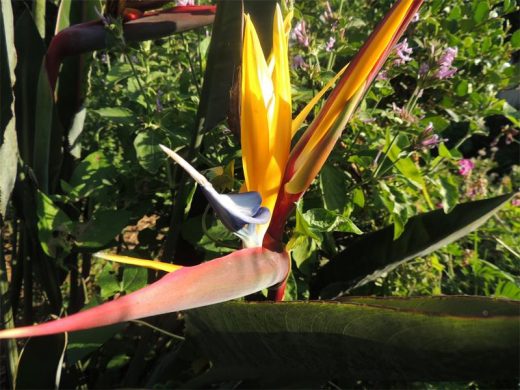
If you are looking for a replacement flowering shrub one of your best bets would be the gorgeous Strelitzia reginae or crane flower, one of South Africa’s most popular exports.
With its showy blue and orange blooms that last for ages in a vase, it is a popular cut flower and garden subject and is widely cultivated all over the world. In fact it is the floral emblem of the Californian city of Los Angeles.
Even when it is not flowering it makes a lovely form plant with its beautifully shaped, green-grey banana-like leaves. It is also useful for mass planting and will form thick clumps.
Wherever you plant it in your garden it will be much appreciated by sweet-toothed birds and insects because of its abundant, sticky nectar. This in turn attracts the insect eating birds and then, when the seeds form, along come the fruit eaters.
A tough, hardy plant that likes a bit of sunshine, it doesn’t seem to mind the salty winds that sweep through my coastal garden. It doesn’t seem too fussy either.
Like most other indigenous plants it thrives quite well on a bit of benign neglect. Strelitzia reginae has an interesting but less well known cousin that is also an attractive form plant. Stelitzia juncea has similar flowers but it has unusual spear-shaped leaves.
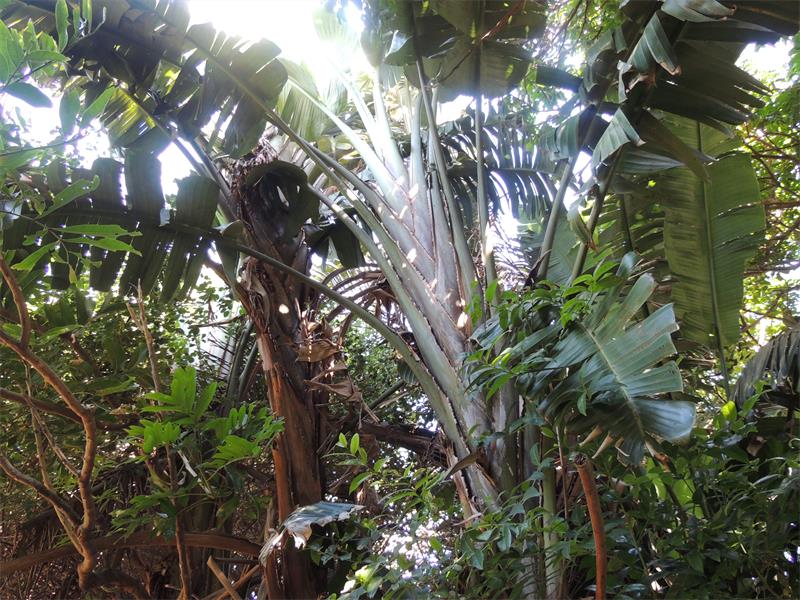
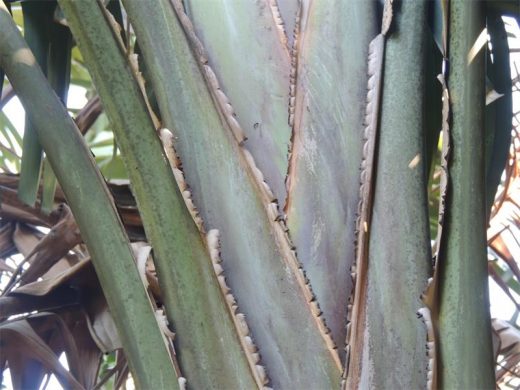
Another cousin is the Strelitzia nicolai or wild banana, such an integral part of our sub-tropical coastal bush. Its flowers are similar in shape to Strelitzia reginae but blue and cream and much less showy that the orange ‘crane flowers’.
Monkeys love nibbling these flowers and can’t resist the seeds. These plants also have plenty of nectar for the sunbirds and the larvae of some butterfly species munch on the leaves.
They can be a little scruffy and do need space but they are striking form plants and fit in well with trendy, natural looking, contemporary garden design and architecture.
Because they are such a part of our landscape and because of their usefulness in a wildlife friendly garden, every KwaZulu-Natal property owner should try and make at least a little patch available for one or two of these iconic plants.
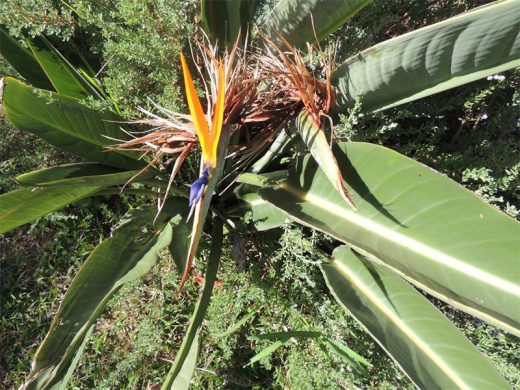
Finally a very special Strelitzia is my beloved Mandela Gold, a natural sport of Strelitzia nicolai. From time to time a yellow-flowered plant would pop up in various gardens around the world but it was only in the 1970s when there were seven yellow-flowering varieties doing well in Kirstenbosch and the Karoo Desert Botanical Gardens that horticulturists could start cultivating them and making their seeds available commercially.
YOU MIGHT ALSO BE INTERESTED IN : Invasives and natives: A sword-shaped threat and a harbinger of rain
In 1996 these beautiful plants were named Mandela’s Gold after former president Nelson Mandela – a fitting tribute to Madiba. And yes, the bright flowers are more golden than yellow. All in all, they are very well named.
HAVE YOUR SAY
Like our Facebook page, follow us on Twitter and Instagram
For news straight to your phone, add us on BBM 58F3D7A7 or WhatsApp 082 421 6033