In our previous three blogs, I’ve talked about the theory of what happens at death. And that can be summarised like this:
- The rand-value of all that I OWN, all that I OWE (my debt), and all that is OWING to me must be totalled and placed into a “container” called my ESTATE.
- All that I OWE must be paid out from the estate, and all that is OWING to the estate must be collected.
- A bunch of duties and taxes must be paid out.
- The remainder of the estate must be divided according to whatever I have written in my WILL.
ALSO READ : RIP Jay Pillay: Learning by Pretending to Die: Some more definitions of dying/living words
I think that that’s a bit long for a summary, but that’s death. I live with it. What do you think?
Let’s use a real-death example: my car. It’s a Nissan Almera, year 2017. As at early 2019, I owe about R100,000 for it. I die. (I’m learning to live with that two-word sentence.)
I die, remember. My wife is faced with two immediate challenges. She needs to continue paying the debt. You see, I did not know about debt insurance. I could have insured the debt, so that my insurer would pay out the balance owing when I die. My wife gets the car – but she gets the debt too. For me, it’s too late. You, reading this blog, have an advantage over poor, late, me. k My wife needs to transfer the car to her name. No, this does not happen automatically. (Nothing happens automatically when I die. My executor has to do lots of things. Legally necessary things.) To transfer the car to her name, she needs (don’t read the parts in brackets):
- An executor’s letter (that would be the executor of my estate)
- The executor’s ID (the ID of the individual doing the work)
- The ID and death certificate of the deceased (Yes – that’s me. But I can’t do much; I’m dead, remember)
- Our marriage certificate (Huh? Do you know where’s yours?).
Oh no! Heavens above – if the Almera is still being paid for, the bank is the legal owner of the car. That’s more documents, more stuff that has to be done.
I wish I could rewind life, and die again. At least I’d know a bit more about the right things to do!
For the late Jay Pillay, it’s too late. For you, it’s just in time.
Why are we talking about my car? What about my house? The car is something you can relate to – and it’s an easier illustration of what needs to be done when my estate is wound up. My house is a lot more complex. Am I still paying for it? If YES, is the debt insured? If I am married in community of property, my wife already owns half the house. Come now – it’s registered in BOTH our names. Must transfer to one name still occur? ABSOLUTELY YES. Does it happen automatically? ABSOLUTELY NO.
I used to think that living was difficult. Dying is not any easier.
In my next blog, I’ll look at the whole process of winding up an estate. It’s information to die for.
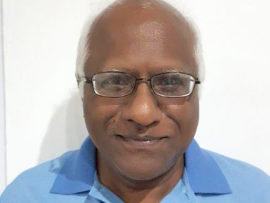 Jay Pillay’s first two critical decades were spent where his first decade began – in Pietermaritzburg. After studying at ML Sultan Technikon in Durban (anyone remember that place?), he then joined the sugar industry, working in Tongaat, Durban, and Xinavane – a sugar mill village 120km north of Maputo. Oh yes – there was a brief period of unfaithfulness, when he flirted with aluminium in Richard’s Bay. Upon retirement, he and his wife Dorothy – settled in Southport.
HAVE YOUR SAY
Like our Facebook page, follow us on Twitter and Instagram