The defensive (and almost hysterical) response from the government to the memo from five of our key trading partners outlining what should to be done to create the environment needed to convince them to invest more in the country would have been understandable had the issue involved been anything but the economy.
ALSO READ : Good Business Basics: Stamp out corruption to encourage investment
While mutterings of ‘new colonialism and imperialism’ from the ruling party’s spokesman would have played well with its constituents, the reality is that fixing the economy has to be the key priority of the government, and president Cyril Ramaphosa has made foreign direct investment (FDI) a key pillar of this, through his $100-bn campaign.
Practical pointers
So if anything, protocol be damned – the memo should have been welcomed by the president as practical pointers to accelerate the investment drive. I have previously mentioned the stiff competition we face for the investment dollar, euro or pound on our home continent and throughout the developing world, and it is imperative that we do as much as we can to stand out from this crowd.
Some of the key aspects here involve acting decisively and speedily against the culture of corruption, deregulation and cutting down on red tape (fertile conditions for the first to thrive), policy certainty, and improved infrastructure.
Cautious approach
As much as there is some unease about pushing for investment from our traditional western trading partners, we should be ultra-wary about the (on the face of it) hyper-generous approach the Chinese have taken to their African investment policy. Recent research has shown that the terms offered as enticement, particularly for the construction of infrastructure, mask long term commitments from the beneficiary countries that far outweigh the value of the projects.
The positive impact of FDI cannot be denied, but it is incumbent on the beneficiary country to ensure that the results are aligned with the long-term goals of the government and people.
These mainly revolve around multi-year mining concessions for raw materials that are having a serious environmental impact. Add to this the very limited skills transfer offered by the Chinese (the projects are undertaken by Chinese contractors and crew) and economic impact (the bulk of the materials are of Chinese origin), and a large dose of wariness is justified.
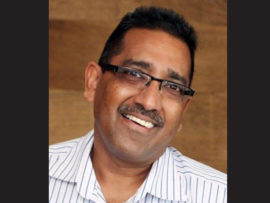
After matriculating, Vijay Naidoo studied Economics in the UK. Upon his return, hejoined the family construction business as MD for 10 years.
He subsequently joined his sister in their furniture manufacturing business as director for quality assurance and operations. He was responsible for all quality aspects of their products, and led the project to the business achieving an ISO 9000 quality accreditation. As an export focused business, this was important for our international competitiveness.
Mr Naidoo has an abiding interest in quality management and productivity improvement, particularly in manufacturing.
More recently, he has focused a lot of his time on giving back to the community by way of mentorship of small businesses and sitting on the executive of the South Coast Chamber of Commerce. He also sits on the Board of the Ugu South Coast Development Agency.
HAVE YOUR SAY
Like our Facebook page, follow us on Twitter and Instagram