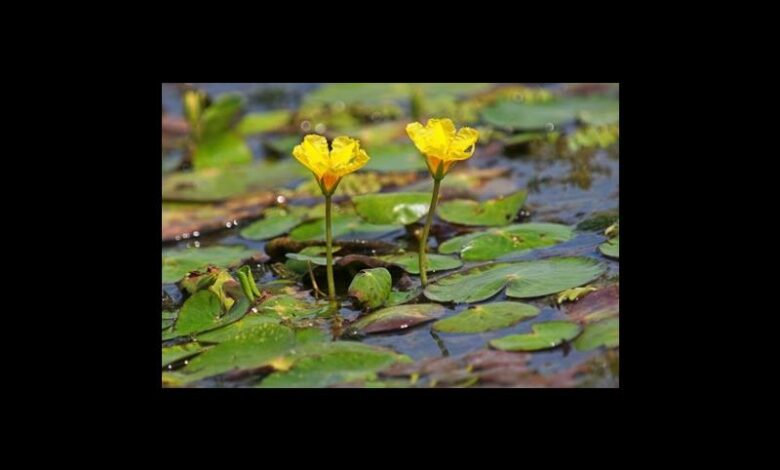
Yellow floating-heart and water poppy sound like fairly innocent names, right?
However, when it comes to alien aquatic plants, these two are invasive and can choke out native aquatic vegetation.
They are officially known as nymphoides peltata (yellow floating-heart) and hydrocleys nymphoides (water poppy).
The South African National Biodiversity Institute Directorate on Biodiversity of Evidence is calling on the community to help identify where they might be and to report the location to them.
The institute conducts ongoing surveillance, research and monitoring of invasive aquatic plants, including these two.
These are listed as Category 1a invasive species under the National Environmental Management: Biodiversity Act.
However, protecting South Africa’s waterways cannot be achieved through scientific monitoring alone.
The community can play a vital role in early detection.
Residents, hikers, landowners and others who regularly spend time near rivers, wetlands and dams are often the first to notice unusual or unfamiliar plants.
Their observations can help identify new or previously unrecorded populations that may be missed during formal surveys.
Your report could make a real difference.
Early detection gives SANBI-DBE an opportunity to investigate and, where possible, eradicate an invasive species before they become widely established and much more difficult and costly to control.
You can play your part in protecting local waterways, biodiversity and the ecosystems that support people and wildlife.
Your observation and subsequent report could help stop an invasive species from spreading.
* How to identify nymphoides peltata (yellow floating-heart):
· Has almost circular leaves (3-10cm long) produced on long stalks and arise from underwater rhizomes.
· The leaves are frequently purplish underneath, with slightly wavy, shallowly scalloped margins.
· The flowers are bright yellow, mostly 5-petaled and 3-4cm in diameter and are held above the water surface on long stalks, with one to several flowers per inflorescence.
· The fruit is a capsule up to 2.5cm long containing numerous seeds which are flat, oval and about 3.5mm long with stiff marginal hairs.
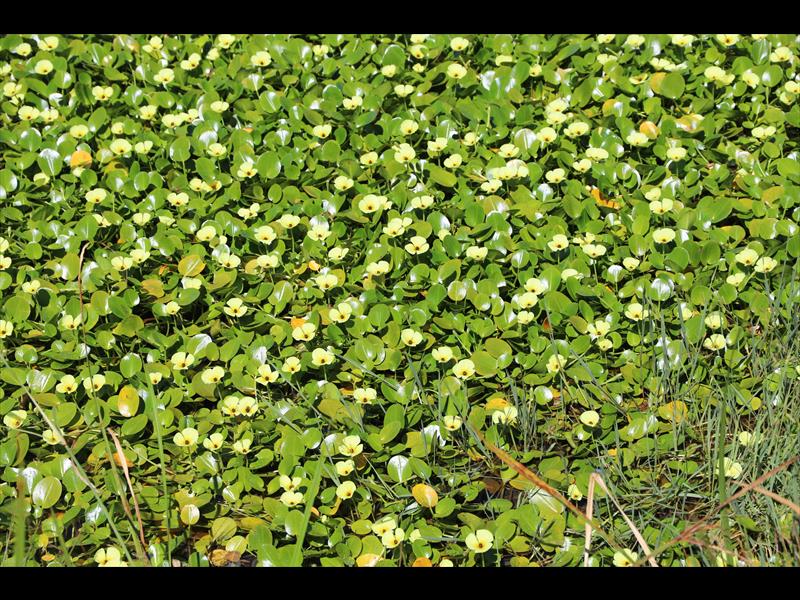
* How to identify hydrocleys nymphoides (water poppy):
· It has thick, shiny, dark green, oval-to-round leaves (2-4 inches wide) with heart-shaped bases that float on the water surface.
· Produces trailing stems (runners) that float on the water, rooting at the nodes to sprout new plantlets.
· Three-petaled, bright yellow, poppy-like flowers with reddish-brown centres and dark stamens.
* Environmental impacts:
· Both these species are listed Category 1a under National Environmental Management: Biodiversity Act (NEM: BA; 2004) in South Africa.
· Both species form dense mats on the water surface, displacing native plants, reducing biodiversity, and hindering recreational activities.
· Both plants have the ability to reproduce through various means (seeds, rhizomes, stolons, and broken plant parts) which makes it difficult to control.
* What to do:
· If you spot these aquatic alien plants report populations to: invasivespecies@sanbi.org.za. Staff will come out to verify the identification, as well as gather data that will facilitate removal.
HAVE YOUR SAY
Like the South Coast Herald’s Facebook page, follow us on Twitter and Instagram