
Push to get trails established in Amanzimtoti’s indigenous forest
Today the first forest covers about five hectres.
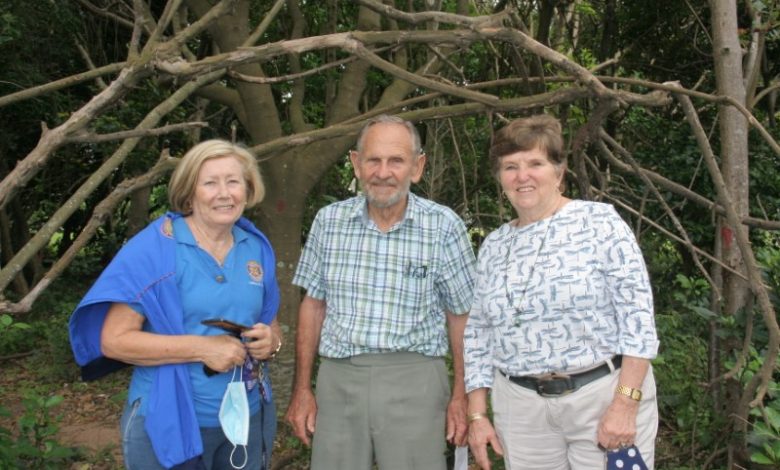
The SUN, accompanied by Gillian van Wyk of Toti Conservancy and Aneska Dupont of Amanzimtoti Rotary Club, was taken on an informative walk through Amanzimtoti Country Club (ACC) and Conservancy’s first indigenous forest by co-ordinator Ted Holden on Monday, 19 October. The reason for this being the first forest, started by planting a few trees on each hole, was found limiting, and more so during Arbour Month each year. So it was decided to accelerate the conservancy’s main objective, which is to ‘enhance the indigenous tree footprint of the club’. “We are not wanting to conserve the alien and invasive plants, trees and vegetation. The only way open was to change the character of existing plants and trees surrounding the fairways and riverside,” said Ted, who was instrumental in the formation of the conservancy in 2002 and planting more than 2,000 indigenous trees in the golf course. The reason for the walk was to relay support and assistance to fast-track the opening of walking trails through the first forest area. “It’s important from a social and environmental aspect that we get these trails going. We are hoping to get them establish by 2021.” READ ALSO: Amanzimtoti conservancy’s indigenous forest keeps growing Today the first forest covers about five hectres, a far cry from the reeds and exotic and invasive trees that grew along the sixth hole’s fairway. Gill, with help from Mike McGregor, supplied the conservancy with about 100 mitzeeri seedlings, that were planted among the reeds on the riverside of the sixth fairway and most are now fully grown. The first forest is made up of many smaller ‘forests’ that have been donated and paid for by families and groups. The golf club is more than 100 years old and over the years, the forest has been looked after by the club’s golfers. The idea for family forests in the conservancy came from Ted, who planted his family’s 26 trees in 2012, but he is still adding to it.
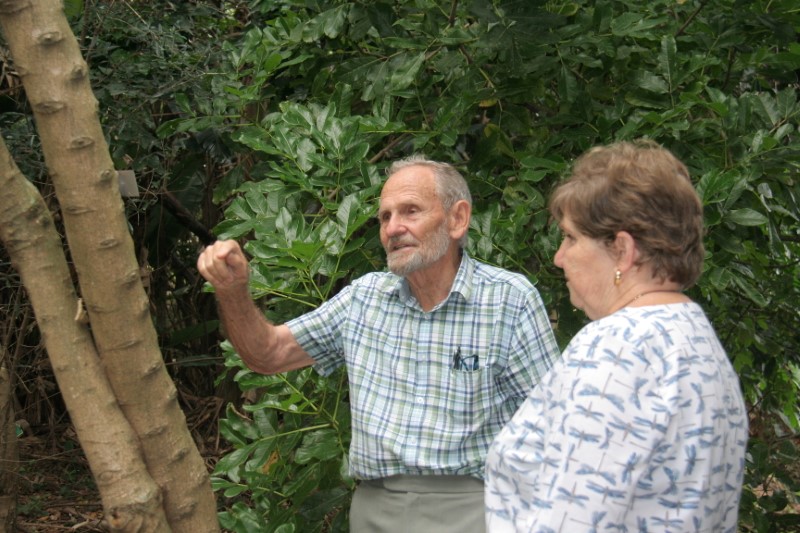
On the club’s 100 birthday in 2015, motivated to plant 100 trees, he was pleasantly surprised by the arrival of then group chairman, Bruce Surmon, Group Scout Leader, Rev Andrew Manning, the 1st Umbogintwini Scouts and an additional 100 trees they wanted to plant, so the forest grew exponentially by 200 trees in one day! Among many past Arbour Days, he and Gill also held an event in 2014, where they got golfers to plant a tree adjacent to the Holden Forest near the tee box on the sixth hole before they teed off. Today most trees are sourced from the club’s nursery he started at ACC, that currently houses about 600, and from him ‘begging, borrowing and stealing’ from wherever he can. “Over the years I have received a lot of help from Gill, who is very knowledgeable about trees, and the Wildlife and Environment Society of South Africa. READ ALSO: New Amanzimtoti Rotary president elected “The idea behind creating a conservancy is that we could lose this area to a politically pressurised municipality that the club leases from, for development, unless we get a stranglehold on the area as an asset. We needed to realise and establish the area as more than just a golf course. We have to look at it as a community asset. When I say our community, I mean all the Upper South Coast.” In 2017 Ted shifted his focus when he was requested to ‘beautify’ the club’s new golf practice nets. “Trees that were planted are coral, umdoni and yellowwood. All the yellowwood trees around the nets have come from one prolific female situated at the ninth hole’s tee box. A big problem I’m dealing with is borer that is attacking the umdoni trees.” The first walking trail is about one kilometre into and back out of the first forest and should take about 30 minutes to complete. There are red markings painted on the trees to the right of the trail and yellow to show the way out. Walkers can use a guide book to distinguish the many different species. “We want a walking or birding group member to join the conservancy, who will then become a guide. We do have a problem with litter, as the whole area was under water during the flood and a lot of the rubbish washed downriver. I have also come across snares occasionally. There used to be duiker in the forest, but those have been killed off. We still see mongoose and monkeys though. We also have a problem with invasive trees and plants.” Once the trails are established, it will be a great outing for school groups to learn more about fauna and flora. If any groups would like to arrange a clean-up of the forest or sweep for snares, call Ted on 082-825-6951. “As we develop more forests, we will incorporate them into the trails. I also want to build seating in clearings for birders to relax while they wait for the birds to return, but all this takes time and money.” https://www.youtube.com/watch?v=XZc1eADWtL8 DID YOU KNOW? Click on the words highlighted in red to read more on this and related topics. To receive news links via WhatsApp or Telegram, send an invite to 061 694 6047 The South Coast Sun is also on Facebook, Twitter, Instagram and Pinterest – why not join us there? Do you have more information pertaining to this story? Feel free to let us know by commenting on our Facebook page or you can contact our newsroom on 031 903 2341 and speak to a journalist. (Comments posted on this issue may be used for publication in the Sun)