
[WATCH] – Emerald green mambas inhabit coastal KZN
The green mamba spends most of its life in dense coastal vegetation, where it hunts for tree-living mammals as well as birds during the day.
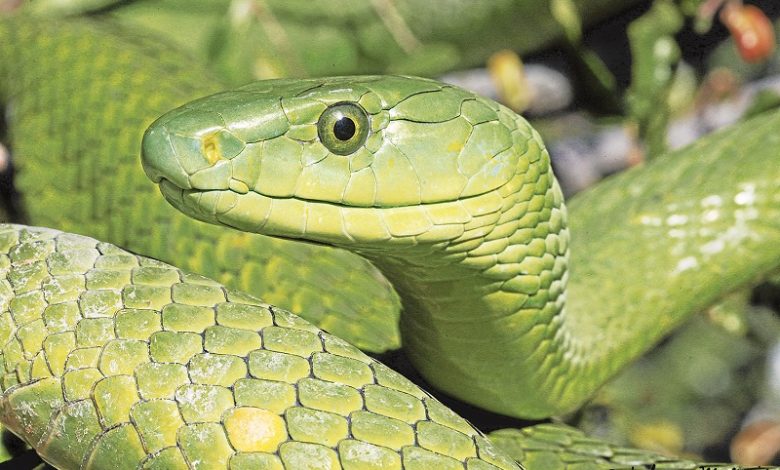
The green mamba (Dendoaspis angusticeps) is a bright green snake that inhabits coastal KZN and is usually only found within a few kilometres of the sea.
These shy snakes are emerald green above, sometimes with a few scattered yellow scales and their bellies are pale to yellowish-green. Juveniles are often blue-green, up to about 75cm in length and adults average around 1.8m in length.
“They are often confused with harmless green snakes of the genus Philothamnus and the green boomslang. The green mamba spends most of its life in dense coastal vegetation, where it hunts for tree-living mammals as well as birds during the day. It occasionally ventures into suburban gardens and may seek shade in houses, especially if there are shrubs that grow close to an open window,” said Ashley Kemp of the African Snakebite Institute.
Bites from this snake are rare, as they spend most of their life in dense coastal vegetation and avoid humans at all costs.
ALSO READ: [WATCH] – Snakebite institute sheds light on the notorious black mamba
“Their venom is potently neurotoxic, but also has cytotoxic properties, causing progressive weakness and labored breathing as well as some swelling. Anti-venom is effective in treating a bite and victims need to be taken to a hospital as soon as possible.”
This snake does not occur in any of the other provinces in South Africa other than KZN and the extreme North-Eastern part of the Eastern Cape.
DID YOU KNOW?
Click on the words highlighted in red to read more on this and related topics.
To receive news links via WhatsApp or Telegram, send an invite to 061 694 6047
The South Coast Sun is also on Facebook, Twitter, Instagram and Pinterest – why not join us there?
Do you have more information pertaining to this story?
Feel free to let us know by commenting on our Facebook page or you can contact our newsroom on 031 903 2341 and speak to a journalist.
(Comments posted on this issue may be used for publication in the Sun)