
Learn more about the black-headed canary
The black-headed canaries often become tame around human settlements.
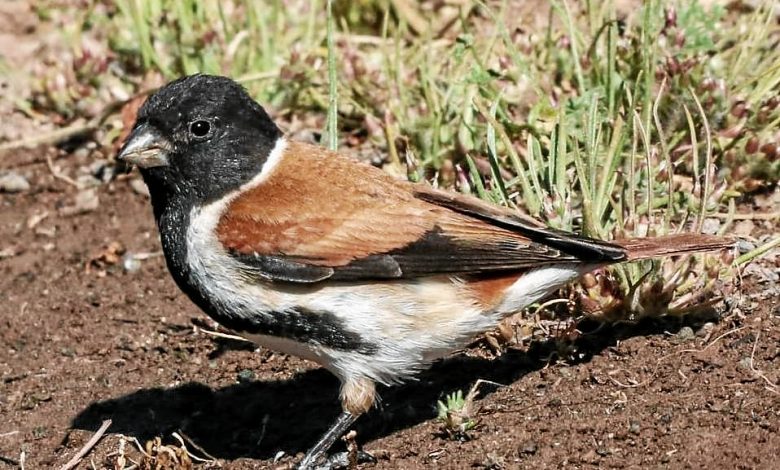
THE black-headed canary is a locally common to uncommon resident that is nomadic after breeding.
They are mostly found in the Northern Cape, Karoo, Free State and Southern Namibia. Usually in pairs or small family groups when breeding, otherwise gregarious in small flocks, especially at water.
These canaries like arid shrubby hillsides and koppies, rocky slopes with bushes, gardens and cultivated lands. They forage on the ground and in shrubs for seeds.
The males sing from a perch on the top a bush or shrub. The call is a musical tweet and pee – chee note rising in pitch.
ALSO READ: Eight things to consider before buying a bird
Breeding takes place from July to April, but varies with rainfall. The nest is a deep cup of dry grass and fine twigs lined with plant down and wool. Usually three white or pale blue eggs are laid. Incubation is about 13 days and the nestling period is 20 to 21 days.
The Afrikaans name is swartkopkanarie.
DID YOU KNOW?
Click on the words highlighted in red to read more on this and related topics.
To receive news links via WhatsApp or Telegram, send an invite to 061 694 6047.
The South Coast Sun is also on Facebook, Twitter, Instagram – why not join us there?
Do you have more information pertaining to this story?
Feel free to let us know by commenting on our Facebook page or you can contact our newsroom on 031 903 2341 and speak to a journalist.
(Comments posted on this issue may be used for publication in the Sun)