
The bishop with the golden crown
Male bishops adopt a distinctive yellow and black plumage during breeding season, contrasting with the female's predominantly brown coloration.
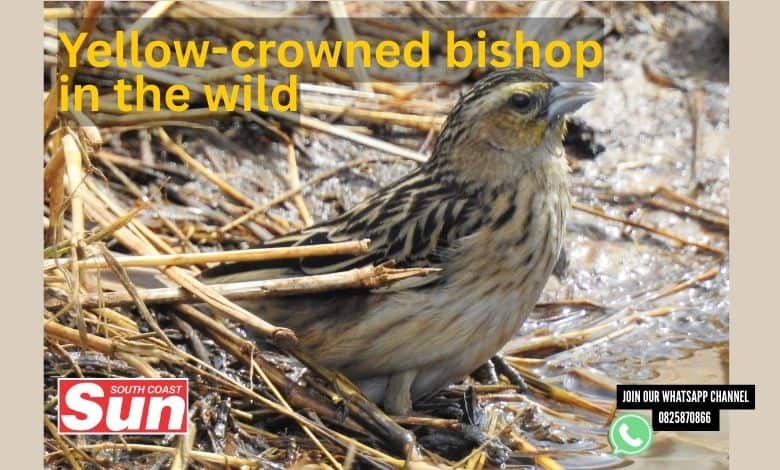
THE yellow-crowned bishop is a small, seed-eating bird commonly found in South Africa’s highveld region, above 600m altitude.
They inhabit moist grassland, vleis, flooded pans and fields of wheat, maize or sorghum and rank weedy vegetation in valley bottoms.
These bishops are gregarious at all times, sometimes in flocks of hundreds of birds. They forage on the inflorescence of standing grass and herbs, as well as on the ground.
Also read: How to attract birds to your garden
Nestlings are mainly fed small caterpillars after hatching while adult birds eat all sorts of insects. The voice is a series of high pitched buzzing, rasping and chirping notes, especially in flight display.
Breeding is from December to February. The nest is a thin-walled upright oval which is woven by the male from fine grass strips. It has a porched side top entrance and is attached to upright stems of grass, weeds and wheat stems.
Usually three finely speckled white eggs are laid. Incubation lasts between 12 and 14 days and the nestling period is 11 days.
During the breeding season, the male is easily recognised by its bright yellow crown and black body, while females and non-breeding males are brown and streaked, blending well into grassland and wetland habitats.
The Afrikaans name is goudgeelvink.

Do you have more information pertaining to this story? Feel free to let us know by commenting on our Facebook page or you can contact our newsroom on 031 903 2341 and speak to a journalist.