
Assassin bug: It’s a bug’s life
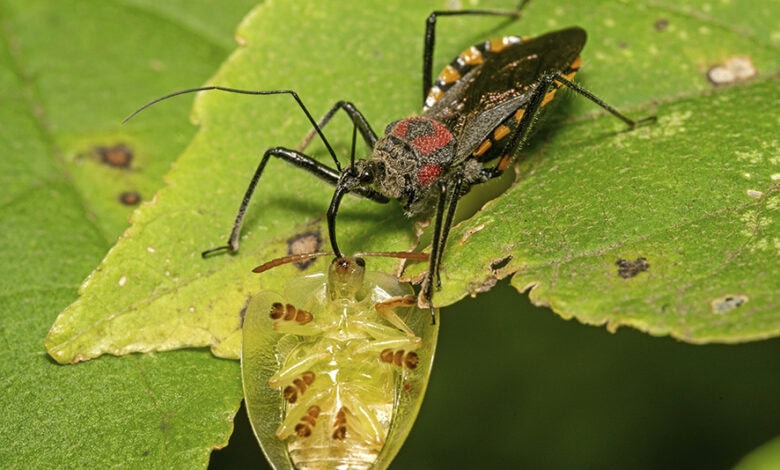
Assassin bugs use their long rostrum to inject a lethal saliva that liquefies the insides of the prey, which are then sucked out.
THE Harpactorinae are a large subfamily of the Reduviidae, also known as assassin bugs, with over 2 000 species worldwide. As their common name suggests they feed on other insects.
Assassin bugs can vary quite considerably in shape and size, depending on species, with some being aquatic. Some sub-species have small forearms that resemble those of a praying mantis.
Also read: Wildlife centre needs flying ants to feed animals
While most species have a varied insect diet, there are some species of assassin bugs that are specialist feeders, only feeding on specific insects.
However, the one photographed prefers a varied diet, feeding on anything it can overpower. Assassin bugs are equipped with a long, sharp, biting proboscis which it uses to bite into its prey, immediately injecting a type of saliva into the prey which subdues, kills and liquefies its inners. The liquid is then sucked up through the same proboscis.
Assassin bugs are very useful insects to have around your garden. In this image one can see the assassin bug feeding on a tortoise beetle. If left unchecked the tortoise beetle and a host of other insects could cause quite a bit of damage to plants in your garden.
Contact Warren Dick to have some of your interesting insects, snakes or spiders identified. Call or WhatsApp him on 072 211 0353, or visit his Facebook page, Warren’s Small World.

Do you have more information pertaining to this story? Feel free to let us know by commenting on our Facebook page or you can contact our newsroom on 031 903 2341 and speak to a journalist.