Water woes continue in eThekwini
Some areas in the northern suburbs are totally dependent on a mix-owned fleet of 355 tankers at a cost of R50m per month to deliver water.

SOUTH Africa, as a water-scarce country, is facing a severe shortage of water. Although many residents feel that only they are affected, the current water crisis in eThekwini is affecting everybody.
Also read: South Coast water challenges persist
The northern suburbs have been struggling for well over a year, while some areas are totally dependent on a mix-owned fleet of 355 tankers at a cost of R50m per month to deliver water.
But, what has changed?
• Urbanisation – that’s left 300 rural schools standing empty, people flocking to the city in hopes of work, accommodation, education and a meal on the table, however, municipalities are collapsing under bankrupted, failed administration
• Informal settlements inhabited by those who arrive from either domestic or foreign destinations, as the decay of failed administration, unemployment and poverty extend beyond the borders
• Densification and development
• Adhering to human rights
• Lawlessness
• General population explosion and extended human lifespan
• Old and failing infrastructure
• Lack of maintenance
• Poor or inadequate planning
• Poor control and metering
• Excessive usage measured against international benchmarks.
All these place a demand on resources such as electricity, especially water.
The days of a single standpipe servicing 50 people are gone. Instead, there is either piped water to formal dwellings, mushrooming under low-cost housing projects to shelter the poor, illegal connections into and throughout informal settlements, new cluster residential developments, new industrial and retail developments, dictated and necessitated by the above, water leaks and unmetered usage, reluctance to recycle and wastage. With the mindset that: if it is in the tap, there is no shortage.
Also read: Amanzimtoti water shortage blamed on heatwave
Global warming and excessive summer temperatures increase water demand. The national Department of Water and Environmental Affairs is restricting the extraction volumes against the number of users in the city which causes a shortfall of 100 million litres of water per day.
How do you recover?
Education, water rotation, forced restriction, alternative sources such as reuse of grey water to the point of purification to potable for human consumption, desalination and inevitably, enforcement.
The city is presently in the rotation phase with forced restrictions to follow if consumption doesn’t drastically reduce.
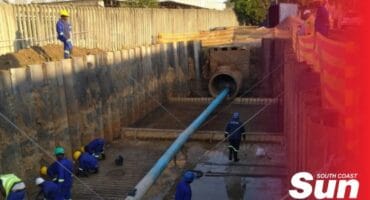
First real relief can only be expected towards the end of 2027 going toward 2032 as the phases of the Umkomaas project, already 10 years behind schedule, start to become operational to substitute the ever-growing demand of the city.
Once complete, the R20 billion project is expected to permanently resolve water supply issues from Isipingo to Amanzimtoti and beyond. After the slated December 2027 completion, it will produce 100 megalitres (ML) of water per day, of which 40ML will supply the southern wards of eThekwini Municipality.

Do you have more information pertaining to this story? Feel free to let us know by commenting on our Facebook page or you can contact our newsroom at 031 903 2341 and speak to a journalist.